Shadow Country
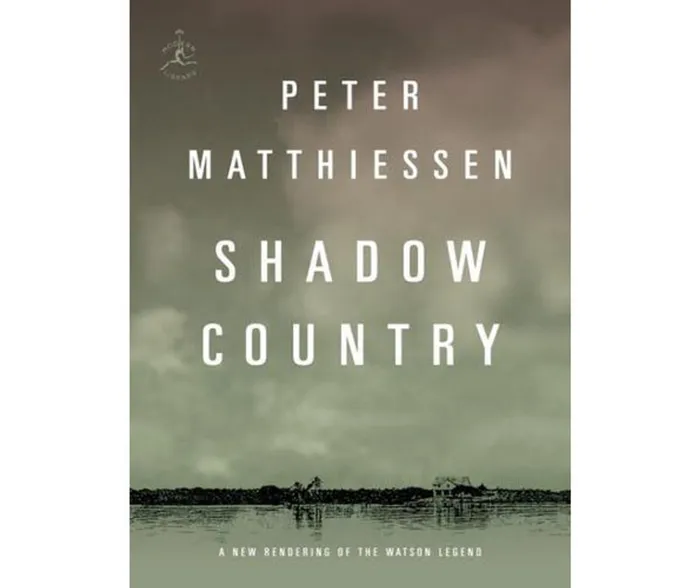
by Peter Matthiessen (Quercus Publishing, R155)
Inspired by the legend of pioneering plantation owner and outlaw, EJ Watson, this is a violent tale with a tragic ending for both the wild lands of south west Florida, as well as Watson and his offspring, whose legacy is ultimately destroyed.
Matthiessen has reworked the unwieldy trilogy of around 1 300 pages into a more compact novel, of about 900 pages, that became a National Book Award winner in 2008.
It is no surprise that the principal character of this novel-in-three-parts treasures Ancient Greece, for Peter Matthiessen’s “great American epic” – originally broken up into three parts – reads a little like a Greek tragedy, with the father forcing his favourite son to go against the grain and commit a heinous crime for which he cannot forgive himself.
A prolific writer, Matthiessen has long favoured non-fiction, writing primarily about wildlife, so his take on the landscapes and creatures of the Everglades as experienced by pioneers is a fascinating, albeit depressing one, in which birds and reptiles were indiscriminately killed for their plumes and skins, and the sacred burial grounds of the Native Americans were plundered.
Against this background, we are introduced to Watson, who, in 1848, supposedly shot outlaw Belle Starr. His reputation follows him to Florida and it is here that, Watson, a hard-working visionary with a burgeoning family builds up a successful plantation despite the odds, and advocates forward-thinking ideas on how to bring civilisation to south west Florida.
Why then, in 1910, is he gunned down by his neighbours?
The first part of the novel is written from the perspective of a chorus of different neighbours and family members, each with their own views of what happened.
The second is told by Lucius, one of Watson’s sons, and the third, by Watson himself. Each successive book unpeels more layers of the story.
Warning: Whilst enjoyable enough for history enthusiasts/buffs, I do not recommend reading this book when tired.
There is so much to digest that you may find yourself having to re-read sections in order to refresh your memory. On the other hand, there is much repetition, so the basic story is not hard to follow. – Janine Magree