New Markets, New Mindsets – Creating Wealth with South Africa’s Low-Income Communities Through Partnerships and Innovation
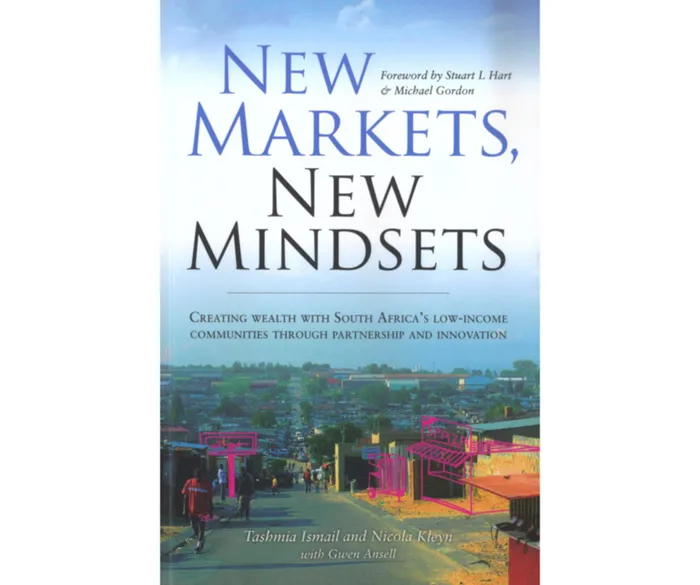
by Tashmia Ismail and Nicola Kleyn with Gwen Ansell (Stonebridge Books)
This may not be everybody’s cup of tea in that it is basically a textbook on how large corporations can do sustainable and valuable business among our many poor, but it nevertheless covers interesting concepts surrounding business operations.
Some foreign academics pioneered work on business relationships with underserved communities, especially in India, several years ago. This book brings the issue into the South African context where there is apparently room for big companies to make a profit by engaging in the right partnerships and tailor-making their products or services.
A lot of it boils down to having a common-sense approach, as well as an appetite for risk and the patience to endure setbacks, in a tough social and physical environment that was created by the apartheid system and still exists today.
In fact, the 231-page book informs us there are as many as 4 billion people around the world who are at the base of the economic pyramid. So that’s a huge market to tap if you have the right systems in place and are willing to adapt them with time.
And there are examples of successes and failures in this particular business environment.
Interesting terminology at play includes frugal engineering, B24B, co-creation and triple bottom line accounting.
Frugal engineering is the science of breaking up complex engineering processes into their basic components and then rebuilding them in the most economical way possible.
B24B is a buzz term for doing business at the “base of the pyramid” where the 4 billion reside.
Co-creation is working with market and local partners to transform a product or service in ways that make it more relevant and effective.
Triple bottom line accounting, or TBL or 3BL, is the idea that a business entity’s health should be measured by not just the traditional bottom line of profit, but also by social/ethical and environmental performance – an important issue in today’s major global worries over economic justice.
In essence, the book details that many actions are needed to ensure that business does well by doing good. – Carl Peters