Visit Sunny Chernobyl and Other Adventures in the World’s Most Polluted Places
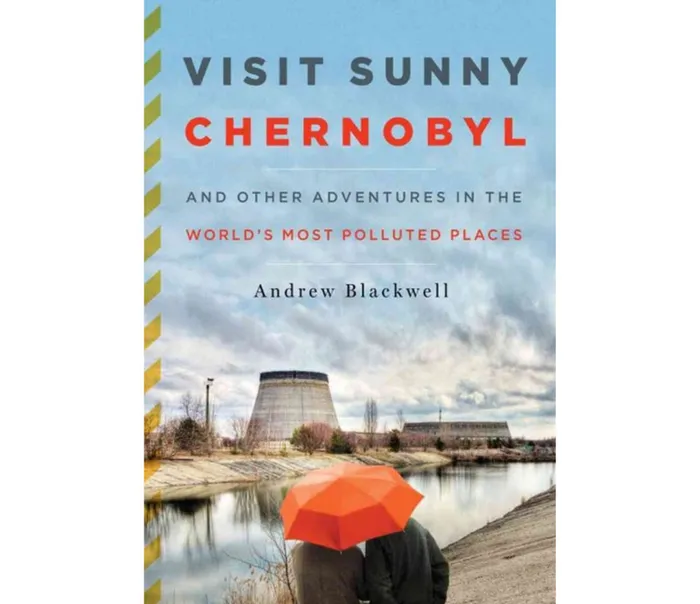
by Andrew Blackwell (Random House)
This book is based on a simple but brilliant idea: to hang out in the most polluted and toxic places on the planet. Well, it’s a brilliant idea for a book at any rate, if not a holiday.
But Andrew Blackwell is no eco warrior: he has been inspired not by love of Gaia or fear of global warming but by the sheer daftness of his plan. So off he goes on the first and probably most foolhardy of his jaunts – to Chernobyl. Here he discovers that, 26 years after the nuclear meltdown, there’s still a 30.5km exclusion zone.
To the increasingly shrill beeps of his black-market radiation detector, Blackwell ventures inside and finds not a dead wasteland but nature flourishing in what is effectively one of Europe’s biggest wildlife parks.
He also takes a day-trip to Pripyat, once a town of about 50 000 people until everyone had to be evacuated when Chernobyl went up.
Still uninhabitable, with astronomically high radiation levels, Pripyat is a post-Armageddon vision of empty roads, lifeless buildings and plazas covered in shrubs and moss.
Most moving of all are the dust-covered toys he sees in an abandoned, Soviet-era pre-school. The children who went there are probably still alive and well. It seems that fewer than 100 people died at Chernobyl, although nobody knows the long-term effects of the world’s worst nuclear accident.
In his toxic tour of the world’s most polluted places, the author also takes in the noxious oil refineries of Port Arthur in Texas, two smoggy cities at the belching forefront of China’s coal-fired industrial revolution, a patch of deforested Amazon rainforest, and the litter and plastic debris that make up the new “eighth continent” – the so-called Great Pacific Garbage Patch.
Blackwell finishes his world tour in India, on a pilgrimage along the Yamuna, one of the holiest tributaries of the Ganges. It’s also one of the foulest, passing through Delhi and – skip the rest of this sentence if you’re not feeling strong – many of the stomachs of the millions of people for whom the Yamuna is their one and only sewer.
“It smelled so bad it gave me goosebumps,” Blackwell reports.
“The gag reflex scrambled up my throat, looking for purchase. I tried to take shallow breaths.”
Even here, Blackwell tries to accentuate the positive. Look at the lovely greenery, he urges. All the beautiful butterflies…
No. Let’s instead run away on to other features of this toxic travelogue. There is the endearing subplot about the author’s romantic life – halfway through he is jilted by his fiancée and spends the rest of the book lovelorn.
There are also some interesting reflections by the author on his tour of the world’s unloveliest spots – that many people who love nature also seem to dislike people.
My own take-home message: if I ever walk by the Yamuna River and I’m thirsty, I’ll opt to stay thirsty. – Harry Ritchie