Why nations fail – the origins of power, prosperity and poverty
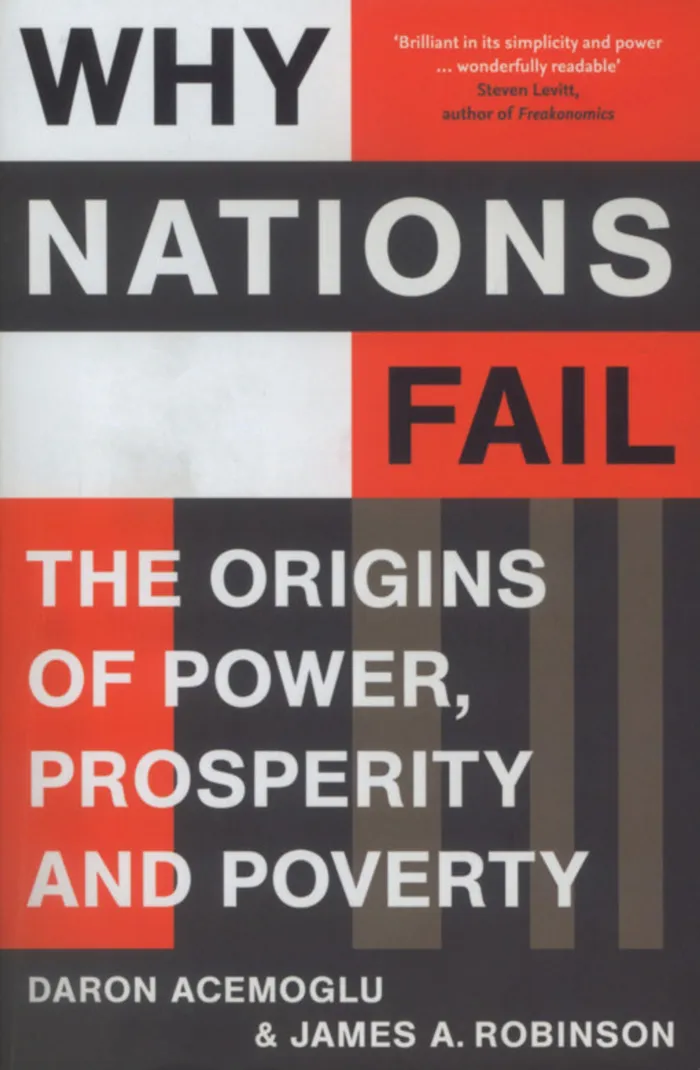
by Daron Acemoglu and James A Robinson (Profile Books)
The two analytical authors use 15 years of extensive and interesting research to explain the inescapable link between politics and economics across a globe that has an ever-growing and unsettling divide between wealth and poverty.
More precisely, they argue in an easy-to-read manner that long-lasting prosperity for any country can only come from it having the right and favourable political system in place, one that is pluralistic, does not have power elites extracting the country’s resources, protects property rights, keeps law and order, and allows citizens to follow their entrepreneurial noses, among other things.
Both economists and professors Acemoglu and Robinson slice through the traditionally accepted causes of poverty, such as bad geography and economic ignorance, and instead theorise that any nation in any region can put itself on a path to wealth by having the correct political/legal environment in place. This often needs to be done at an opportune juncture in a country’s history, as happened in France, the US and the UK.
The authors present plenty of case studies from each continent to explain their theory, with our neighbours Botswana and Zimbabwe analysed in contrasting light because of their respective political situations that developed after colonisation.
Good politics feeds good economics, so countries which have extractive systems where politicians centralise power and enrich themselves, their families and their cronies are bound to end up with the majority of their citizens being poor, even if there’s initial economic growth in a new dispensation.
Even countries which are officially democratic can suffer from enduring political and economic elites, and there may be a lesson for South Africa in the 509-page book.
You may find interesting what the authors think of the sustainability of China’s so-called economic miracle.
What is also interesting is how they explain the fact that many countries experience the same extractive political situations for a long time despite the emergence of fresh leaders who claim to want to institutionalise a bright new democratic order where citizens have equal political and economic rights, with the power to keep in check political abuses.
If you have an interest in politics and economics, you will probably find this a compelling read.