

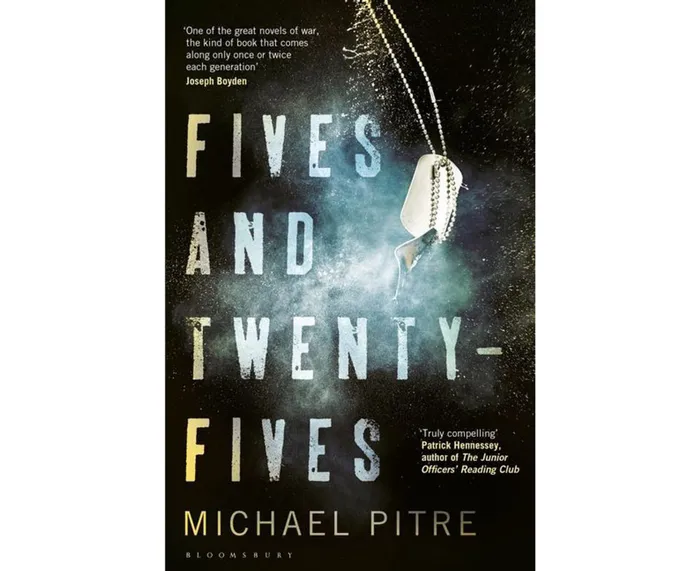
by Michael Pitre (Bloomsbury)
Iraq war veteran Michael Pitre, the author, writes in his acknowledgments: “above all credit goes to my wife, Erin, who is ultimately responsible for whatever good can be found in these pages and in me. My life orbits twin mysteries. What compelled you to take in the foul wreck of a man you found and how, in all the days that remain to me, I could ever repay you...?”
I always read acknowledgments. Pitre’s honesty hooked me immediately. Here was a man who had done the missions, lived to tell a tale and walked in the boots of a soldier who had seen first hand, what evils a complicated conflict can do to those on both sides.
It is 2006 in war-torn Anbar Province, (yes, in the news now as IS invade ever further) where a US marine unit has the unenviable and tedious job of mending potholes. Potholes which, nine times out of 10, conceal a bomb and which will put you in harm’s way of explosions or snipers daily.
Needless to say, it’s a tight-knit platoon,with a crew who, for the most part, work well together, their lives dependent on teamwork. Pitre concentrates on three men; platoon leader First-Lieutenant Peter Donovan, an educated man with a degree and a shrewd take on leadership: “in war to empathise too much with the people who might die on account of the decisions you make”, well, perhaps, that’s not useful; then there is Hospitalman Third Class Lester Pleasant, a medic, endowed with a sensitive nature and a skill for healing, who has seen too much. Given his job, he should realise that post traumatic stress has overtaken his life, but when it comes to himself, perception is not his strong point.
Kateb (a young Iraqi interpreter, known by the alias Dodge for his own safety) is Pitre’s third main protagonist.
Pitre writes on real issues, one of which, ongoing, is that local translators play a crucial role for the military in Iraq. It is a highly dangerous job, (“terps” automatically become targets for the Taliban, et al) but many locals have been enticed by the offer of US visas, once the job is done.
In 2008, laws were passed in the US, setting aside a certain amount of visas for this purpose. Of late, covered extensively on international news and by media critic John Oliver in his excellent Last Week Tonight show (M-Net on Sunday nights), the US government are reneging on the deal, leaving many Iraqi interpreters in mortal danger.
The likeable Kateb, a lover of the American way of life, their culture and something of an expert when it comes to Mark Twain, is one such man.
It is 2011 and Donovan and Pleasant are still trying to make sense of life, post-war, after having returned to the US. Kateb, having escaped the death squads in Baghdad, is in Tunisia trying to fulfil his dream – to leave this war torn region (the violent “Arab Spring” has just started). He needs that visa.
In the US, Donovan is, laconically, studying for a post graduate degree while Pleasant, a recovering addict living at home, yearns for the days when his medical expertise made him useful. The story winds between the present day and the time the three men spent in Iraq.
Gripping
As the “literature of war” goes, this is a bleak and important slice of days in the life. Pitre writes with gripping conviction and a thorough understanding of the emotional turmoil suffered by those who face the daily grind of a war – where the enemy is a physical and mental presence.
Explanation of the title: “It’s the rule – always watch your fives and twenty fives. When a convoy halts to investigate a possible roadside bomb, stay in the vehicle and scan 5m in every direction.
A bomb inside 5m cuts through the armour, killing everyone in the truck.
Once clear, get out and sweep 25m. A bomb inside 25m kills the dismounted scouts investigating the road ahead.”