Review: Wake
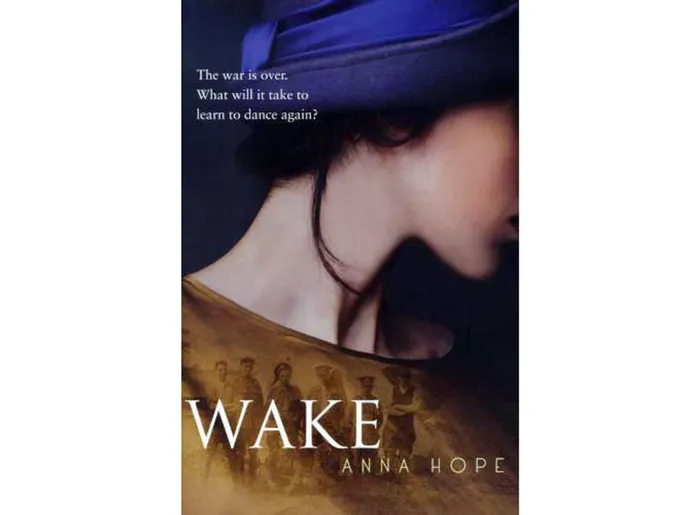
Sometimes life’s synchronicities hit home pretty forcefully. The timing of my reading of Anna Hope’s novel, Wake, was one of these coincidences which seemed almost too premeditated to attribute to fluke. The story, set over five days in 1920, follows the remains of the unknown warrior from their exhumation somewhere in the muddy battlefields of France, to their reinterment in Westminster Abbey on Armistice Day.
On November 11, someone asked on Facebook what the moment of silence at 11 o’clock was in aid of. I was caught off-guard, jerked back 30 years to a Remembrance Day ceremony held at the memorial arch in Pietermaritzburg on a bright blue day. I remembered listening to the dying notes of the Last Post and contemplating the millions of lives cut short. The funny thing… this question reminded me I had finished reading Hope’s polished debut novel that very morning.
The main characters of the novel are Ada, Evelyn and Hettie. But the soldiers of World War I feature prominently as their dead or broken sons, lovers and brothers, who are treated compassionately by the author, in spite of the deplorable roles they may have been compelled to play in the theatre of war. Short, italicised passages also give the perspective of a number of anonymous characters who bear witness to the journey of the remains from a French trench to the final resting place. The symbolism of burying an unidentified soldier gives them all an opportunity to assuage the grief of their own losses.
Well-researched, tender, and emotionally charged, Hope’s prose is natural and the plot intriguing, making Wake an outstanding read. Post-war Britain is realistically rendered without making the historical detail seem forced. Taking place in typically English dance halls, homes in places like Clapton, Primrose Hill and Poplar, (the area made famous by the television series Call The Midwife) in the trenches at the war front, and at the butcher’s, grocer’s and allotments, where vegetables are grown to supplement meagre post-war incomes, it reflects the chasms of class divide. Apart from the obvious funereal sense, which is fitting, the thoughtful title refers, also, to a reawakening of society from its mourning and to consequence.
Ada, a married housewife, has become a ghost of her former self, having received news of her son’s death. She has never been privy to information about his burial place and hopes he might still be alive. She waits, suspended in time until a veteran who may have known her Michael, visits and she undergoes a sense of wakening as the truth slowly dawns.
Hailing from an upper class background, bitter spinster Evelyn has done her bit for the war effort, working in a munitions factory. Now that the war is over, she tortures herself in a job at the Pensions Exchange, where she is confronted by angry survivors whose attempts to claim benefits are often thwarted by government legislation, which discriminates along class lines against so-called “temporary gentlemen”. Evelyn seemingly cannot move on from the loss of her lover in the war and wishes she could relate to her brother as she once did.
Meanwhile, young Hettie, who dances at the Hammer-smith Palais, for a living, loves the pleasures of American Jazz and resents having to hand over half her pay to her mother and brother, who has returned from the war.
She knows little of his ordeal and wishes only to forget the past, bob her hair, and dance her way into a better life, which might, she thinks, come about if she catches the eye of the right man. The way the three women’s lives are woven into a single strand requires sublime storytelling skills and as the body of the Unknown Warrior approaches its final resting place, the lines of separation between the characters become increasingly blurred.
While there is a romantic aspect to the novel, the physical and psychological effects of war are plain throughout. And a more timely novel I cannot imagine. On Friday, November 13, Paris came under attack and the pope was one of those who described the events as part of a third World War… With the painful aftermath of the Great War fresh in my mind, I reeled at the news of retaliatory air attacks against the Islamic State, which is clearly well-entrenched in Europe and likely to respond in kind.
The novel’s clever mid-sentence ending is pregnant with hope and a hint of healing, but the novel does not provide simplistic solutions. Rather, it reminds readers that a return to World War is to be avoided at all costs.
Wake by Anna Hope is published by Random House Struik