

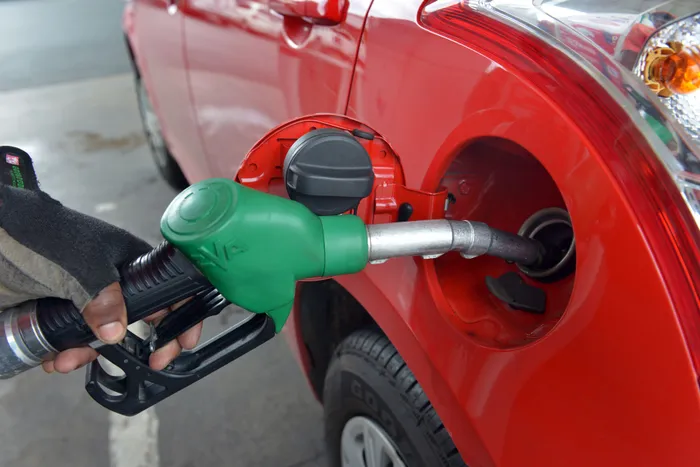
South Africa has about 7 to 8 million barrels of strategic fuel reserves
Image: Picture: Karen Sandison/Independent Newspapers
The ongoing war in the Middle East has placed renewed focus on South Africa’s strategic oil reserves as the conflict continues to push oil prices higher and unsettle global energy markets.
According to reports, South Africa has about 7 to 8 million barrels of strategic fuel reserves, equal to around two weeks of demand, below the 90-day benchmark used by energy-secure countries.
This has raised fears that the lack of adequate reserves could leave the country vulnerable to supply disruptions, with limited capacity to cushion the impact of global shocks on fuel availability and prices.
However, there is also growing concern that much of the country’s reserves are held as crude oil, meaning that even in the event of a release, the supply cannot be used immediately at scale without being refined into usable fuel such as petrol and diesel.
That could prove to be a major problem for South Africa, as much of the country’s refining capacity has declined in recent years. Recent data shows that South Africa has lost around half of its refining capacity in recent years due to accidents and underinvestment.
In 2022, the Sapref Refinery, South Africa’s largest refinery at the time, suspended operations, significantly reducing domestic refining capacity.
Other major facilities across the country have also been affected in recent years, including the Engen Durban Refinery, which has remained offline, and the Natref Refinery, the country’s key inland refinery, which has experienced intermittent disruptions.
However, some facilities are still functioning, including the Astron Energy Cape Town Refinery, which remains one of the key operating coastal refineries, and Natref Refinery, which continues to supply fuel into the inland pipeline network despite periodic constraints.
While that may offer limited relief, concerns remain over whether the remaining operational refineries have the capacity and reliability to meet national demand.
This has led to the country importing most of its refined fuel to meet domestic demand, leaving South Africa increasingly exposed to global price volatility.
"As a net importer of petroleum products, South Africa remains inherently exposed to these external dynamics. Sustained increases in international oil prices, coupled with exchange rate fluctuations, are expected to translate into higher domestic fuel prices in the months ahead," the department said in a statement on Wednesday.
Meanwhile, the Democratic Alliance (DA) has called on Mineral and Petroleum Resources Minister Gwede Mantashe to provide full transparency on the state of South Africa’s fuel reserves.
"By law there are supposed to be two months’ supply of transport fuel held in reserve at any one time. The minister’s failure to confirm whether this legal requirement is being met raises serious concerns that the two-month reserve has not been maintained."
"In order to settle public worries about shortages, he should disclose the exact state of the country’s fuel reserves without delay."
It added that the government should disclose the exact state of national reserves without delay in order to ease uncertainty and reassure markets.
With geopolitical tensions showing little sign of easing, South Africa’s energy security debate is likely to remain in sharp focus — particularly its ability to withstand sustained global oil shocks with reduced domestic refining capacity and limited strategic buffers.
IOL Business