

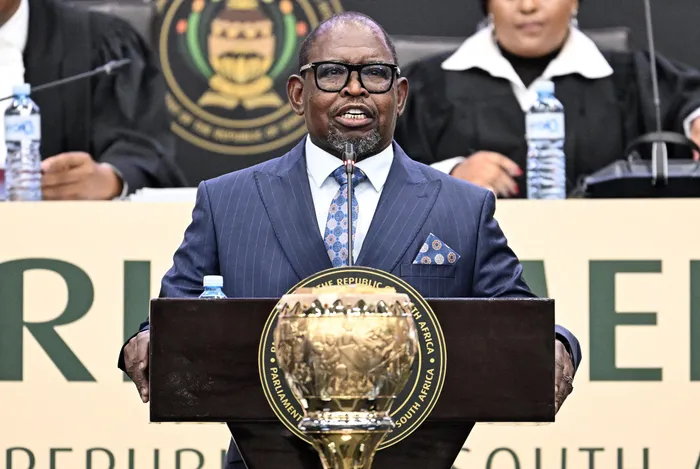
Finance Minister Enoch Godongwana delivered the 2026 Budget on Wednesday, February 26.
Image: GCIS
Finance Minister Enoch Godongwana delivered the 2026 Budget on Wednesday, February 26.
The 2026 Budget signals a turning point in fiscal stability. Debt is stabilising, no broad tax hikes were introduced, and social support remains protected. Government is shifting spending toward infrastructure, municipal reform and economic growth while maintaining social protection.
Here are seven take-aways from Godongwana's speech:
For the first time since 2009, government debt is stabilising. Gross debt peaks at 78.9% of GDP in 2025/26 before gradually declining. The budget deficit is narrowing and debt-service costs are easing — restoring fiscal credibility and lowering borrowing pressure on the country.
Stronger-than-expected revenue allowed government to withdraw R20 billion in planned tax increases. Personal income tax brackets and rebates are fully adjusted for inflation, preventing “bracket creep.” VAT remains unchanged. However, excise duties on alcohol, tobacco and fuel levies increase in line with inflation.
Public-sector infrastructure spending will exceed R1 trillion over the medium term. Major focus areas include:
Road maintenance (SANRAL)
Passenger rail recovery (PRASA)
Energy transmission expansion
Bulk water projects.
The goal is job creation, improved logistics and long-term economic growth.
Many municipalities are financially distressed (63%). Government is introducing performance-linked reforms:
Education remains the largest spending category (23.7% of total spending).
Early Childhood Development gets R12.8 billion extra.
School nutrition funding is increased.
Health receives R26 billion for HIV/AIDS programmes and R21.3 billion to employ doctors. Government will also partially absorb funding gaps created by the US withdrawal of PEPFAR support.
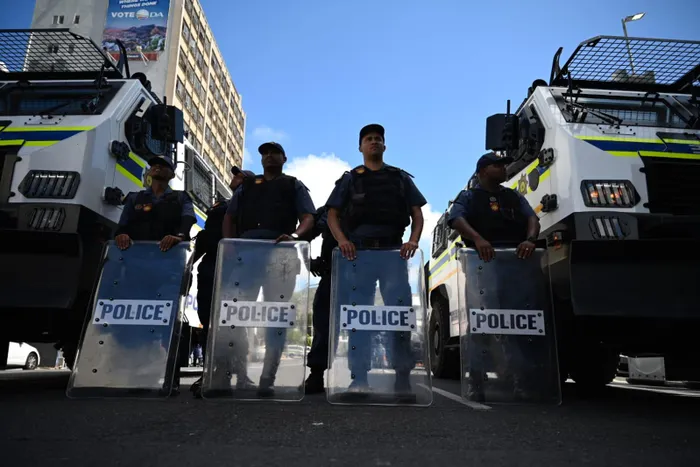
SAPS on duty, ensuring law and order at Budget 2026
Image: Armand Hough / Independent Newspapers
Spending on peace and security rises to R291.2 billion by 2028/29.
Extra funding for police and SANDF to combat illegal mining and organised crime.
Border Management Authority receives R990 million to expand capacity.
Judiciary gains more independence and funding. This aims to improve crime prevention and protect economic stability.
ICYMI, you can read the Minister's speech in full here.
IOL