

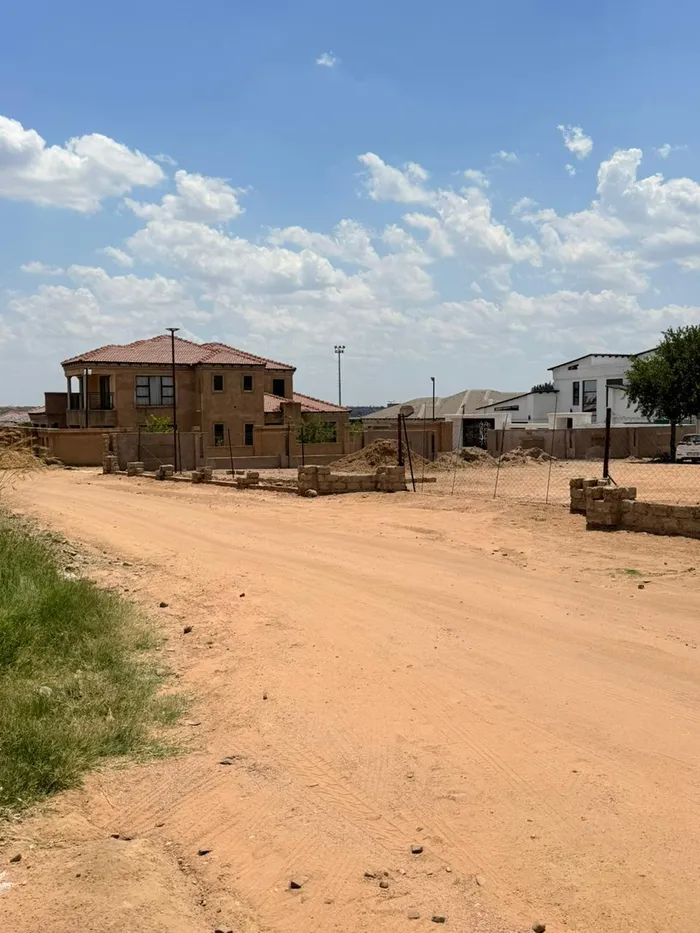
One of the 17 illegally developed townships in Garona, Hammanskraal, north of Tshwane.
Image: Supplied
Residents in the city of Tshwane are reminded that while landowners may seek to establish new townships, all development must first receive the required land development authorisation from the municipality.
This ensures compliance with the law and makes it possible for the city to provide essential services safely and sustainably, says Ald Aaron Maluleka, the MMC for Human Settlements in the City of Tshwane.
“The City has warned that unauthorised developments not only violate municipal by-laws but also lead to significant revenue losses through unpaid water, electricity and waste services. This weakens the City’s ability to maintain existing infrastructure and expand services for all residents,” says Maluleka.
The City of Tshwane mayoral sub-committee on illegal townships began the second phase of its community consultation process on February 12 and will run until 21, as part of ongoing efforts to address the growth of unlawful township developments.
During this phase, the sub-committee will engage residents in Prestige, Wallmannsthal, Haamdoringboom and Onderstepoort. They will also engage residents in Kleinfontein, Moifontein and Tweefontein Kudube Unit 6.
These engagements are said to be intended to allow residents to share concerns, inputs and recommendations on the challenges affecting illegal townships and the processes required to regularise development.
Written submissions can be sent to: [email protected]
The sub-committee is a special task team made up of members of the mayoral committee and supported by a technical working committee of officials.
It was established to investigate illegal township developments and to develop a policy response to this growing challenge.
The first round of engagements already took place in Leeuwfontein, Moloto City, Rapao Village, Elandsfontein Plots, Moshate Gardens, Medline, Morula View and Laezonia.
These consultations form part of a broader process involving 17 identified illegal townships and others across Tshwane. The aim is to assess their status and develop practical mechanisms to address illegality while ensuring that future development follows proper legal processes.
The City of Tshwane says officials have stressed the importance of feasibility studies and proper land development applications that comply with municipal land use management bylaws, the National Building Regulations and the Spatial Planning and Land Use Management Act.
These requirements are critical to ensuring safe, lawful and serviceable communities, it says.
“Illegal townships generally fall into two categories. The first involves property owners using land or erecting structures without the necessary land use authorisation under the Tshwane Land Use Scheme 2024 or without approved building plans. The second involves owners who allow others to develop land without zoning approval or approved building plans.”
At the same time, Maluleka says residents engaged during the first phase expressed willingness to cooperate with the city and appealed against the demolition of their homes.
“They committed to working with officials to move toward compliance. The consultation process is therefore aimed at finding lawful, practical and humane solutions while upholding planning legislation.”
Residents and developers are encouraged to work with the relevant municipal departments before starting any development to protect their investments and ensure that communities can be supported with infrastructure and services.
The City of Tshwane is raising concerns about a growing number of cases involving illegal property developments and the unlawful sale of stands.
The metropolitan municipality says this unlawful activity undermines legitimate planning, places families at risk of financial loss and forms part of the broader challenge of land-related fraud and bylaw violations that the city is actively addressing as part of its safe and clean city priority.
The MMC says the city wants residents to be clear that the illegal sale of land is a criminal offence. “In many reported incidents, the land being sold does not belong to the seller. It may be privately owned, owned by the City or owned by another sphere of government. People who sell, promote or knowingly participate in such transactions expose themselves to legal action.”
He says the impact is not abstract. “Families often invest life savings in stands that cannot be legally transferred, serviced or developed. This leads to heartbreak, disputes and in some cases the need for enforcement action that further disrupts communities.
"Preventing this harm is central to the city’s resident-first approach to building safe, lawful and well-managed neighbourhoods.”
Warning to residents
Residents are urged to take simple but critical steps before buying any property.
“A valid and lawful title deed must exist, and the person selling the property must be legally authorised to do so. Buyers should verify ownership, zoning and development rights with the relevant municipal departments before signing any agreement or paying any money.”
The city also strongly cautions against concluding property deals through affidavits, letters or informal arrangements. It says property transfers must follow legally prescribed processes and be registered through the Deeds Office. If a stand cannot be legally registered, ownership is not protected.
As part of strengthening compliance and enforcement, the City has dedicated channels for reporting suspected contraventions.
Residents can report:
By reporting suspicious activity, residents help the city to act earlier, prevent scams and protect communities from unlawful and unsafe developments.
The City of Tshwane says it remains committed to firm but fair enforcement, public awareness and lawful urban development.
“Safeguarding residents from property-related fraud and ensuring that development happens in a planned, legal manner are key to maintaining safe, orderly and liveable communities,” says Maluleka.
According to the South African government, both state land (land under the control of a national or provincial government or municipality) and privately-owned land can be invaded unlawfully.
The government says it has a constitutional duty to ensure, where required and with available resources, that all citizens can enjoy their basic rights to access to land and to housing. Where large-scale invasions occur, the government has a similar duty to assist private landowners in protecting their land.
Where unlawful occupiers whose basic rights are not at risk have to be evicted, the private land owner must, without delay, approach the court for an eviction order in terms of the Prevention of Illegal Eviction From and Unlawful Occupation of Land Act, 1998 (Act 19 of 1998).
This law is currently administered by the Department of Human Settlements and will be transferred to the Department of Rural Development and Land Reform (DRDLR) in due course.
Independent Media Property