

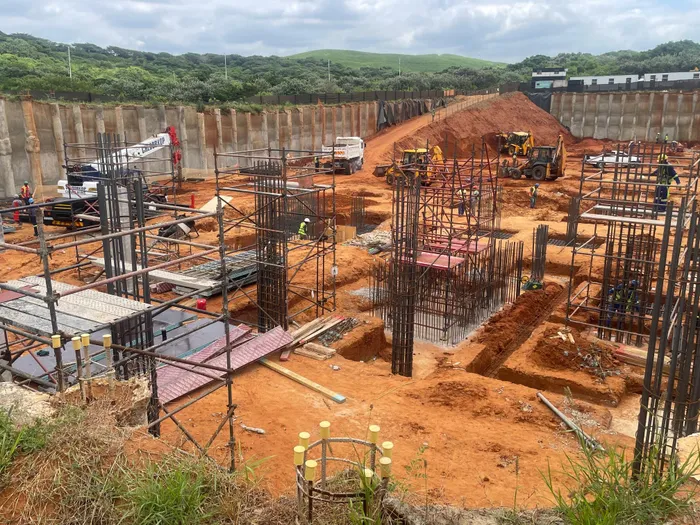
Hilton's four-star hotel is under construction. They are also in negotiations of bringing a five-star hotel to the precinct as well.
Image: Vivian Warby
The Hilton Durban closure in the city centre earlier this month was widely framed as an autopsy of the old world and a death knell to the KwaZulu-Natal property market.
To the casual observer, the yank of that iconic global flag was a terminal diagnosis for a region strangled by the "Plagues of Eight”, which included five bad years that saw Covid, riots, floods and the provisional liquidation of its biggest land owner make the region the hardest sell of any in South Africa..
But for the heavy hitters of the South African property sector, it was merely the "push factor" in a radical, multi-billion-rand rebalancing of capital for the economic development in KwaZulu-Natal.
The "pull factor" is now undeniable: a definitive migration towards managed, private-sector-led precincts. From the Outer West to the North Coast, a new map of power is being drawn by titans such as Collins Residential, Devmco, Fundamentum and Growthpoint Properties.
Most notably, the Sibaya Coast Precinct has reached a commercial tipping point, where the world’s most iconic brands and top luxury brands in South Africa are no longer just watching but are voting with their feet.
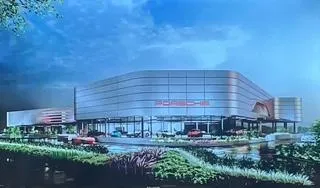
Something big is being planned... Porshe comes to Sibaya precinct, indicating the luxury market move to the North Coast of KZN.
Image: File
Nothing validates a region’s resilience quite like the arrival of Porsche. In a landmark move for the node, the high-performance brand has secured over 20,000m2 to build a mega-flagship, state-of-the-art dealership in Sibaya. This is not a mere relocation; it is a "thunderclap" for the luxury sector.
"Porsche is the ultimate signal," says Brad Winstanley, development manager for Devmco Group, who took me around the precinct recently, the scale of which has to be exoperienced to fully understand it.
"They don’t choose 'no-hope' regions. By securing a footprint of this scale, they are launching the most significant dealership and ancillary services we have seen in the country. It is, quite frankly, incredible for the region," he tells me.
Winstanley says by buying into a flagship that is enormous in both scale and design, Porsche is validating that the purchasing power of the province has officially shifted. "KZN has cars in its blood, and this is the new heart of that market." In the luxury sector, brands such as Porsche are "smart money" indicators; their move north informs the global market that the LSM 10 wealth magnet has moved.
The sudden closure of the Hilton Durban on 5 February 2026 was framed as a retreat. In reality, it was a tactical relocation. The brand isn't leaving KZN; it is simply upgrading its environment.
Following the CBD exit, the brand confirmed The Sterling Hotel, Tapestry Collection by Hilton in Sibaya. This 111-room boutique lifestyle offering is integrated directly into the 350-hectare coastal forest, prioritising ecological safety and lifestyle over city-centre proximity.
However, the buzz in property circles suggests this is only the beginning. Winstanley confirms the precinct is in "advanced stages" with several hotel groups.
Beyond the 4-star Tapestry, talks are underway for a second, five-star flagship Hilton and a massive 8,000m2 conference centre. The goal is clear: to capture the international and regional business that once belonged solely to the Durban ICC, offering business travellers the "managed security" of a private precinct.
The momentum has been further accelerated by the structural shift in provincial land ownership. For decades, Tongaat Hulett’s land monopoly acted as a de facto handbrake on the region, with the pace of development dictated by the constraints of a single balance sheet.
Following the sugar giant's well-documented collapse, Devmco was able to access significant additional land parcels that were previously locked away. This collapse opened a massive growth spurt for other developers.
KZN has shifted from a one-company town to a competitive, high-octane arena where multiple balance sheets are now racing to build at scale, turning a corporate crisis into a developmental catalyst.
The commercial engine is being further bolstered by a new Design Precinct, a specialised quarter catering to the massive influx of homeowners in the North Coast corridor. Years ago, Durban was earmarked to be the country's design capital. However before it could blink, Cape Town too the lead on this. Now Sibaya hopes to re-trigger that dream.
Perhaps the most significant shift is the "Renewed Handshake" between the state and developers. Winstanley credits City Manager Musa Mbhele and Mayor Mxolisi Kaunda for a newfound willingness to engage in the Sibaya precinct. Through the "Investor Fridays" roadshow, municipal heads are now on the front line, meeting developers on-site to unblock regulatory bottlenecks.
"Sibaya is a catalytic project," Winstanley says. "We recognised early that if we don’t bring the surrounding communities with us, we have an uphill battle. We treat the local wards as partners." This proactive stance has helped secure a zero-stoppage record against the construction mafia, turning what was once a "Problem Child" province into one of the best-performing precincts in the country.
Estienne de Klerk, Growthpoint’s CEO, is the financial architect of this re-rating. While Growthpoint is a global fund, its R8.6 billion KZN stake is currently one of its highest-performing South African engines.
As the share price rockets towards 1870c (up from 1166c in 2023), the market is rewarding De Klerk’s decision to recycle capital out of stagnant Gauteng nodes and into coastal regions including KZN’s "functional basics" such as industrial logistics and student housing. Despite the national narrative of decline, De Klerk is seeing near-zero vacancies in KZN industrial assets. This data-driven bullishness gave the market the "stomach" to re-rate the stock.
The resurrection of KZN is not a municipal miracle; it is a R34 billion private-sector-led engine. While the Hilton may have closed its doors in the city, in the Sibaya forest, the lights have never been brighter. From Club Med's global "Beach and Bush" gamble to Westown's new city in the West, the message is clear.
KZN hasn’t just found its second gear, it has rebuilt the entire engine, one managed precinct at a time.