

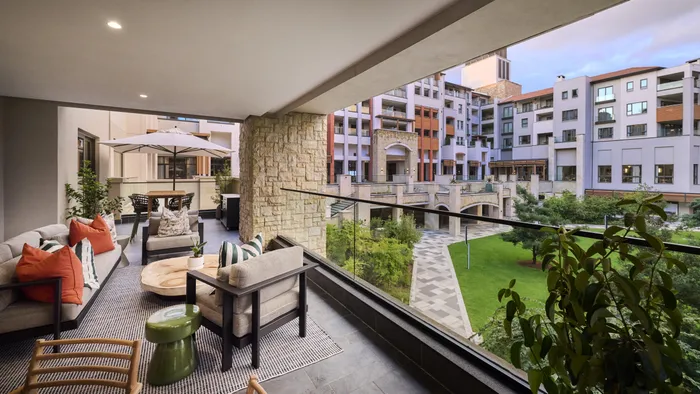
Estate living has evolved. It is not just about security, it’s about convenience, connectivity and a strong sense of belonging.”.
Image: Supplied
With South Africa’s traditional suburban living struggling to keep pace with the demands of modern life, integrated estate precincts are setting a new benchmark for how South Africans live, work and connect.
Estate living is rapidly redefining residential norms in South Africa, emerging as the preferred lifestyle choice for families seeking security, convenience and a strong sense of community.
This change is fundamentally about lifestyle integration, says Pamela Naidu, the sales and marketing director of Devmco Realty. “We are seeing a clear move towards estates that allow residents to live, work and enjoy life within minutes of each other,” says Naidu.
“Sibaya Coastal Precinct is a prime example of how estate living has evolved. It's not just about security, it’s about convenience, connectivity and a strong sense of belonging.”
The precinct is said to be a master-planned development, offering a diverse range of estate living options that cater to every life stage from young professionals entering the property market, to growing families, and retirees seeking secure, lifestyle-focused living.
This variety reflects a broader national shift towards inclusive, multi-generational communities.
The South Coast property market is experiencing a noteworthy transformation. A combination of market stabilisation, ongoing semi-migration, and a growing preference for gated community living is redefining investment strategies, said Paul Tedder, a developer and builder, when he shared his insights on the trends that are significantly shaping property investments in the region late last year.
Last year began with cautious optimism, as investments had seen an uptick, albeit selectively, Tedder said then.
He said the demand for lifestyle-focused properties continued to surge, particularly in coastal areas where remote work is still a viable option. “These outlying regions offer families an improved quality of life, characterised by reduced traffic, proximity to nature, and a more family-oriented atmosphere.”
Modern estates are no longer designed for a single demographic, says Devmco Realty.
The luxury properties specialist says instead, they acknowledge that families today are dynamic, often spanning multiple generations who value proximity, support and shared spaces while still maintaining independence.
It says estate precincts like Sibaya enable this by offering sectional title apartments, free-standing homes and luxury residences within one cohesive environment.
Convenience remains one of the most powerful drivers behind the rise of estate living. With on-site amenities, nearby commercial nodes, recreational facilities and easy access to major transport routes, residents are able to reduce travel time and reclaim valuable personal and family time.
This work-live-play model has become increasingly important as hybrid and remote working continue to shape daily routines
Equally significant is the growing demand for community-centric living. Estates are said to foster interaction through shared spaces, walking trails, leisure facilities and social initiatives that encourage connection, something increasingly sought after in an era of fast-paced, digitally driven lifestyles.
As South African families prioritise safety, flexibility and quality of life, the luxury property specialist says integrated estate precincts such as Sibaya are no longer aspirational; they represent the future of residential living.
It adds that estate living has evolved into a holistic lifestyle solution, designed to support modern families today and for generations to come.
At the turn of the century (early 2000s), housing estates accounted for only a small fraction of South Africa’s residential market. More than two decades later, they rank among the fastest-growing property types, offering investors security, convenience and shared amenities alongside reliable long-term value and steady capital growth.
Property intelligence firm Lightstone, which tracks data on how buyer preferences have shifted over time, reveals that in 2009, freehold properties accounted for 66% of sales.
By 2023, preference for freehold property had swung the other way, dropping to 56%, while sectional title climbed from 23% to 29% and estates grew from 11% to 15%.
Most of the country’s estates are said to still be in Johannesburg’s northern suburbs (Sandton, Midrand, Fourways) and Pretoria East.
However, the Western Cape leads with premium, high-value estates, particularly in the Cape Winelands (Stellenbosch, Paarl, Somerset West), Southern Suburbs, and along the Whale Coast and Garden Route.
Independent Media Property