Google website pays warm tribute to Steve Biko
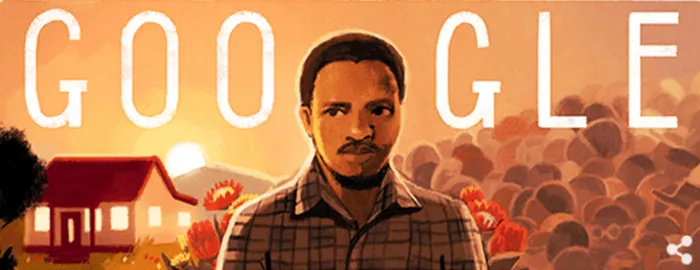
TRIBUTE: Google created a doodle of Black Consciousness leader Steve Biko, honouring him on the day that he would have turned 70. TRIBUTE: Google created a doodle of Black Consciousness leader Steve Biko, honouring him on the day that he would have turned 70.
GOOGLE caused a frenzy on social media when it created a doodle of Black Consciousness leader Steve Biko, honouring him on the day he would have turned 70.
Social media buzzed with excitement, many sharing gratitude, while others spoke of how his life has inspired them. For many it was surreal that Google had honoured the late hero in such a way.
On Twitter, @ShaunKing said: “Today, Steve Biko would’ve turned 70. My wife and I are so glad when we saw him honoured on Google. A true thought leader indeed.”
@MMann420 tweeted: “Steve Biko would have turned 70 today, such an unnecessary loss. Rest in peace my friend and hero.”
“Never thought I would live to see the day when Steve Biko is Google”, @MarqAfrica said on Twitter.
Television presenter and model Maps Maponyane tweeted: “Today’s Google doodle honouring the great Steve Biko on his 70th birthday is a beautiful touch.”
Biko was born on December 18, 1946 and his life came to an end on September 12, 1977. Under the Terrorism Act of 1987, active during apartheid, Biko was arrested and interrogated for over 20 hours in Port Elizabeth. He was beaten and tortured until he fell into a coma. Shortly after that, police drove a naked and manacled Biko to Pretoria, where he succumbed to brain injuries he had suffered during the interrogation.
His conscientised black people to embrace their uniqueness and to stand together.
“It becomes more necessary to see the truth as it is if you realise that the only vehicle for change are these people who have lost their personality. The first step therefore is to make the black man come to himself; to pump back life into his empty shell; to infuse him with pride and dignity, to remind him of his complicity,” he wrote in 1978.