Seamount hot spots found off Cape Town coast hold hope for oceans
|Published
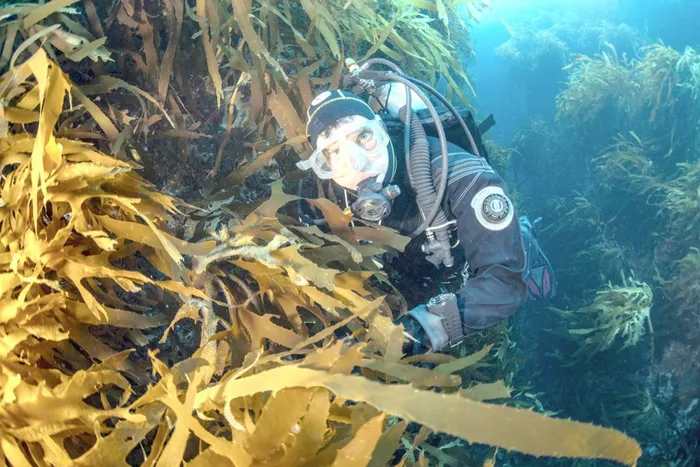
Picture: Greenpeace/Supplied Picture: Greenpeace/Supplied
Cape Town – A team of activists, divers and
scientists on board Greenpeace’s iconic
Arctic Sunrise have discovered a biodiversity haven on the Vema Seamount, 1 000km off the coast of Cape
Town in the South-east Atlantic Ocean.
The return of this research expedition concludes the South African leg of the Pole-to-Pole ship tour which will continue in the South-west Atlantic before ending in the Antarctic.
“We don’t need to look far to find the beauty we must protect: the bountiful marine life we have found is a sure sign that seamounts are unique wildlife hot spots, critical to the resilience and health of our oceans.
‘‘It’s this resilience that gives them a living chance in the face of the climate crisis, which they are directly impacted by,” said Greenpeace Africa climate and energy campaigner Bukelwa
Nzimande.
Divers documented a kaleidoscope of underwater flora and fauna, including yellow-tailed mackerel, striped bream, various calcareous algae, soft coral and crustacean species that thrive in these oceanic ecosystems, ideal for their similarity to coastal regions.
Mount Vema rises from the seabed at 4600m to just 26m below the surface of the ocean.
The upper slopes and plateaus are covered in soft corals, seaweed and kelp forests, teeming with life.
The population of Tristan crayfish is of particular interest, according to Greenpeace, having been fished to the brink of extinction twice in the past - divers observed dozens of the spiny lobsters on Mount Vema.
The population is, therefore, showing signs of recovery.
“Marine life in these unique areas is able to flourish and entire species recover, provided that the right measures are established and implemented,” Nzimande said.
“This is why the creation of ocean sanctuaries through an instrument like the Global Oceans Treaty is not only necessary, but critical.
‘‘Current protections are insufficient and poorly implemented; we need real action to protect life in our oceans and further build resilience on a planet in crisis,” Nzimande added.
Abandoned fishing gear, known widely as ghost gear, poses a major threat to living worlds like those on Mount Vema, and Greenpeace has been campaigning for consistent measures against ghost gear pollution in the oceans.
Lost or abandoned lobster cages, artefacts of destructive industrial overfishing, still threaten Vema’s wildlife, Greenpeace said.
The team of divers on the Arctic Sunrise were able to retrieve one cage at a depth of about 35m - no longer in use, yet still a deadly trap for fish, crabs and other marine animals.
An estimated 640 000 tons of abandoned or lost fishing equipment ghost gear enter the ocean every year, the equivalent in weight of more than 50 000 double-decker buses, according to Greenpeace.
In total, they make up around
10% of the plastic waste in our
oceans, entangling and killing
marine life.