

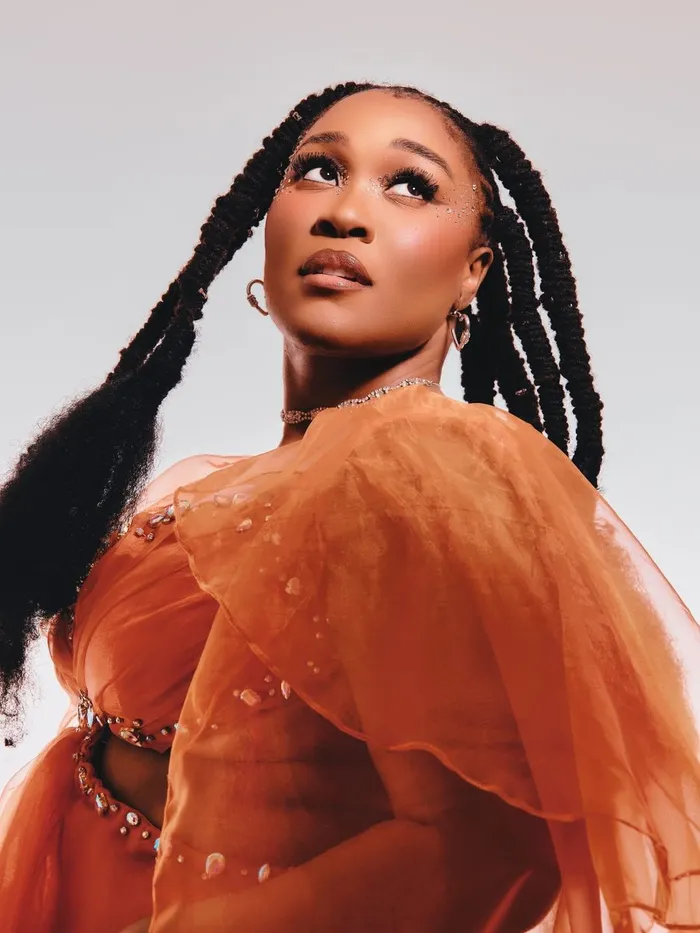
Lady Zamar has opened up about life and her latest body of work.
Image: Instagram
Lady Zamar (real name Yamikani Janet Banda) has always been deliberate.
From her early rise alongside Junior Taurus to the era-defining success of her solo albums "King Zamar" and "Monarch", the Johannesburg-based artist has built a career anchored in emotional precision and sonic elegance.
Now, with the release of Emperor Eclipse: Realm I - Awakening, she isn’t simply introducing new music - she’s presenting what she calls a “program.”
And that distinction matters.
We caught up withZamar to dive into her musical journey and discover what makes her tick.
You describe "Emperor Eclipse: Realm I – Awakening" as a “program” rather than just an album. What feels different about this body of work?
It’s a structured body of work designed as a mental and emotional program. An album is a collection of songs. A program is an experience with sequencing, intention, and outcome.
This program assumes the listener enters in one state and exits in another, and that’s what EE: R1-A is meant to do. It isn’t about entertainment alone; it’s about recalibration.
The track order, the tonal shifts, and the lyrical progression are deliberate.
It moves from fragmentation to alignment and the coming together of the mind and heart. I created it as a design.
“Awakening” is such a powerful word. What has this season awakened within you personally?
Discipline - a self-discipline in living and expressing. Not motivation and no emotion. It awakened a deeper understanding that visibility without structure is noise.
That talent without a system dissolves. That emotion without clarity becomes chaos, and it was chaos for me for a very long time.
This season awakened my responsibility, not just to create, but to build something sustainable and intentional.
This project feels like an arrival rather than a reinvention. Do you see it that way, too?
Yes. Reinvention suggests I have abandoned the past. Arrival suggests integration of past and present, moving into the future.
This era feels like the point where everything - the vulnerability, the experimentation, the missteps, the silence -converged into one cohesive language that I hope listeners understand.
This is your first Afrobeats-led project. What drew you to that sound at this moment?
Afrobeats isn’t just a genre right now; it’s a global language, and it captures a large part of the world.
I wanted to participate in that conversation without losing myself and my sound. The rhythm felt like the right vehicle for expansion and playful expression.
It felt expansive for me and very African.
How did you ensure your Southern African identity stayed present within that broader Afrobeats conversation?
By not imitating or trying to be West African but by integrating their culture with ours. Southern Africa has a distinct melodic sensibility.
There’s a certain emotional restraint, a certain chord choice, and a certain storytelling pacing that’s ours.
I leaned into those themes that we celebrate and how we share our stories.
Do you feel pressure stepping into the global Afrobeats space?
Pressure is a byproduct of comparison, and I didn’t compare myself to anyone or want to be like any other artist.
I positioned myself to be a South-based artist taking on the culture of Afrobeats.
The global space is crowded, yes. But culture rewards specificity and integrity. The more specific you are, the more universal you become.
So instead of asking myself, “How do I compete and stay in the same lane?” I asked, “How do I differentiate and become more me in this new genre that’s dominated by so many people I admire?”
What inspires you most right now outside of music?
I’m interested in systems and how humans behave, and how I can better become a global citizen and participate in the larger world.
When you’re building something as expansive as this project, how do you stay grounded?
I separate identity from output; I am without what I put out. The project can succeed or fail. That doesn’t define me, but I know it won’t fail because light overcomes darkness.
Groundedness comes from my routine: gym, quiet time, reading, prayer, and conversations with people who don’t care about who I am publicly.
You have to remember you’re human before you’re anything that you do, and I spend time doing things that help me remember that.
What does creativity look like in your everyday life?
It’s not glamorous at all; it’s hard work, daily inputs, and constant reminders to do things while balancing the everyday life I need to live.
It’s spreadsheets, voice notes, meetings, research, and rewriting lyrics. Making sure captions fit the messaging I’m putting out, and long days and nights in the studio.
Creativity is editing more than it is imagining, but imagining makes up most of my day-to-day, while a team I work with helps ensure everything fits into its relevant place.
People romanticise inspiration. I respect iteration.
What’s one misconception people have about you?
The biggest misconception is who I am. I think a lot of people think I’m all fluff and smiles and great pictures and stunning performances.
The biggest thing about me is my standards. I believe in certain things very deeply, and I’m fiercely protective of my mind and heart. I love everyone, and I am never stuck in the past.
Has public scrutiny changed you?
It refined my skin, not my core, and actually helped me to learn to be more empathetic. Scrutiny teaches you discernment, and you can openly see and hear people’s true opinions about things.
You stop reacting to noise and start responding only to those who are on the same wavelength as you.
I have been able to see myself as I am better because of how publicly, violently and incorrectly I have been scrutinised.
What have challenges taught you about yourself?
That knowledge is power... and that you lose yourself if you allow external opinions to shape you.
When people look back at this era of Lady Zamar, what do you hope they feel?
I want them to feel like this was the moment that cemented the foundation of who I am as an artist.
The moment the story started to unfold of who I am and how I express.
I want people to look back and see the very nature of my mind and to know that I am about the craft, the passion, and not the stories that are fabricated and retold to suit personal narratives.