

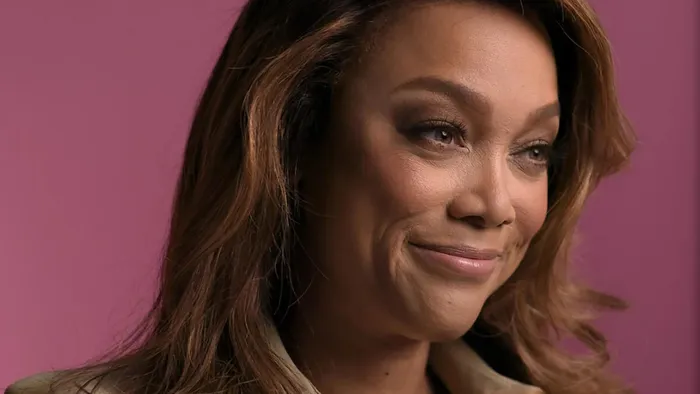
Fans and critics finally get to hear from Tyra Banks in 'Reality Check: Inside America’s Next Top Model'.
Image: X/@movietvtechgeek
I’ve been waiting on "Reality Check: Inside America’s Next Top Model" like a kid waiting for Christmas, honey, because this isn’t just another “let’s watch the nostalgia” moment.
This Netflix docuseries isn’t here to hold our hands and say, “Aww, remember the drama?” Nope. It’s here to serve the tea, the bitter, messy, uncomfortable tea about one of reality TV’s biggest hits.
For many, "America’s Next Top Model" (ANTM) was a guilty pleasure in the early 2000s, the drama, the challenges, the runway walks and yes, the occasional outrageous critique.
But as the three-episode series revisits the show through a modern lens, it becomes clear that the series’ legacy is far more complicated than nostalgia alone.
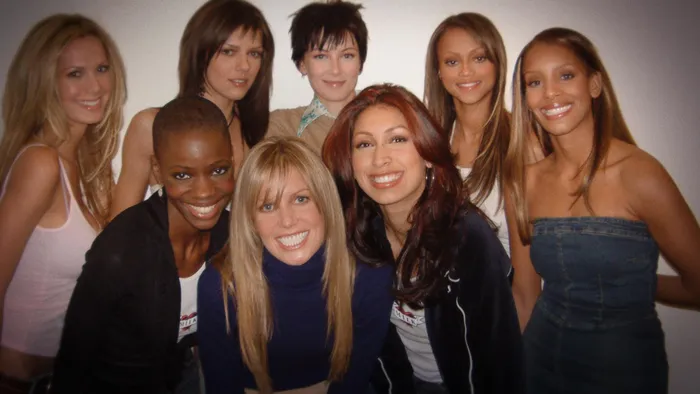
Throwback image of some of the models revisited in 'Reality Check: Inside America's Next Top Model'.
Image: Courtesy of Netflix © 2026
It provides insight into the highs and lows of the iconic reality show, particularly the aspects that now raise serious concerns: body shaming, racial commentary and the mental toll on contestants.
Clips show Tyra Banks and the judging panel openly criticising contestants’ bodies, hair, and features, with remarks that today feel less like professional guidance and more like harassment. Comments such as calling a black model’s skin “ashy” or advising Dani Evans to close a gap in her teeth are presented alongside anecdotes from former contestants describing the lasting emotional impact.
Banks’ own interviews add nuance. She acknowledges that some moments went too far, citing specific incidents like the infamous confrontation with Tiffany Richardson, where she admits she “lost it” and reflected on how personal experiences influenced her actions.
Banks also dives into her own story, spilling tea about the colourism she faced while climbing the modelling world and how she fought to make space for black models in an industry that often ignored them.
But hold up, the documentary doesn’t let her off the hook. She was a trailblazer, sure, but she also ran a tight ship that sometimes felt cruel.
There are moments where she critiques a contestant’s eyebrows for being “too thick,” tells another model her legs “don’t photograph well,” and pressures a black model to straighten her hair to look “more professional.”
Honey, that doesn’t exactly scream “I’m here to change the way the industry sees models,” especially black models. It kind of makes you wonder, is Banks really any different from the rest of the monsters lurking in the elite world? I doubt it, even while she's making her hot ice cream debut.
The docuseries also features key figures from the original production, including Miss J. Alexander, Jay Manuel, Nigel Barker, and model manager Nolé Marin, whose reflections reveal the pressure-cooker environment of reality TV.
Behind the glamour and staged competition, contestants faced an unrelenting intensity: body critiques, hair scrutiny, and emotional manipulation were standard components of the show, leaving many struggling to cope with anxiety, self-esteem issues, and long-term mental health challenges.
A recurring theme in the show is the defence of the era: “It was a different time.” It kind of feels as if it is used as a counterargument to justify certain events, or in some cases, dodge accountability.
Imagine Jeffrey Epstein and P. Diddy tell you, "Well, it was a different time." No! In "Reality Check", that same argument is leveraged by plenty of those involved in the show. “That’s the world that we lived in,” says Banks.
While context helps understand the cultural norms of early 2000s television, the documentary questions whether time alone can excuse behaviour that caused real harm.
The series raises an important discussion on accountability, especially in reality television’s enduring influence on young audiences and societal perceptions of beauty.
Despite the criticism, it acknowledges the excitement and opportunity ANTM offered. Contestants’ ambition, creativity, and resilience are evident throughout, showing that while the environment was flawed, many still found a platform to showcase their talent.
This duality, the exhilaration of opportunity versus the psychological strain of judgment, sits at the heart of the docuseries.
Ultimately, this is not merely a nostalgic revisit; it is a critical reflection on a landmark reality show. It offers viewers a chance to reassess the impact of public scrutiny, the consequences of body and racial commentary, and the enduring pressures placed on women in the modelling industry.
The docuseries offers a behind-the-scenes look at the reality behind the cameras, showing how entertainment can leave lasting effects. We hear devastating stories directly from the models, who question why certain moments were aired and why no one intervened while they were happening.
While ANTM offered glamour, drama, and career opportunities, it also perpetuated unrealistic standards and emotional strain. The docuseries asks a crucial question: Can we appreciate the show’s cultural significance while acknowledging the harm it caused?
And perhaps more importantly, it highlights the need to consider the mental health of participants in entertainment spaces, a conversation as relevant today as it was 20 years ago.
Rating: *** solid and enjoyable, though not groundbreaking.