

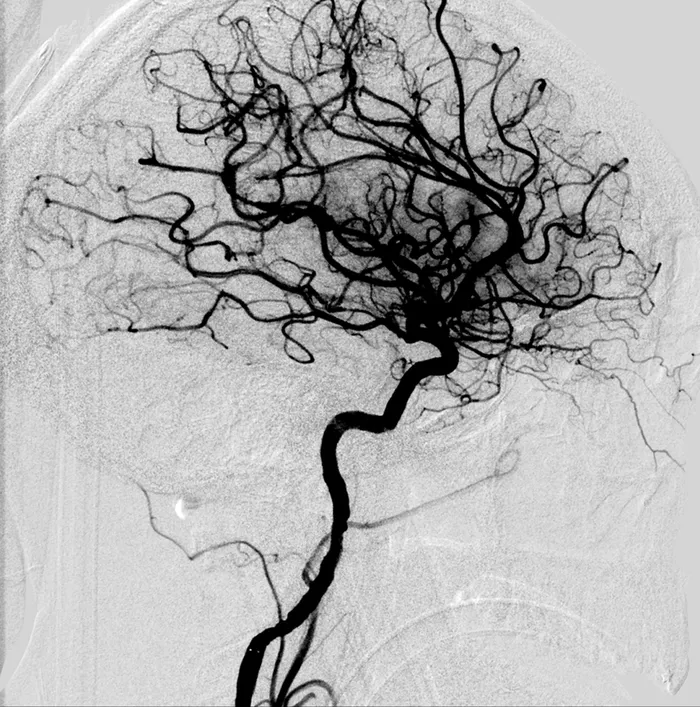
Learning about strokes is important because it can help save lives and reduce long-term damage.
Image: Supplied
Strokes are terrifying not just because of their suddenness but because of what they leave behind: unanswered questions, lingering fears and, for many, a life forever changed.
In South Africa, as in much of the world, stroke rates are climbing, particularly in sub-Saharan Africa, where it’s one of the leading causes of adult mortality.
But here’s the thing, strokes aren’t just random acts of fate waiting to upend lives. They’re often rooted in preventable risks, and knowing how to spot the signs and act quickly can make all the difference.
So, let’s break it down, one question at a time.
"Think of a stroke as a 'brain attack'," said Dr Hofmeyr Viljoen, a neuroradiologist at SCP Radiology.
It happens when blood flow to a part of the brain is cut off or reduced, depriving brain cells of the oxygen and nutrients they need to survive.
Within minutes, brain cells begin to die, and the damage can be permanent unless help arrives fast.
There are two main types of strokes:
Both types are life-threatening emergencies, but they’re treatable if caught in time, stated Dr Viljoen.
The key to surviving a stroke is speed. Every second counts, which is why the acronym B.E. F.A.S.T. is your best friend:
Even if symptoms fade quickly, don’t ignore them. This could be a Transient Ischemic Attack (TIA), also known as a “mini-stroke", which is often a warning sign of a major stroke.
It’s a myth that strokes only target older adults. While age is a significant risk factor, especially for those over 55, strokes can happen at any age.
In fact, younger people are increasingly affected, often due to underlying health conditions or lifestyle factors.
The road to recovery following a stroke is a deeply personal journey, with outcomes varying widely among individuals.
Image: Pexels/Marta Branco
Up to 80% of strokes are preventable. It starts with taking control of your health and knowing your numbers:
Recovery from a stroke is a deeply personal journey, and outcomes vary widely. Roughly 10% of stroke survivors recover almost completely. Others may face lasting challenges, such as paralysis, memory loss, speech difficulties, or emotional changes like depression.
The first 3–6 months after a stroke are critical for recovery, but progress can continue for years with the right rehabilitation and support.
Behind every successful stroke recovery is the power of imaging technology. Neuroimaging allows doctors to quickly determine the type of stroke and the best course of action.
Radiologists play a pivotal role in stroke care, ensuring patients get the right treatment, whether it’s a clot-busting drug or surgery.
Strokes don’t discriminate. They’re not just an “old person’s disease,” and they can strike when you least expect it.