

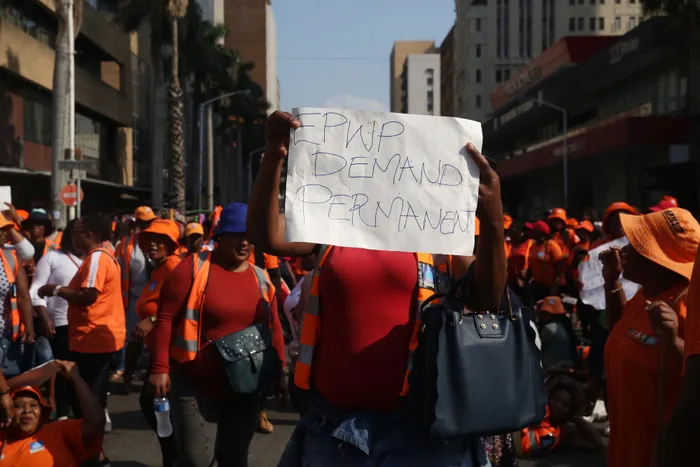
A head count of the city’s Expanded Public Works Programme (EPWP) beneficiaries has found that some had also been employed by the municipality. An audit has found that some beneficiaries of the Expanded Public Works Programme (EPWP) are benefiting from more than one EPWP project with some beneficiaries also in the employ of the city. Picture: Nqobile Mbonambi African News Agency(ANA)
DURBAN - THE eThekwini Municipality’s internal audit unit has not been able to account for all the workers that are employed under the city’s Expanded Public Works Programme (EPWP).
The EPWP is aimed at providing poverty and income relief through temporary work for the unemployed.
The city’s audit committee raised the concerns following a head-count of the staff benefiting from the programme.
In its report, which came before the municipal executive committee, it said: “The Audit Committee noted with concern that not all EPWP beneficiaries listed as part of the active beneficiaries could be accounted for and verified during the physical verification process conducted by Internal Audit.
“Furthermore, the verification process identified EPWP members that were benefiting from more than one EPWP project, with some beneficiaries also in the employ of the city,” it said.
The Mercury reported last year that eThekwini Municipality had been ordered to conduct a physical verification of employees under its expanded public works programme (EPWP) following concerns of ghost employees in the programme.
It was reported by the audit committee that approximately “30 ghost EPWP employees” were migrated to the city’s payroll from a standalone EPWP payroll.
The project has been plagued by crises and budget overruns. Last year, the municipality also revealed that it needed close to R200 million in extra funds to fund the programme as it was seeking to extend the period of the programme by 12 months.
Some opposition parties objected to the proposal at the time, saying the programme was plagued by problems, including the presence of ghost workers.
They said while this was a national government programme, the municipality was paying more for the programme than the national government.
THE MERCURY