

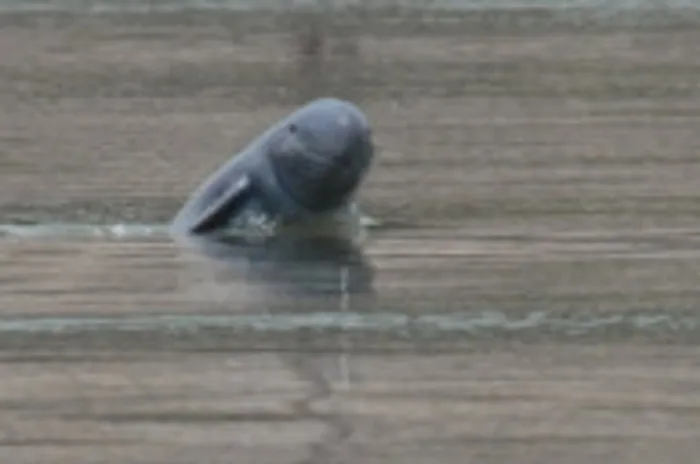
An Irrawaddy dolphin An Irrawaddy dolphin
PHNOM PENH: The population of critically endangered Irrawaddy dolphins in the Mekong River is set to fall by 3 per cent per year unless the Cambodian government takes urgent action, environmental group WWF warned today.
Surveys conducted between 2007-10 indicated a decline in numbers to just 85, WWF said in a statement released in Geneva.
"Evidence is strong that very few young animals survive to adulthood, as older dolphins die off and are not replaced," said Dr Li Lifeng, the director of the group's Freshwater Programme.
Although the dolphins are protected, WWF called on Phnom Penh to do more, including establishing conservation zones and instituting a pending ban on gill nets.
Studies by a previous researcher in 2004-5 showed a population of over 115 individuals. The recent analysis projected a fall of 3 per cent per year over the next three years, if action is not taken.
WWF studies in 2007 estimated there were 71 of the mammals left, but today's statement said the apparent rise since then was due to improved census methodology, not increasing numbers.
The Irrawaddy dolphins are ranked as critically endangered, the highest threat ranking, on the Red List compiled by the International Union for Conservation of Nature. Most of the population live on a 190-kilometre stretch of the Mekong in north-eastern Cambodia.
"This tiny population is at high risk by its small size alone," said Li. "With the added pressures of gill net entanglement and high calf mortality we are really worried for the future of the dolphins."
The dolphins are a key tourism drawcard for the remote north-east, and inhabit a stretch of water that runs north from the town of Kratie towards the Laos border.
The head of the government's Commission for Mekong River Dolphin Conservation and Ecotourism Development, Dr Touch Seang Tana, disagreed with WWF's figures.
"This number is really underestimated," he said. "I estimate that (the population) was between 155 and 175 at the end of 2010."
He added that a dolphin-protected area would likely be in place by the end of the year, by which time gill nets would be barred on most of the stretch of river inhabited by the dolphins.
WWF's Li said the group stood by its numbers, which were derived from photographs of dorsal fins and had been peer-reviewed.
"The data has been collected over four years, highly advanced modern analytical techniques were used, and the work has been reviewed by a number of prominent dolphin scientists and statisticians," Li said.
The species is also found in coastal areas in the region, and in two other rivers: the Irrawaddy in Myanmar and the Mahakam in Indonesian Borneo. - Sapa-dpa