

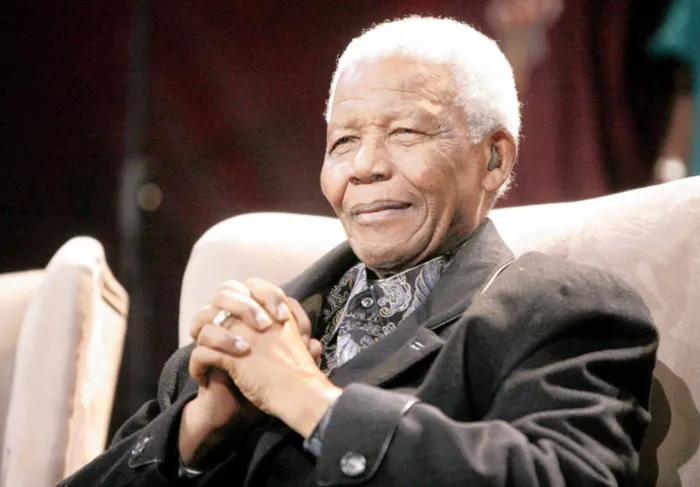
Nelson Mandela is in a 'serious but stable' condition in a Pretoria hospital. The writer says Mandela is our father figure, the glue that keeps us together, but he also means a lot of different things to different people. Nelson Mandela is in a 'serious but stable' condition in a Pretoria hospital. The writer says Mandela is our father figure, the glue that keeps us together, but he also means a lot of different things to different people.
It is easy to write about Nelson Mandela. To write the obvious stuff, telling readers that Mandela is a global icon, he is reconciliation personified and a father figure of the Rainbow nation.
Yeah, who does not know?
The thing about Mandela is that he’s had an incredibly tough life – and now a tough ending, it appears.
So people, understandably though, become emotional about him. Reason takes flight.
He is our father figure, the glue that keeps us united. Without him, the savages we are could be unleashed, right?
But Mandela, in truth, means a lot of different things to different people. To some racists, he remains that bloody terrorist. But who cares about what they think?
To liberals, he is the guy who did not make them feel guilty for having benefited from apartheid.
He is Mr Reconciliation. The past must be in the past. He is not, for example, Thabo Mbeki – he of South Africa of two economies, where whites live in the first world and blacks are part of the informal economy, the third world.
Mandela is also not Jacob Zuma. The latter still insists on blaming everything wrong on the bad apartheid past, when liberals – and clever blacks – want to focus on Zuma’s many gaffes.
With Mandela, the narrative is easy. It is easy to heap praise on him. To deify him. To pretend that it was he, and not anybody else, who brought down apartheid. To think he gifted us democracy, even when he protests about this. To believe that when Mandela goes, South Africa will go to the dogs – and the dogs are not looking forward to this!
We can engage all we want in self pity and how our fate is inextricably linked to how long he lives. Or, well, we can be less emotional about him and this may do us a lot of good.
The truth though is that Mandela’s life has been far from perfect. He has said that repeatedly.
He has told us how other freedom fighters contributed more than he. But the Mandela story, or the parts we choose to tell, is a convenient, escapist sort of story.
It helps us momentarily forget about the eyesore that is Zandspruit or Alexandra or the jungle that Diepsloot is.
These might force us to talk about economic freedom, something we would rather not do.
We are comfortable with the narrative of Mandela the great, we choose not to look at things that appear suspect, things that others might be doing in his name.
When cadres of the movement say he could hardly remember their names when they visited, the mind races and, almost immediately, all manner of uncomfortable things come to mind.
You wonder what else he still remembers? Does he remember Winnie Mandela, for example?
Is it not uncomfortable to even contemplate the meaning of that question? What about Bally Chuene, his lawyer? Does he remember what instructions he last gave him? George Bizos? Tokyo Sexwale? You get the picture?
And if he does not remember, when exactly did this start? Could it be that this memory loss was already effective when his former lawyer Ismail Ayob protested that Mandela did give him instructions to disburse R700 000 among his children? They confirm that Ayob gave them the money. Ayob insists Mandela is forgetful owing to his age. But still, the forgetful Mandela insisted that he wanted his money back from Ayob and his children? Quite a father that, if you ask me.
But how could we, as mere mortals, know whether or not this man we are trying to deify, to project as father figure of the globe, is in fact the one who quibbles with his children over R700 000? Is he the one who gave the instruction to go after Ayob and the children? How could we know? It is a minefield. We can’t ask him now.
This is why most of those who love Mandela prefer the easier stories to tell about him. Poor Ayob was hauled before court and made to pay money he had not used. The verbal instruction he claimed to have received from Mandela was not good enough.
Now Mandela’s children have turned against the esteemed individuals Mandela “trusts” – Bizos, Sexwale and Chuene – and are fighting them off in another case to be determined by the courts.
Whatever the courts decide, I wrestle with the thought about Mandela’s relationship with his children. I wonder if the instructions his lawyers say came from him did in fact come from him before he started having memory problems.
I ask myself these questions and wonder when society would be ready – and not be as emotive as it perhaps still is now – to discuss these.
Those sitting close to Mandela might say they know – but the children, also relatively close, might cry self-interest, as they did in court papers. Where does that leave many of us, mere beings?
Thinking critically about the life of Mandela is a troubling thing. He is a hero of heroes. It is saddening to see him go through endless hospitalisation. It was quite a relief to hear President Zuma say he is responding well to medication.
But I remain tortured. How does the magnanimous figure like Mandela, worth millions, who reconciled with hardened racists who tortured and incarcerated him for so long, quibble with his lawyer, take him to court, not for corruptly spending his money, but spending it on his children? The children feel entitled. He has been an absent father for too long.
But, every time I think about this, and about how hard it must be to write about this, I wonder if indeed it is Mandela taking these decisions or if others, given his failing memory, have taken it upon themselves to pass their own wishes as Mandela’s?
Sure, the battles over Mandela’s millions were going to be had whether or not Mandela was of sound mind when he died. It is worse now that the old man, our beloved leader, can hardly recognise faces.