Poverty survey plan
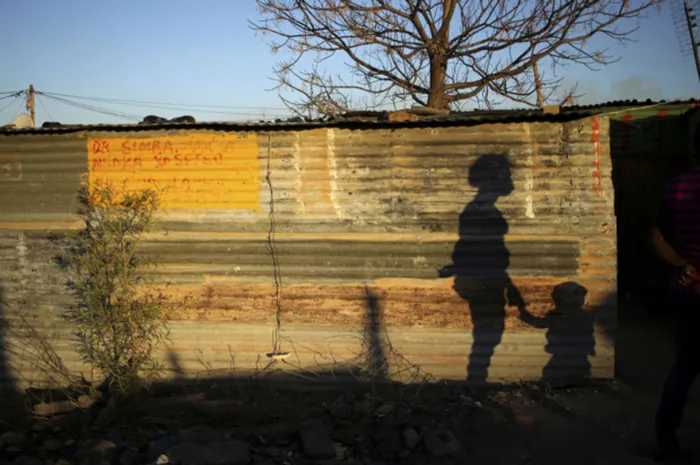
The shadows of a mother and child are cast on a shack in Marikana's Nkaneng township in Rustenburg, 100km north-west of Johannesburg. StatsSA will conduct a year-long poverty survey, starting in October. The shadows of a mother and child are cast on a shack in Marikana's Nkaneng township in Rustenburg, 100km north-west of Johannesburg. StatsSA will conduct a year-long poverty survey, starting in October.
Statistics SA was conducting a survey to measure the level of poverty and inequality in the country, it said on Wednesday.
The collection of data would begin on October 12 and end on October 30 next year, with approximately 32 000 dwellings to be visited, StatsSA poverty and inequality statistics executive manager Nozipho Shabalala told reporters in Pretoria.
Detailed income and expenditure data, information on education, housing, social welfare, health, poverty, and living circumstances would be gathered.
The first survey was conducted in 25 075 households in 2008/09. It is done every five years.
The next survey was expected to have been conducted last year, but owing to lack of funding, the date was postponed to this year, Shabalala said.
The aim of the survey is to profile poverty and inequality to help achieve the country’s goals in reducing the Gini co-efficient, currently at 0.69.
The co-efficient is a number between zero (perfect equality) and one (perfect inequality).
The National Development Plan aimed to reduce the co-efficient to 0.60 by 2030.
The survey would allow StatsSA to reassess the consumer price index (CPI) basket of goods and services, Shabalala said. The CPI had to be updated every three to five years so that it was linked to current consumption and spending patterns of households.
It was last updated using the Income and Expenditure Survey for 2010/11.
Shabalala urged South Africans to help the StatsSA employees collecting the data. Members of the public could ask them for identification.
Data would be collected from households over four weeks, using a questionnaire, a two-week-long diary of each member’s personal expenditure, and a pouch for receipts to be kept in.
According to the last survey, 39.5 percent of South Africans lived in poor households and the food poverty line was R305.
This is the amount below which one cannot afford or have reasonable access to a healthy diet.
Blacks were still the poorest population group, it found.
StatsSA said it was using about R110 million from its reserves for the project.
Plans to use findings from the survey to assess or contribute to talks about a reviewed minimum wage were still in progress.
Sapa