Treasures like no other
|Published
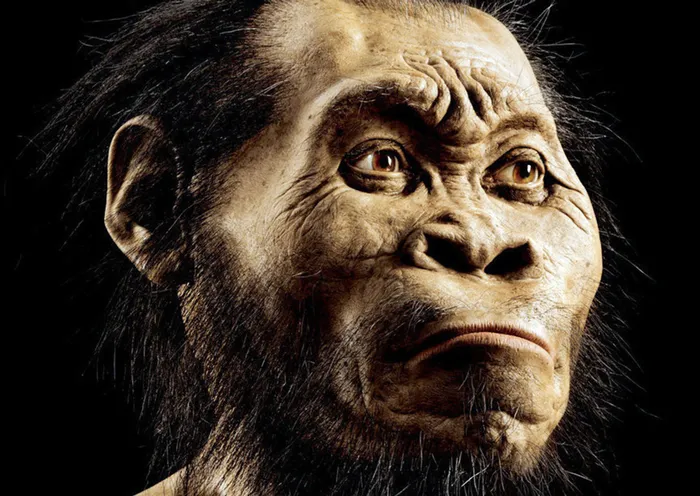
A reconstruction of Homo naledi's head by paleoartist John Gurche, who spent some 700 hours recreating the head from bone scans. The find was announced by the University of the Witwatersrand, the National Geographic Society and the South African National Research Foundation and published in the journal eLife. Photo by Mark Thiessen/National Geographic PERMITTED USE: These images may be downloaded or are otherwise provided at no charge for one-time use for media/news coverage or promotion of the National Geographic Society's H. naledi announcement and exclusively in conjunction thereof. Copying, distribution, archiving, sublicensing sale, or resale of the images are prohibited. DEFAULT: Failure to comply with the prohibitions and requirements set forth above will obligate the individual or entity receiving these images to pay a fee determined by the National Geographic Society. Mandatory usage requirements for National Geographic magazine photos 1-10: Please note: A maximum of 5 images total may be used o A reconstruction of Homo naledi's head by paleoartist John Gurche, who spent some 700 hours recreating the head from bone scans. The find was announced by the University of the Witwatersrand, the National Geographic Society and the South African National Research Foundation and published in the journal eLife. Photo by Mark Thiessen/National Geographic PERMITTED USE: These images may be downloaded or are otherwise provided at no charge for one-time use for media/news coverage or promotion of the National Geographic Society's H. naledi announcement and exclusively in conjunction thereof. Copying, distribution, archiving, sublicensing sale, or resale of the images are prohibited. DEFAULT: Failure to comply with the prohibitions and requirements set forth above will obligate the individual or entity receiving these images to pay a fee determined by the National Geographic Society. Mandatory usage requirements for National Geographic magazine photos 1-10: Please note: A maximum of 5 images total may be used o
They have been digging there for several decades, millimetre by millimetre, brushing away sand by the grain, finding palaeo-anthropological treasure piece by piece, and exciting the world with their progress.
Welcome to the Cradle of Humankind World Heritage Site, 50km from Johannesburg, where daredevil scientists have just retrieved 1 500 ancient bones of at least 15 near-human individuals from the darkest of caves accessible only through a 17.5cm slot.
The beauty of the 53 000ha cradle area, also home of the famous historical trove that is Sterkfontein, is that there is a lot more to come. It has delivered prized finds, millions of years old, that have changed the world’s understanding of man’s development, and there are no doubt more.
The narrative of how the Dinaledi chamber in the Rising Star cave system was discovered just two years ago, shows that our ancient riches run deep.
As Lee Berger, Wits University Research Professor in Human Evolution and the Public Understanding of Science, put it, “we have enough fossils and evidence to take us on a very long journey”.
He is sitting on a scientific mother lode, with the announcements of finds – such as yesterday’s – probably lagging far behind actual events as the data is painstakingly retrieved, scrutinised and verified.
It is also apparent that excavations such as this, like that at the Sibudu Shelter near Ballito, draw fine scientific talent from around the world who want to be part of these adventures in knowledge.
The cover of the October issue of National Geographic carries the headline “Almost human, a new ancestor shakes up our family tree”. From Naledi, we learn that this cave was probably a burial place for these pre-humans.
Which changes our understanding of how man developed, and what defines us as humans. So we learn here, in South Africa.