Snake season: How to deal with slithery 'visitors'
Durban - With the warmer season approaching, local snake whisperer, Nick Evans, has been busier with rescues from all over the city. While Evans is considerably thrilled about the season, many residents aren’t.
“There are those who dread this time of the year because of snakes. There is no need to panic or move house,” Evans said.
He has offered advice on how to deal with the ‘unwelcome’ visitors.
“Snakes are not out to harm people, that’s not their purpose. They’re more scared of people than we are of them, and so they should be. The same applies to the infamous yet misunderstood Black Mamba. All snakes would rather avoid conflict with people than defend themselves. Biting is a last means of defence, when they feel they have no other option. Hence why you should leave snakes alone,” he said.
Evans said people should keep their gardens tidy.
“Seeing two snakes together at this time of year is not impossible, it's not something you can expect
to see. Baby snakes also don’t have a mother or father protecting them, or brothers or sisters. Also, we must remember that snakes are animals,” he said.
Durban’s most common snakes
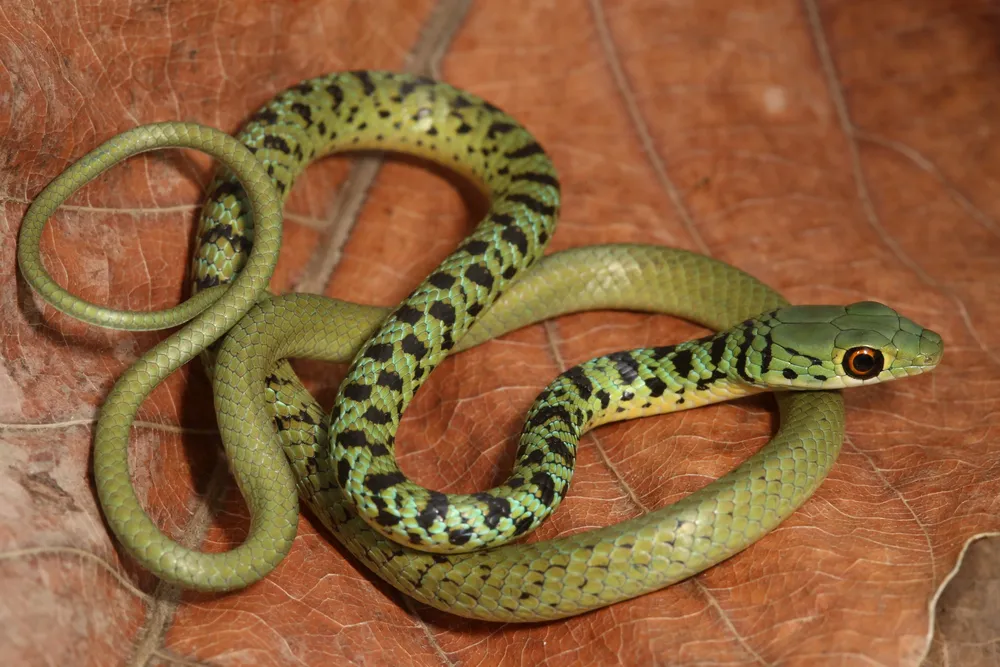
By far the most common snake in the Greater Durban Area, is the Spotted Bush Snake, also
commonly known as ‘The Garden Snake’. This thin green snake, with black spots, a pale yellow belly, and who can grow up to a metre in length (thereabouts) is frequently seen in and around homes, more so than any other snake. It is nothing at all to worry about, as it is non-venomous. It can’t harm adults, children or pets. If you see this snake outside, the best thing is to just let it go away by itself, and to not stress about it. They’re just looking for their favourite food - geckos. They are often mistaken for Green Mambas. It’s important to note that Green Mambas are generally restricted to coastal forest areas. They’re a plain, emerald green colour (underneath and below).
They’re a fairly rare sight. Boomslang also aren’t that commonly seen, and they too are much larger than Bush Snakes, with more rounded heads. They’re also not green until they reach about a metre in length, and only the males are green (generally).
Three other common harmless species
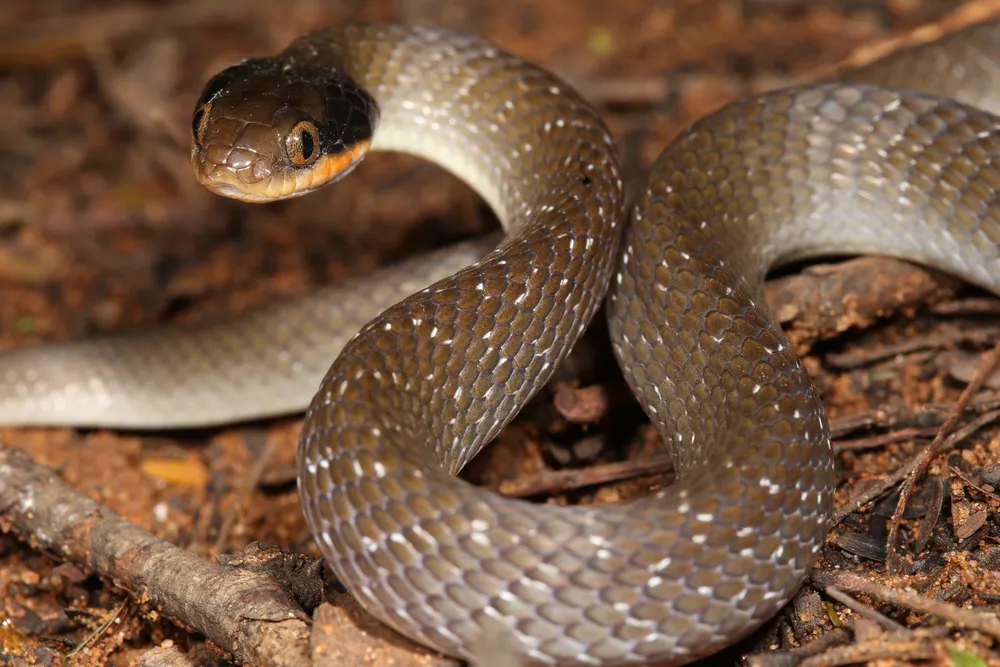
The Herald Snake: A grey snake whose head is darker in colour than the rest of the body with white speckles which can usually be seen on the body. They have pale-coloured top ‘lips’, which can sometimes be orange/red in colour, hence the common name, Red-lipped Herald. They feed on frogs.
The Brown House Snake: As the name suggests, they’re commonly found around homes. During the day, they’re usually found under things like pieces of wood etc. They’re active at night. Their brown body has creamy-coloured stripes running along the body, and they have a pearl-white belly. They are excellent to have in the garden for rodent control.
The Thread/Worm Snake: This snake can cause confusion, as it looks exactly like a worm! A tiny snake, usually around 10cm in length +-. Shiny black body which it wriggles around when threatened. Absolutely nothing to worry about.
Common venomous snakes
The Rhombic Night Adder: This is the most common venomous snake in and around Durban. It is often confused for the Puff Adder, although Puff Adders we tend to only see inland (Upper Highway area). Night Adders are far more active in the day, despite their name. They feed only on toads. A brown snake with dark diamond markings on the body, and a distinctive ‘V’ marking on the back of the head. Their bite is not lethal, but anyone bitten should get to a hospital ASAP regardless.
Mozambique Spitting Cobra: A feared snake, commonly known by its isiZulu name, mFezi. They’re generally plain brown on top, but a salmon-pink colour underneath. Under the neck region, they have orange/yellow and black bands, which they may show off when flaring a hood, which is used to intimate. They have the remarkable ability to spray their venom of distances of up to two to three metres. They can bite too, and their venom can certainly be described as life-threatening.
Black Mambas: Not every black or grey snake you see is a Black Mamba! Black Mambas are most easily identified by their enormous size. Snake-catchers are seldom called-out for specimens under two metres in length. They’re a grey/brown colour, with a matt appearance, and a white belly, and can be as thick as an adults arm. Herald Snakes are often incorrectly identified as Mambas, but juvenile mambas are rare. Also, young Mambas are feisty, and are quick to raise up and open their mouth, exposing the pitch-black colouration where they get their name from. This is a warning that should be heeded. I don’t need to tell you how serious the bite is. Most people, though, survive the bite if they can get to a hospital promptly. Generally found in homes in or bordering valley areas.
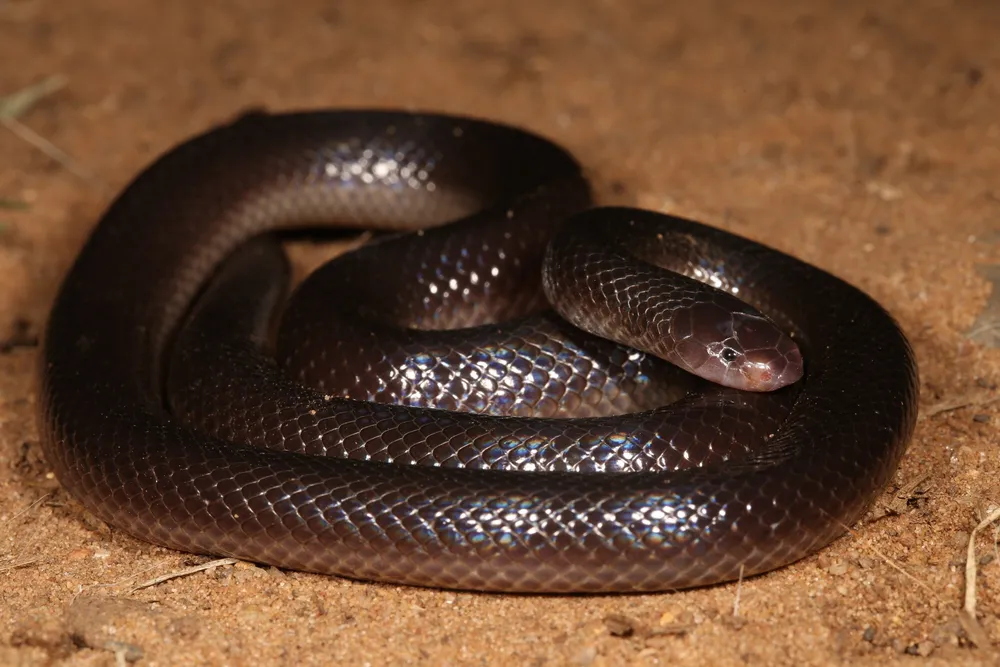
Stiletto Snakes: A small, inoffensive-looking, dark-coloured snake, which is often picked up due to its appearance. However, as those who pick it up will learn, it has a nasty bite. It bites out of fear. Its cytotoxic venom causes swelling, extreme pain and necrosis. They’re found throughout Durban, but seem to be most common on the Bluff.
“If you see a snake in your garden or home, please leave it alone, and immediately call a snake-catcher for advice, to identify it, or to remove it. But please do consider leaving harmless snakes in the garden, as they do serve an environmentally important purpose, and we actually need them if we want a healthy environment.
For more information on the snakes of Durban, visit www.kznamphibianreptileconservation.com