

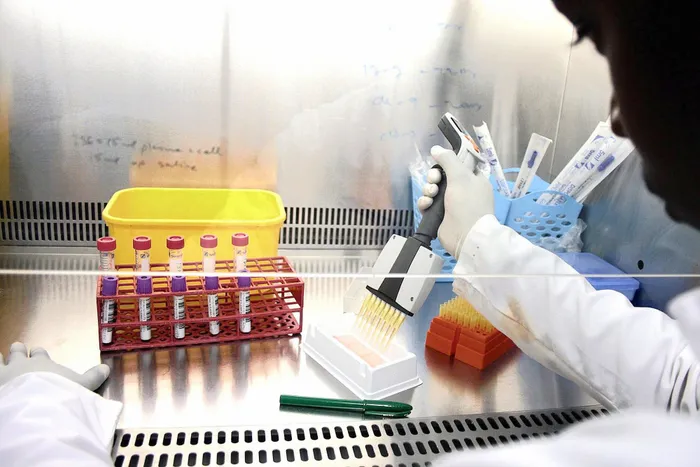
The decision to stop Uhambo early came after an independent Data and Safety Monitoring Board found during an interim review that the regimen was not effective in preventing HIV. File photo: African News Agency (ANA) The decision to stop Uhambo early came after an independent Data and Safety Monitoring Board found during an interim review that the regimen was not effective in preventing HIV. File photo: African News Agency (ANA)
Durban - WHILE disheartened by the discontinuation of the HVTN 702 Study, organisations fighting against the HIV/Aids pandemic felt the trial had some lessons to be learnt.
The HVTN 702 Study, popularly known as Uhambo (journey), was an HIV vaccine trial which began in 2016 in South Africa. It enrolled 5400 volunteers in 14 sites across the country. Some of the volunteers were sexually active men and women aged 18 to 35 and they were assigned to either a placebo arm or the vaccine arm.
Uhambo was the world’s first HIV efficacy study conducted in South Africa since 2009. The decision to stop Uhambo early came after an independent Data and Safety Monitoring Board found during an interim review that the regimen was not effective in preventing HIV.
Treatment Action Campaign national deputy chairperson Patrick Mdletshe said discontinuing the trial was sad news for SA because of the promises the trial bore.
“Our hopes were high that one day we’re going to have a vaccine that will prevent new infection. We remain hopeful because this is one part that was discontinued; the other two will continue,” Mdletshe said.
He commended those who participated in the trial for their bravery and dedication in the struggle to fight HIV in the country.
Mdletshe said since the study was conducted, they continued to encourage people to have protected sex and remain faithful to their partners.
They remained hopeful that people would take advantage when government rolls out post exposure prophylaxis treatment. He said that by March all South African facilities should have pre-exposure prophylaxis drugs.
Professor Salim Karim, director of the Centre for the Aids Programme of Research in South Africa, said the results of the trial, which was similar to a promising Thai vaccine, were disappointing. However, he said it was not unexpected because HIV was a complex virus and making a vaccine against it was difficult.
“Importantly, the HVTN 702 study findings will guide future vaccine development through understanding why this vaccine did not prevent HIV.
“So even though it did not produce the result we would prefer, it’s an important result that will help us move forward in making future HIV vaccines,” Karim said. Persistence in the midst of challenges was essential for an HIV vaccine, he said.
Professor Lynn Morris of the National Institute for Communicable Diseases (NICD) said Uhambo not being able to prevent infection came as a disappointment to the field.
"Indeed, infection rates among young women in South Africa remain alarmingly high, highlighting the need to redouble our efforts to develop an effective HIV vaccine. Over the coming months there will be considerable effort to understand these differences and analyse the immune responses to the vaccine. In this way the trial has provided important information that will be crucial as we develop the next generation of HIV vaccines," Morris said.
She said the staff at the Centre for HIV and STI's at the NICD/ National Health Laboratory Service (NHLS) were playing a key role in the HIV Vaccine Trials Network (HVTN), examining antibody responses to vaccination as well as performing HIV diagnostic testing. There are 3 other trials that are ongoing in South Africa, including the AMP (Antibody-Mediated Prevention) trial that aims to show that infusion of a broadly neutralizing anti-HIV antibody can protect young women. The results of this trial are expected in October this year.