

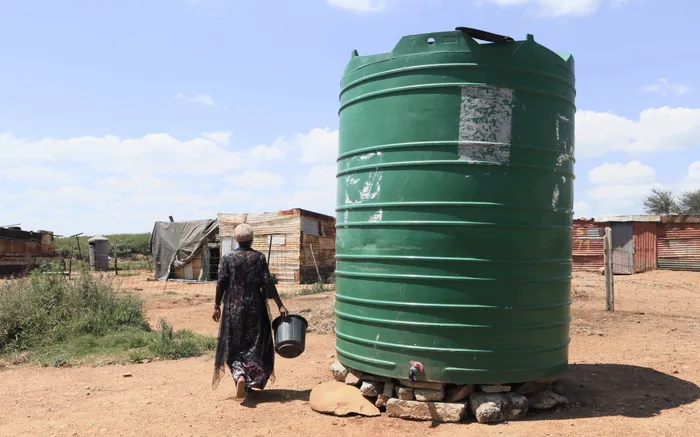
466 water tanks have been delivered to water scarce communities across Tshwane. Picture African News Agency (ANA) 466 water tanks have been delivered to water scarce communities across Tshwane. Picture African News Agency (ANA)
South Africans will sadly not celebrate the 26th anniversary of Freedom Day today. Instead of engaging in song and dance, as is normally the case, they will be restricted to their homes, while mainly the poor, are forced to defy the lockdown regulations in search of their next meal.
The government’s extreme level 5 lockdown measures to “flatten the curve” of the deadly Covid-19, that has gripped the world and has, in the last five months since December 2019, claimed the lives of almost 200 000 people worldwide, have mothballed all major gatherings and celebrations.
On April 27, 1994, South Africa’s black majority stood in long queues to cast their votes for the very first time. They had hoped for a better life in an inclusive South Africa that did not discriminate against them based on their race.
The ANC, which emerged victorious as the first black-led government of a free South Africa, promised the majority free quality education, jobs, a competent public healthcare system, security and free houses. The new democratic government delivered a constitution, admired the world over, which guaranteed all citizens the right to health under section 27, which states that everyone has a right to healthcare services.
In South Africa, the Covid-19 global pandemic has claimed 90 lives of our citizens. The government has responded aggressively to mitigate the spread of this deadly virus. President Ramaphosa declared a state of disaster in mid-March, which was soon followed by a level 5 lockdown to save lives through the enforcement of social distancing rules and keep citizens at home, to check the spread of Covid-19.
Apart from saving lives, the current level 5 lockdown regulation regime in terms of the Disaster Management Act 2002, has “suspended” most of our civil liberties such as freedom of assembly including cultural gatherings, movement, and speech such as stringent restrictions on the proliferation of fake news on social media, as well as freedom of religion.
Places of worship have been closed. Millions of worshipers cannot congregate to pray and worship together. The right to freedom of movement has also been curtailed, with only essential services personnel allowed to move about freely on condition that they can produce special permits that allow them to render services to the public during the lockdown.
Most South Africans have supported the measures implemented by the government.
However, social distancing has proven to be near-impossible to enforce in the densely populated informal settlements that sprout around the country’s cities regularly.
It is ironic that it has taken 26 years and the deadly Covid-19 for the ANC-led government to realise the dangerous living conditions endured by South African citizens forced to live in subhuman conditions in informal settlements due to rapid urbanisation, which drives people from rural areas to the cities in search of better employment opportunities.
One is tempted to surmise that despite Nelson Mandela’s vision of a ‘Rainbow Nation’ the lives of the majority of poor South Africans have not improved and that Freedom Day has little meaning for them.
During the lockdown, the heavy-handed tactics employed by security forces who march through congested informal settlements, have failed to coerce residents of informal settlements to stay inside their shacks. In fact, the modus operandi unleashed on the nation’s poor by the soldiers and police tasked with enforcing regulations is reminiscent of Apartheid South Africa, as media reports of the death of Collins Khosa have shown.
The reality is that the lockdown and its stringent regulations meant to curb the spread of Covid-19, have unveiled the grinding poverty and hunger suffered by many South Africans who live from hand to mouth. These are individuals who leave their homes daily with the hope of getting piece jobs that will enable them to put food in their bellies.
Therefore, the R500 billion economic stimulus package announced by President Cyril Ramaphosa earlier this week will go a long way to assist impoverished families during this difficult period.
But, these are temporary measures in a decimated economy that has been shedding jobs long before the outbreak of the coronavirus in Wuhan, China, in November 2019.
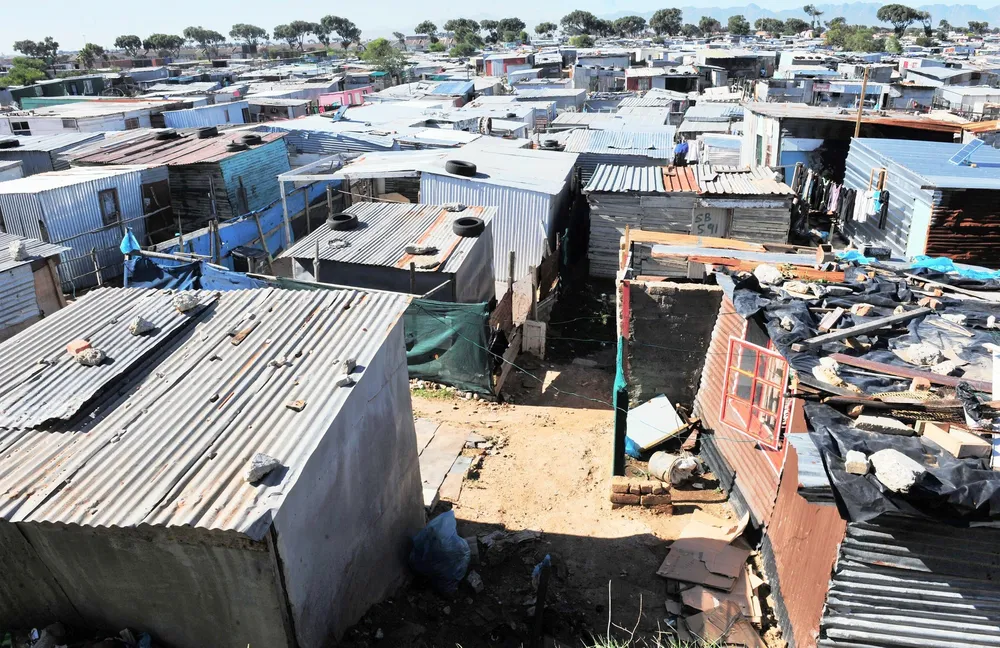
Thus, in all honesty, how do we expect these people to celebrate 26 years of the country’s freedom while they live in squalor with no access to basic services such as water? Daily life in rural communities is no different to that of informal settlements. Residents have to walk long distances to fetch water from streams and if they are lucky, from trucks provided by local municipalities.
The commitments made by the Minister of Water and Sanitation Lindiwe Sisulu to supply water to rural communities throughout the country, even with extra budget allocations and the fast spread of the virus in provinces such as the Eastern Cape – that was recently hit by a drought – do not seem to have prodded municipal officials into prompt action. Instead, some municipal officials have monopolised government water tanks for themselves and their cronies. They are also hogging government food parcels meant to alleviate poverty among the country’s downtrodden.
Oliver Tambo, Chris Hani and many others distinguished freedom fighters must be turning in their graves when they see the disgraceful actions by mostly ANC councillors towards the nation’s impoverished people, the very same who stand in long queues to cast their votes for the governing party.
To voice their displeasure and suffering, the poor can only take to the streets as was evident during the many violent protests for water that took place before the lockdown.
Perhaps the Covid-19 was a saving grace for Ramaphosa and the ANC. It has allowed them to hide behind the pandemic for failures of the ruling party to advance its people and grow the country’s economy.
President Ramaphosa can certainly thank the coronavirus pandemic for saving him from attempting his contrived dance moves in the name of celebrating Freedom Day and making more empty promises to the millions of South Africans who go to bed hungry while comrades find opportunities to loot government coffers.