This is what it takes to become a paramedic in South Africa
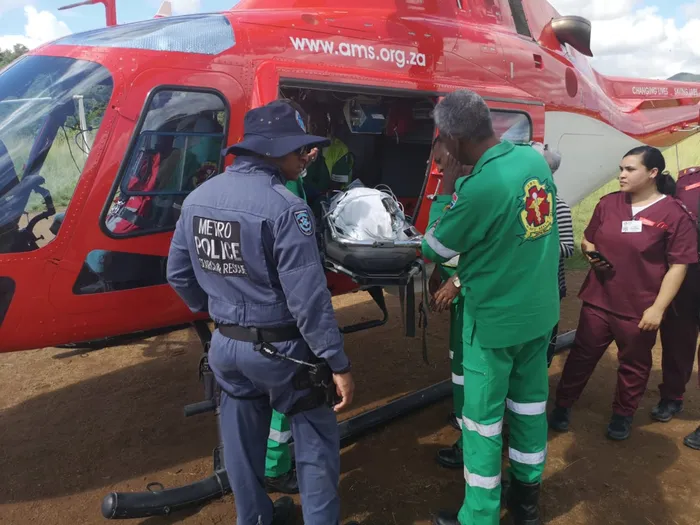
The demands placed on paramedics can be stressful. For those who want to pursue a career in the field, there are currently four different levels of care which paramedics in South African can perform. File Picture: KZN EMS
Whether it be a car crash, a shooting or even a birth, paramedics are often the first form of medical help a person will receive in an emergency.
Their expertise is sometimes the only thing that stands between life and death and their presence is a vital cog in the South African medical system.
But what does it take to be a paramedic in South Africa?
This is probably a question tens of thousands of matric students may ponder as they head towards their final examinations and career choices that need to be made.
According to the KwaZulu-Natal Emergency Medical Service (EMS), many young South Africans wish to become paramedics, however many do not know what the requirements, different training options are and how to access them.
And many people also don't know that there are several different qualifications available and several different levels of care which paramedics operate at.
KZN EMS point out that one of the main functions of paramedics is to provide Emergency Medical Care to patients in the pre-hospital setting - whether it is at a patient’s home, workplace or at the scene of an emergency.
“Paramedics can provide more than just simple ’first aid’,” the KZN EMS says on its website.
“Procedures and interventions that can be provided by paramedics differ, according to their qualification. Paramedics also continue the medical management of patients in the ambulance while the patient is being transferred between hospitals.
Paramedics can also be trained to perform medical rescue, which includes using the "jaws of life" to rescue people from crushed cars and using complex rope rescue systems to rescue people in the mountains”.
For many, being a paramedic is not a job but a calling, which, according to to KZN EMS requires one to be
- Confident
- Outgoing
- Physically fit and healthy
- Caring
The demands placed on paramedics can be demanding and stressful, it is however a rewarding profession which is developing.
These are currently the different levels of care which paramedics in South African can perform:
Basic Life Support (short course)
These practitioners provide Basic Medical Care interventions to patients in Emergencies. This will include CPR, stopping of bleeding, helping women in labour and other non-invasive procedures
Intermediate Life Support (short course)
These practitioners provide Intermediate Medical Intervention including IV therapy (drips) Bronchodilators, Defibrillation (shock) & chest decompression etc.
Emergency care technician
Two years of formal training
Advanced Life Support Paramedic
This category of staff are pre-hospital Advanced Life Support providers. This includes; Advanced Airway Management, IV Drug Therapy up schedule 7 drugs, Advanced midwifery , Advanced Resuscitation, Aviation Medicine, Marine Medicine.
South African advanced life support Paramedics are highly in demand throughout the world due to the nature of training and skills.
However there have been massive changes in the way paramedics are trained.
There is no longer registration of Basic ambulance assistants and Ambulance emergency Assistants/ ILS, with the HPCSA..
They have been replaced with courses that are all NQF recognised and that can smoothly progress from one course to the other, these are:
- ECA – Emergency Care Assistant. This will be a one year course.
- Diploma Emergency Medical Care. This will be a two year course, or only one year if the ECO has been completed.
- Bachelor of health sciences- this is a four year course provided at universities. It is level NQF8 and equips the paramedic with all the necessary skills to practice as advanced life support.
Some private colleges have started training for the ECA and Diploma Emergency Medical Care courses.
Several universities currently offer the Bachelor of health sciences.
Entry Requirements:
The applicant with a national senior certificate with a higher certificate endorsement must have the following subjects and ratings: Either 1 or 2 or 3
The applicant with a Senior Certificate (Prior to 2009) must have at least a minimum of an E symbol on Higher Grade or a D symbol on Standard Grade for all of the following subjects:
- English
- Mathematics
- Biology and/or Physical Science
National Senior Certificate and must have an achievement rating of at least a Rate Code 3 (40%-49%) for each of the following:
- English
- Mathematics
- Life Sciences and / or Physical Sciences
National Certificate (Vocational), must have achieved a minimum pass of 60% for all of the following subjects:
- English
- Mathematics
- Life Sciences and / or Physical Sciences
Please note these are provisional symbols and subjects and they may be changed by the relevant universities, KZN EMS warns.
Daily News