Africa Month: Celebrating his heritage through music
|Published
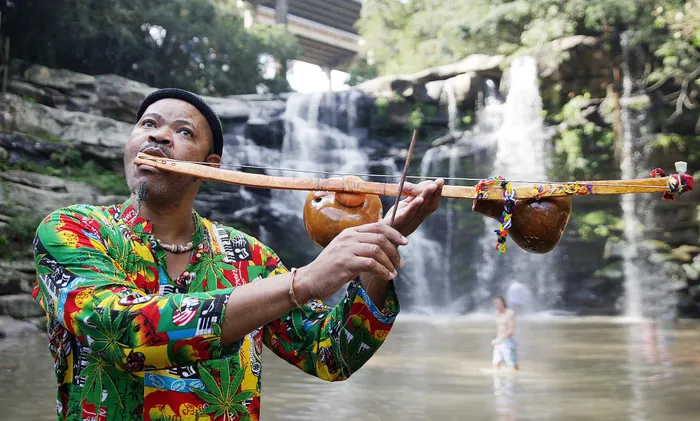
Victor Gabela Sithole, an artist, indigenous music instrument maker and player, said his music career stemmed from listening to his mother’s lullaby songs. On Tuesday is Africa Day and Sithole says his desire is to share skills and contribute in cultural development, conservation and use of African indigenous musical instruments in rural and urban areas both for cultural and corporate purposes. Bongani Mbatha /African News Agency (ANA)
DURBAN - GROWING up in the dusty streets of Estcourt, KwaZulu-Natal, Victor Gabela Sithole never imagined himself entertaining audiences around the world.
Sithole, an artist, indigenous music instrument maker and player, said his music career stemmed from listening to his mother’s lullabies.
“Whenever I cried, my mother would play umakhweyana (an indigenous instrument),” Sithole said.
Sithole, affectionately known as “Mathang’etshitshi” to his fans and peers, has performed in America, Brazil, Denmark, Finland, Australia, Cape Verde, Italy, France, Finland, Spain, England and Sweden.
Sithole combines Western and African instruments, more especially Zulu indigenous instruments, and celebrates indigenous music and culture with a crossover into jazz producing what he called “indijazz”.
He leads a Durban-based outfit called “ilima” which plays his neo-traditional compositions.
Sithole first started playing udloko (single-stringed zither) at the age of 7.
Sithole has influenced many South African artists young and old, and conducts online workshops to learn how to play indigenous instruments.
“I provide continuation of these decades of tradition, culture and heritage. I am making it accessible to the current generation and tourists, so long denied access to this sort of indigenous culture,” Sithole said.
He said he targeted mostly primary and high schools because he wanted children to learn about these instruments at a young age to preserve culture.
He said he also wanted the children to know that they could make a career out of playing this music.
“The kids must understand about preserving culture. They need to understand that in order to succeed in indigenous music, you must study music and be able to deal with the business side of it,” Sithole said.
Daily News