

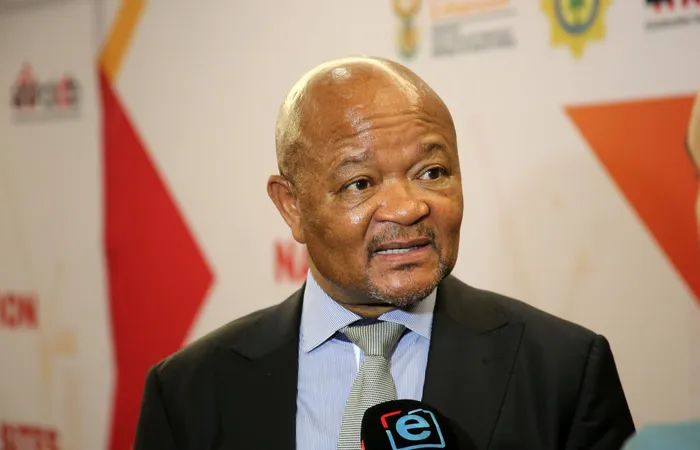
Police Minister Senzo Mchunu says police members, who are medically boarded and whose medical condition prevents them from executing their activities of daily living, received a monthly home nursing allowance to the tune of R5,460.
Image: Tumi Pakkies / Independent Newspapers
THE PHYSICAL and emotional well being of SAPS employees who are relied on to serve and protect South African communities has become a point to ponder on.
This was after Police Minister Senzo Mchunu revealed that R131.5 million was paid in sick leave by the SAPS on its members during the 2023/24 financial year.
The financial outlay begs serious questions about the well-being of police officers, especially as hundreds are reported to be on long-term sick leave due to unresolved mental health issues.
Answering parliamentary questions, Mchunu confirmed that 618 SAPS employees have been on paid sick leave for more than six months.
The persistent issue of excessive sick leave within the SAPS dates back to at least 2012, when Parliament began scrutinising the trend during oversight visits.
This ongoing concern reflects not only individual struggles but highlights the broader implications of the pressures faced by police officers in their line of duty.
Speaking at the recent National Policing Summit, Mchunu emphasised the urgent need for better support mechanisms for officers, stating, “Our members are exposed to traumatising situations, and thus require support in respect of mental health.”
To address these concerns, Mchunu announced an array of new measures aimed at improving officer wellness, including the introduction of a 24/7 toll-free hotline for Employee Health and Wellness services, trauma debriefing sessions, and peer support networks. He characterised these initiatives as a “medium-term measure” to alleviate some of the burdens facing the police force.
However, the scale of the challenge is staggering. With only 621 wellness professionals supporting over 187,000 officers across South Africa, the current ratio is being widely regarded as grossly inadequate.
Between 2019 and 2022, the police recorded 102 suicides among their ranks, alongside 38 homicide-suicide cases. Shockingly, since April 2023, three suicides and one attempted suicide have already been documented, suggesting that the crisis is deepening instead of improving.
The ongoing trend is not just a figment of statistical reports; it is indicative of systemic flaws that plague the SAPS, including insufficient mental health resources, immense job stress, and trauma linked to day-to-day operations.
This current environment has resulted in around 5,300 officers leaving the SAPS every year, prompting urgency for a recruitment drive aimed at bolstering numbers, particularly among detectives.
As Parliament continues to grapple with the financial implications of extended sick leave, experts agree that these numbers are just the visible tip of an iceberg of systemic issues — the long-term sustainability and effectiveness of the SAPS hang in the balance.
Stakeholders are gearing up for the much-anticipated reforms, waiting to see if the proposed measures will provide meaningful relief for the brave men and women who stand on the front lines of law enforcement.
DAILY NEWS