

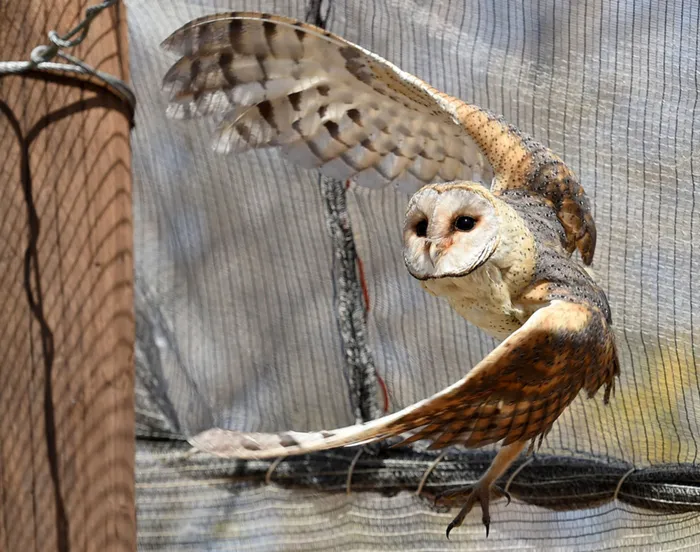
A barn owl in flight.
Image: Chris Collingridge
A MAN selling endangered barn owls for R1 000 at Nelspruit shopping mall yesterday was swooped upon by the he Directorate for Priority Crime Investigation, commonly known as the Hawks.
Acting on an alert received by Parks Board official, the arresting officers also seized the 48-year-old man's vehicle, which was used to transport the birds.
The bust, yet again highlighted the constant threat and the battle authorities have with the illegal trade in wildlife in South Africa, a country rich in biodiversity.
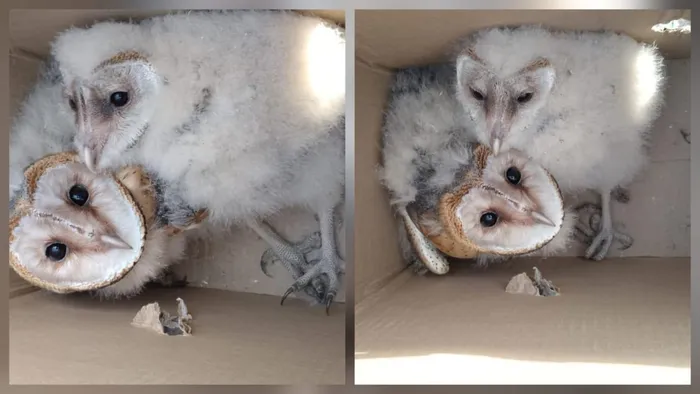
A man will appear before the Nelspruit Magistrate's Court, facing charges under the Mpumalanga Nature Conservation Act, and keeping or conveyance of live game.
Image: Hawks
According to Lieutenant Colonel Magonseni Nkosi, spokesperson for the Mpumalanga provincial Hawks, the suspect was discovered selling the owls at a local shopping complex for R1,000 each.
The brazen act of illegal wildlife trade prompted swift action from the Hawks, following a tip-off from the Parks Board officials. A joint operation ensued, leading to the suspect being caught in the act, with no necessary permits to sell the protected species.
“The vehicle used to transport the wildlife, a Nissan light delivery vehicle, was seized in the operation,” Nkosi confirmed.
The arrested individual is set to appear before the Nelspruit Magistrate's Court on Tuesday. He faces serious charges under the Mpumalanga Nature Conservation Act, specifically regarding the keeping and conveyance of live game.
Brigadier Danie Hall, the acting provincial head of the Hawks, welcomed the arrest, emphasising the importance of wildlife to South Africa's cultural and natural heritage.
“Wildlife is part of South Africa’s heritage, which must be protected,” Hall asserted.
He encouraged local communities to report any suspicious activities related to the illegal sale of wildlife, stressing, "When we take care of our wildlife, we safeguard our heritage for future generations."
This recent incident is part of a broader trend in South Africa, where law enforcement agencies are stepping up efforts to combat wildlife trafficking. J
Last year, another significant case was reported where a 59-year-old man, Neo Tongwane, lost his Mercedes-Benz after being convicted of attempting to sell a pangolin.
The Asset Forfeiture Unit secured a final forfeiture order for the vehicle, valued at R150,000, highlighting the legal repercussions faced by those involved in illicit wildlife trade.
The fight against wildlife crime is critical for maintaining biodiversity and ensuring that future generations inherit a naturally rich environment.
As authorities increase their vigilance, the hope is that such actions will serve both as a deterrent to would-be traffickers and a rallying call for public involvement in safeguarding South Africa's unique wildlife.
DAILY NEWS