

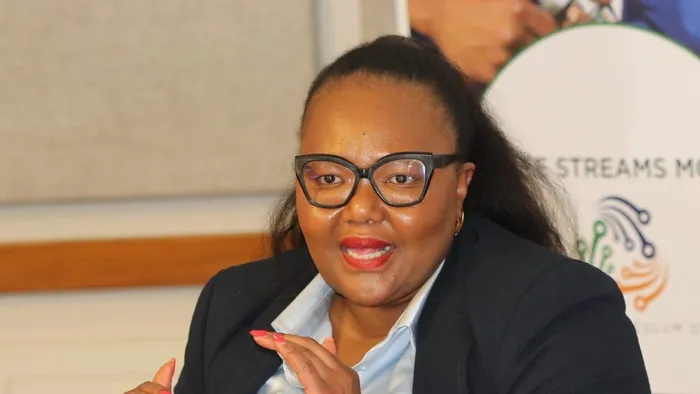
Education Minister Siviwe Gwarube added her voice on what was needed to turn things around in basic education in KwaZulu-Natal
Image: Facebook
The education sector in KwaZulu-Natal is currently grappling with immense financial challenges, a situation highlighted by recent comments from Premier Thamsanqa Ntuli and Minister of Basic Education, Siviwe Gwarube.
During a briefing focused on the province's financial constraints, officials outlined strategies aimed at preserving the operations of poorer schools within the region.
Yet, the hope for lasting solutions seems dim, as experts warned that the proposed measures were merely temporary fixes to a much deeper systemic problem.
Professor Wayne Hugo, an educational specialist, criticised the framework being adopted by both the provincial government and the education department.
He contended that the people of KZN were being offered a false choice between two flawed financial interventions.
“It’s unfortunate that money from citizens is wasted on predictable problems like ghost employees and poorly managed contracts,” Hugo expressed, indicating that the ongoing crisis threatens not only teacher salaries but also the stability of the upcoming 2025 examinations for pupils.
The briefings highlighted the urgent need for funds for Quintile 1-3 schools, which relied heavily on government support
“These schools are the first tier of our country’s education, and ensuring their financial stability is critical,” stated Gwarube.
She addressed concerns regarding budget allocations, particularly amidst high salary commitments and necessary provisions for schools.
An impending audit targeting ghost employees and learners is aimed to optimise fund utilisation, but questions linger over the effectiveness of this approach.
However, Hugo deemed the suggested Section 18 financial intervention a means that permits provincial treasury oversight while leaving existing leadership in charge as inadequate for addressing the root causes of the issues.
In drawing comparisons with failed interventions in Limpopo and the Eastern Cape, he reiterated that these strategies merely fostered an environment of crisis management without instituting necessary institutional reforms.
“The rot in KZN’s education department isn’t isolated; it reflects systemic failures throughout various state institutions,” Hugo said in highlighting a critical point: the need for comprehensive societal engagement in confronting and dismantling the corruption plaguing the educational system.
Gwarube highlighted the dire state of financial management in KZN’s education system, referencing the size of the uMkhanyakude District, which was larger than the entire educational system in the Northern Cape.
This emphasised the necessity for focused interventions to address the damages inflicted by years of neglect.
Premier Ntuli reinforced the importance of continued dialogue to gauge progress in resolving these issues, stating, “We need to ensure that this isn’t our first and last meeting; ongoing discussions are vital.”
He said the department was expecting to head into the final matric exams without major challenges, it was still required for intervention from the national office and the Presidency.
"We inherited a government with almost R70 billion that was taken from us due to the budget cuts, which we were able to navigate through.
“We were able to sit around that troika to resolve on the way forward but as a result we were able to address the challenges of 2024."
Deputy Minister of Basic Education Dr Makgabo Reginah Mhaule responded to inquiries regarding the budget’s limitations, and clarified that the focus on diversifying the curriculum necessitates additional resources, thus stretching the already limited funding available.
The department’s turmoil began earlier this year, when it was revealed that it had already overspent its budget and was now struggling to meet its financial obligations.
Furthermore, it found itself under scrutiny by the provincial Treasury over allegations of fraud and nepotism in the awarding of the school nutrition tender.
DAILY NEWS