

Former president Motlanthe champions the evolution of B-BBEE despite challenges Former president Motlanthe champions the evolution of B-BBEE despite challenges
Image: Supplied
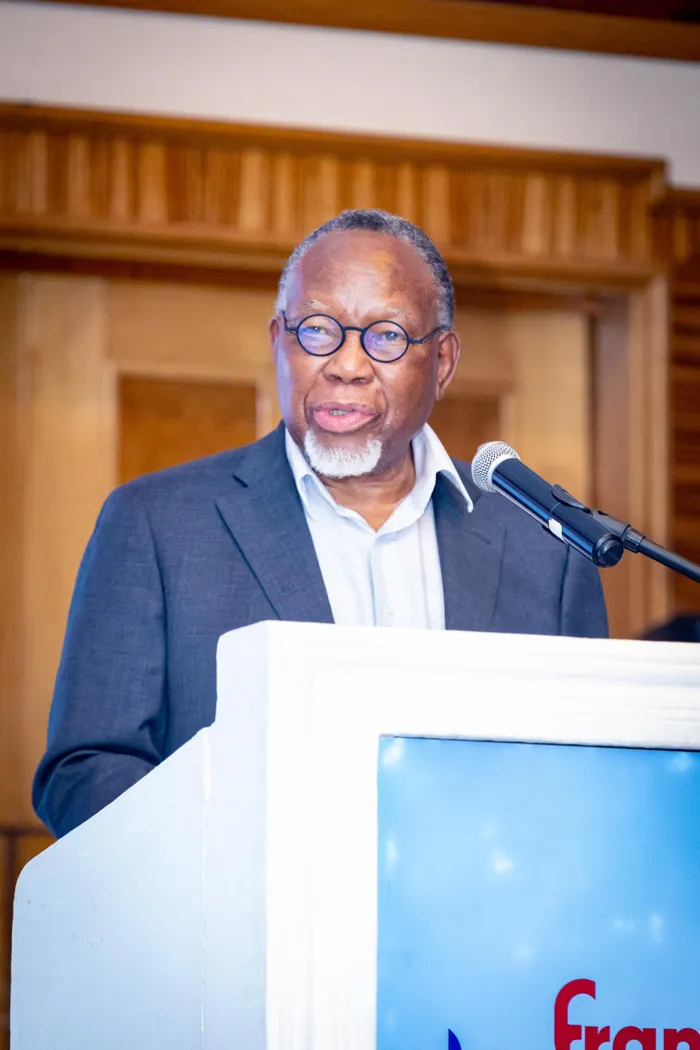
Former President Kgalema Motlanthe recently urged South Africans to refine and enhance the Broad-Based Black Economic Empowerment (B-BBEE) policy instead of discarding it altogether. Speaking during the Frank Dialogue on the Future of B-BBEE in Sandton, he recognised the policy's flaws but insisted on the necessity of evolving it to foster genuine transformation in the wake of systemic inequities.
The high-profile event was convened by Frank Dialogues and included prominent figures such as Trade, Industry and Competition Minister Parks Tau, B-BBEE Commissioner Tshediso Matona, and businessman Sandile Zungu of Zungu Investments. The dialogue aligned with Motlanthe’s emphasis on necessity, stating, “The challenge before us is difficult, yes, but it is necessary. We cannot postpone it, we dare not weaken it with cynical attacks or reduce it to narrow patronage. We must reimagine and implement triple BEE with decisiveness, empathy and vision.”
Motlanthe charted the historical context of B-BBEE, prompting participants to consider its roots in the 1996 Constitution and the Freedom Charter. His call for action sought a shift from mere compliance to authentic transformation, urging a comprehensive approach that benefits all South Africans.
Echoing this sentiment, Minister Tau discussed the origins of B-BBEE within the framework of the 1994 Reconstruction and Development Programme and the 2003 Act. He acknowledged the uneven progress achieved thus far, pointing out the persistent skewed ownership patterns and the lack of black representation in senior management roles, often marred by practices such as fronting and tokenism. “B-BBEE aims to ensure inclusive participation in the economy, development of skills across all populations, and extensive wealth creation for all South Africans,” Tau noted. He outlined the tangible benefits of effective B-BBEE implementation, such as cultivating a skilled workforce and fostering higher consumption for investors.
Businessman Sandile Zungu, drawing from his experience with Seriti Resources—a black-owned mining firm known for job preservation and community stabilization after acquiring Anglo American's coal assets—called for a focus on meaningful empowerment. “Progress has been uneven... but when done right, B-BBEE is transformative for industries and communities,” Zungu opined, criticising the tendency to prioritise certification over genuine ownership.
Commissioner Matona provided data outlining B-BBEE compliance trends from 2013 to 2023, revealing mixed results: while compliance has increased, a rise in non-compliance to 23% by 2023 poses significant challenges. He highlighted that top performance came from enterprise and supplier development (66% of scorecard points achieved), while ownership and management control remained underwhelming, particularly in sectors such as agriculture and property. Matona called for legislative amendments to strengthen accountability measures and address the loopholes that currently exist.
Other contributors to the dialogue, including Dr. Pali Lehohla and Dr. Nthabiseng Moleko, raised pressing concerns regarding economic recovery amid substantial challenges like a 51% unemployment rate and an 82% debt-to-GDP ratio. Lehohla championed public-private partnerships as a pathway toward inclusive growth, while Moleko championed the establishment of a “Transformation Fund,” as well as advocating for banking reforms to provide better credit access for SMEs and prodding pension funds to invest in black-owned enterprises.
Contrasting opinions emerged from the Solidarity Research Institute. Head researcher Connie Mulder argued that B-BBEE curtails investment opportunities and serves only a small elite. “What we’re doing at the moment is not working... We need to start doing something else,” Mulder stated, advocating for alternative approaches that focus on broader collective advancement.
This frank dialogue highlighted B-BBEE’s significance in addressing the enduring legacy of apartheid and underscored the need for ongoing enforcement, diligent research, and collaborative efforts to build a sustainable, inclusive economy. As discussions progressed, it became evident that key decision-makers including those from the finance ministry and treasury must actively engage in these conversations to ensure the effective implementation of B-BBEE policies. The prevailing narrative has often been unidimensional, but the recent dialogue offered a much-needed platform for diverse voices and perspectives.