

Diwali 2025: celebrating hope amid SA’s challenges Diwali 2025: celebrating hope amid SA’s challenges
Image: supplied
THE transition from darkness to lights celebrated with hope as Diwali 2025approaches. Indian South Africans prepare for Diwali, celebrating good over evil, positivity, hope, and com-munity building. During Diwali week, a day is devoted to family bonding and strengthening ties through thanks giving, prayer, and spiritual practice.
However, collectively, we need a transition from darkness into light more than ever. There are too many instances of evil, darkness, and divisiveness that have been reportedly continuing to prevail despite the fact that we, as a democracy, have advocated for accountability, transparency, and equality in all spheres of life.
If anything, the economic gaps between the wealthy and lower-income classes have only widened. South African mass media platforms continue to educate the nation on all the evil and injustices that dominate and have become normalised in society, yet the trajectory continues. The instances continue to divide our society further and break our spirit of Ubuntu and collective growth. The worship of income through fraudulent means, coupled with instances of no respect for human life, truth, and centres of development in South Africa, divides us further as South Africans.
Yet we resiliently have patience and perseverance as we continue to develop our society. As much as Indian South Africans celebrate Diwali in 2025, the community grieves the loss of brave citizens, such as Babita Deokaran, who initiated the investigation into one of the biggest instances of embezzlement and corruption at Tembisa Hospital in Gauteng. Yet we celebrate the role she played and her values that she upheld during her term of employment at the hospital. Her role as the chief financial director gave her privy to suspicious transactions that exceeded the value of R850 million, and post her murder in 2021, the investigation continues to unravel large sums of money that were misappropriated.
The ongoing Madlanga Commission of Inquiry into injustices, criminality, corruption, and political interference in the criminal justice system is another unjust system that we are forced to contend with. The system has been severely compromised, and the commission was established in July this year as a response to the multiple allegations that South Africa’s criminal justice system was compromised because of the infiltration of criminal syndicates into police, judicial, parliamentary, political, intelligence, and law enforcement structures.
Police com-missioner Lieutenant-General Nhlanhla Mkhwanazi initiated the inquiry, and his allegations highlight that the system has an infiltration of criminal syndicates that extends into the SAPS, our judiciary, political intelligence as well as law enforcement structures. His first testimony sheds light on the KZN Political Killings Task Team and the political interference within the criminal justice system.
In the spirit of truth and light, so many of us believe that this commission can initiate a practice of honesty, accountability, and respect for human life in South Africa. The eThekwini city manager was cleared of contentious sexual harassment charges filed in June by a municipal director and this outcome gives us hope that the truth can dominate in our judiciary. The shortage of judges in our country has been noted to be another pivotal reason as to why criminality and darkness has been dominant. The High Courts in the Western Cape, Eastern Cape, and Gauteng are struggling to meet their workloads because of a shortage of judges. Cases are often postponed, which allows criminals to find loopholes and develop communicative stances that eventually allow them not to be accountable.
The lack of employed individuals in these positions can also be attributed to salary disputes which has recently begun, law professionals fearing unlawful, violent attacks and threats upon themselves from criminal cartels and individuals. The role of a judge within this climate can be viewed as risky for one’s family, health, and overall mental well-being. Many judges involved in high-stakes cases fear for their death. To ensure the employment of these skilled professionals, there needs to be measures put into place so that their lives are not endangered and that they can con-tribute towards building a just and democratic South Africa.
Protests have been a means of communication for many South Africans in the Apartheid era. Today post democracy, protests have now been replaced with violent acts that extend to physical violence between people, murder, and the vandalization and burning of buildings, monuments, and other useful infrastructure. The recent incident at the University of Fort Hare has had a devastating impact. Key buildings and academic infrastructure were set alight, and the damage has been estimated to be at the value of R250 million.
The violent student protests have been ongoing over the last three years and indicate that there is a lack of belief that education is a catalyst for individual economic growth and social upliftment in our society. In addition, there seems to be no consideration for the harm caused to individuals on the premises when the buildings were set alight.
Higher educational institutions have played key roles in educating individuals and equipping them with much-needed skills such as the development of knowledge, research skills, communication skills, organisational skills, interpersonal skills, national scholarship, higher-order thinking skills, personal resourcefulness, and active citizenship. The question beckons: When will there be light prevailing for young South Africans to shift behaviour pat-terns from violent protests to peaceful public participatory initiatives?
The recent National Dialogue should have at least encouraged young South Afri-cans to adopt a similar communicative approach. The students’ demands were the cause of this sad act. Their grievances include a call for a new university management and the resignation of Prof Sakhele Buhlungu, the current vice-chancellor, who has been rein-stated post the completion of his tenure and the retirement age.
The woes are many, but once again, South Africa mourns another financial loss, which undermines the value of education. Contributing to the general lack of respect and appreciation for our educational sector is the corrupt practices that continue in the Department of basic Education. School teacher vacancies are being unlawfully sold by a senior education department manager from the Umlazi District for R2 800.
The number of teenagers that are pregnant at the moment is also another alarming scenario. Health Systems Trust indicated that in one year, there were31 000 teenage pregnancies recorded in KwaZulu-Natal. Some of these pregnant girls were between the ages of 10 and 14 years. There is a distinct lack of communication, education and care amidst families and communities that contribute towards this alarming statistics. Parenting of the male child also needs to be interrogated. Young boys and teenagers should be educated appropriately to understand the impact of sexual activity and its repercussions.
Education and community care can assist to curb these statistics. So much needs to be achieved before South Africans can truly celebrate light over darkness and goodness over evil. Even though we do not all celebrate Diwali, its essence and over-arching meaning need to be adopted and respected so that in 2026, we have more to celebrate. All these instances and others contribute towards the fact that many South Africans no longer feel patriotic and experience a sense of belonging in our country.
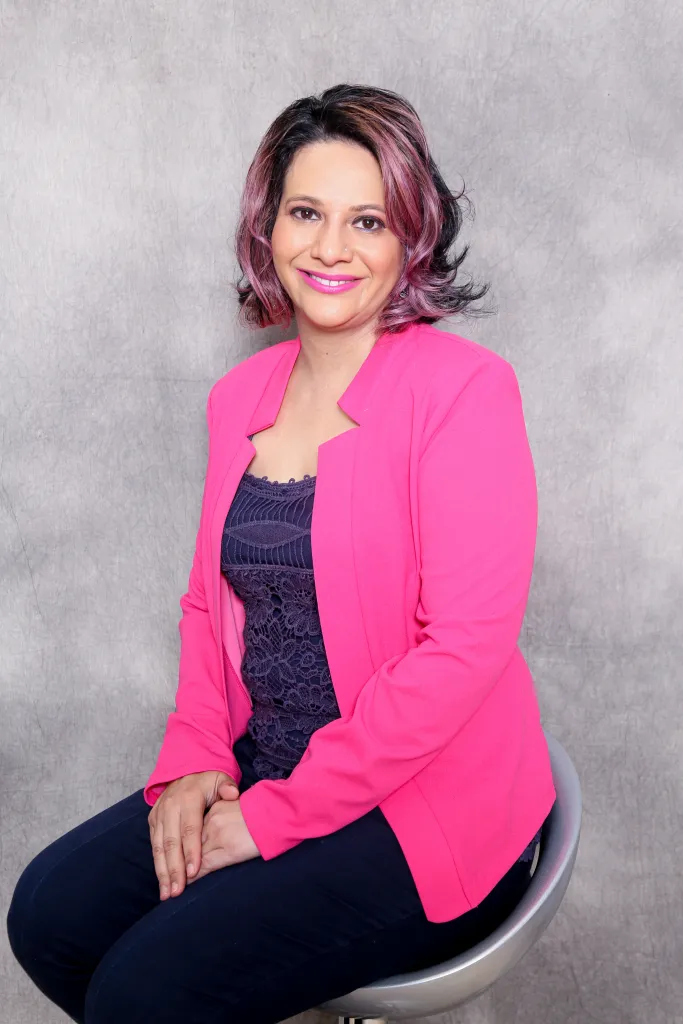
Bhoola is an education expert and a senior lecturer at the University of Zululand, and director at Stellar Maths. The opinions expressed in this article do not necessarily reflect the views of the newspaper.