

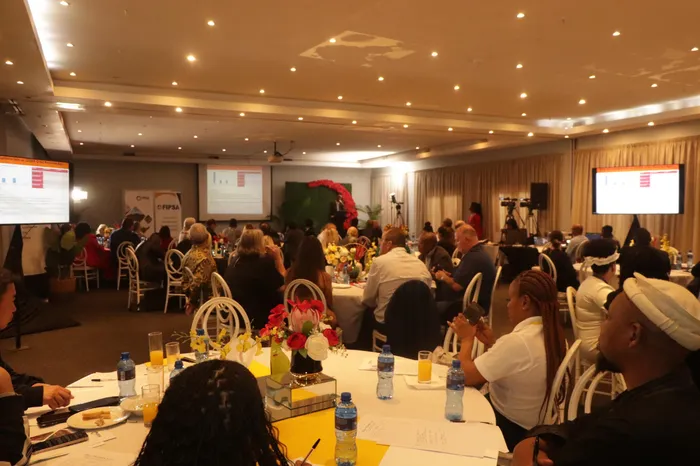
Delegates from FIPSA gathered for their first Indaba 2025 to discuss robustly about immigration issues in Umhlanga Roack, Durban.
Image: Sipho Jack
The Forum for Immigration Practitioners of South Africa (FIPSA) recently hosted its inaugural national conference the 2025 Immigration Indaba in Umhlanga, Durban.
This landmark event gathered experts, policymakers, and representatives from businesses and civil society to discuss the pressing challenges affecting South Africa's immigration and skills landscape.
Under the theme "Advancing Immigration Reform and Skills Mobility for Economic Growth," the Indaba served as a vital platform for dialogue aimed at enhancing the country's immigration system, promoting regional integration, and tackling the skills shortages that hinder economic progress.
FIPSA Chairperson Gershon Mosiane highlighted the significance of this gathering during the opening session, emphasising that immigration reform transcends government concern and represents a national imperative that demands collaboration across all sectors.
"This Indaba demonstrated that immigration reform is not just a government concern but a national issue that requires the involvement of all sectors," Mosiane explained.
The conference witnessed participation from senior officials from various government departments, including Home Affairs, Employment and Labour, and Trade, Industry and Competition, alongside representatives from professional associations, universities, legal practitioners, and immigration consultants.
Key topics of discussion encompassed a review of South Africa's immigration legislation, the implementation of the new work visa system, and the impact of skills migration on economic development.
Participants collectively examined how immigration practitioners facilitate lawful entry and residence for foreign nationals who contribute positively to the economy.
Mosiane noted that the outcomes from this Indaba would inform FIPSA's continued engagement with the Department of Home Affairs to streamline processes and improve service delivery.
"FIPSA is committed to working with authorities to address backlogs, improve turnaround times for visa applications, and ensure that regulations are implemented consistently," he affirmed.
"Our focus is to promote professionalism and accountability in immigration practice while supporting policies that attract and retain the skills South Africa needs.
"Business representatives voiced concerns about the challenges faced by sectors reliant on foreign expertise, citing engineering, information technology, and health care as areas particularly affected.
They stressed the necessity for a balanced approach that upholds local employment opportunities while enabling critical skills recruitment. The representatives called for clearer guidelines on work visa categories to foster investor confidence and enhance South Africa's competitive edge in attracting global talent.
In a show of collaboration, the Department of Home Affairs reiterated its commitment to modernising immigration systems via digital transformation and policy reform.
Home Affairs officials acknowledged the crucial role that professional bodies like FIPSA play in ensuring that regulatory frameworks are practical and aligned with national priorities.
The Indaba also featured discussions surrounding regional migration trends within the Southern African Development Community and their implications for labour mobility.
Academic speakers presented research underlining migration's contributions to innovation, entrepreneurship, and sustainable development. FIPSA plans to compile a comprehensive report reflecting the proceedings of the Indaba, including recommendations for government and industry partners on legislative amendments, administrative reforms, and public-private partnership enhancements in managing migration.
"The feedback from this Indaba confirms that there is a shared desire across sectors to build an immigration system that is fair, efficient, and development-oriented," Mosiane concluded, emphasising the need to translate discussions into actionable reforms.
As the organisation looks towards establishing this Indaba as an annual event, it aims to continue fostering collaboration and knowledge exchange in addressing immigration's complexities in South Africa.
"Immigration touches every aspect of the economy, and it is through cooperation that we can ensure it becomes a driver of growth rather than an obstacle," Mosiane remarked, echoing FIPSA's commitment to professionalising immigration consultancy and bridging public-private sector communication.