

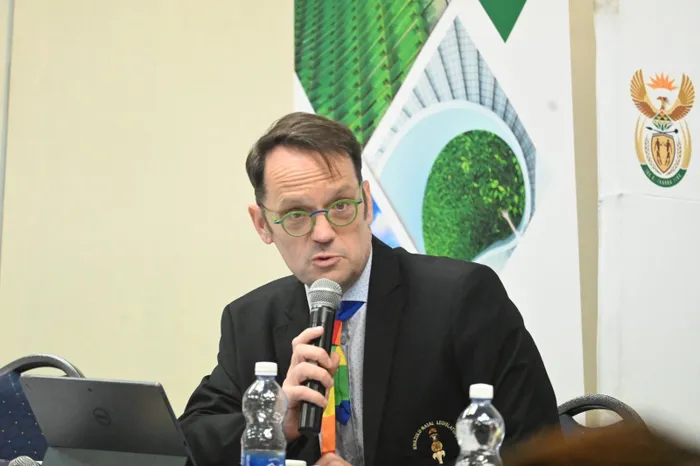
MEC Martin Meyers highlights unacceptable delays in the construction of Nkonjeni Hospital, leaving Ulundi residents to face dire condition. In Picture: Martin Meyers
Image: Supplied
KZN Public Works and Infrastructure Development MEC Martin Meyers has expressed his frustration towards contractors involved in the construction of Nkonyeni Hospital in Ulundi, KwaZulu-Natal, citing a shocking lack of progress that has persisted for five years.
As the region grapples with the profound implications of this delay, it is the residents of Ulundi who continue to bear the brunt of the government's failures.
During an assessment visit to the hospital site last over the weekend, Meyers did not shy away from expressing his displeasure at the sluggish pace of construction, emphasising that the state of the project is unbecoming for the department.
The alarming stagnation follows a comprehensive briefing delivered by Dayalan Soobramoney, the acting Chief Director of Infrastructure Management and Technical Support (IMTS), detailing various challenges that have beset the project.
These include the repercussions of the Covid-19 pandemic, community unrest, adverse weather conditions, and a backlog in payments to contractors.
In response to Soobramoney's account, Meyers acknowledged that while the department has agreed to waive penalties for the ongoing delays until 7 November 2025 recognising a recovery plan submitted by the contractor the sluggish progress remains inexcusable.
“We cannot do anything else but humbly apologise to the people of Ulundi and the people of the Zululand District,” he articulated, emphasising that the local populace continues to suffer because of these setbacks.
The dire conditions faced by patients at the hospital were further highlighted by Chief Executive Officer (CEO) Mabel Zulu, who beseeched Meyers to expedite the hospital's completion.
Speaking from the frontline of the maternity ward, Zulu painted a harrowing picture of expectant mothers sharing cramped quarters, an untenable situation aggravated by the recent arrival of over 140 new babies.
"Hearing that mothers have to give birth in a park home hurts me. It absolutely hurts me as a public servant,” Meyers reflected, acknowledging the stress faced by both medical staff and patients.
In a bid to mitigate further delays, the department has instituted daily inspections by the project leader, alongside weekly evaluations conducted by the regional director.
"The Head of Department has prioritised this project,” Meyers assured, committing to the provision of regular progress reports and assessments to ensure accountability.
Despite this commitment, concerns linger about the financial constraints affecting the department's operations.
Addressing the possibility of further financial implications should delays persist, Meyers acknowledged these limitations but reiterated a resolve to take responsibility for departmental shortcomings.
“We will take responsibility where it's our fault,” he insisted, asserting the need to lead by example in promoting timely project completion.
Moving forward, an internal investigation is set to be launched to ascertain whether managerial shortcomings within the department have contributed to the ongoing delays.
Meyers assured that any officials found responsible would face the appropriate repercussions, reinforcing the department's commitment to delivering essential services to the community.
Initially the hospital was supposed to cost R84 million rand, due to the delays, the cost has increased to a staggering R98 million, and the figure might increase should the project encounter more delays.