

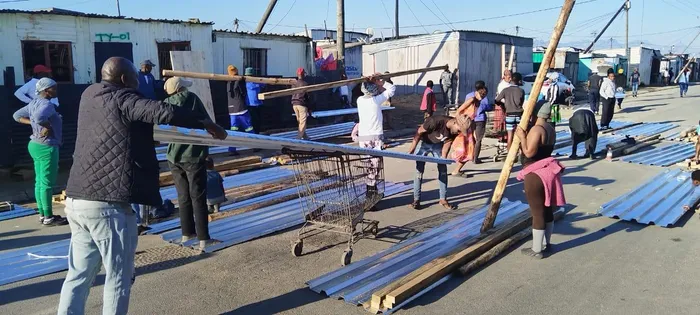
The KwaZulu-Natal Department of Human Settlements is launching a new initiative to address a significant housing backlog affecting over one million residents.
Image: Phiri Cawe
As the KwaZulu-Natal (KZN) Department of Human Settlements grapples with a housing backlog in the province, they plan to embark on a new initiative aimed at forging formal partnerships with business leaders, philanthropists, and non-profit organisations.
This ambitious programme seeks to create a structured approach to alleviate the plight of vulnerable individuals in need of decent housing.
The urgency stems from the fact that the number on the provincial waiting list for government-funded houses exceeds a million residents, and more than 1,000 informal settlements are spread across KZN.
To set the plan in motion, the department has announced the establishment of a comprehensive database of interested parties willing to contribute to the construction of homes for those facing dire living conditions.
“Our appreciation goes to individuals and groups who continue to exercise their social responsibility by providing decent shelter to the needy,” the department stated.
“We now call upon these groups to partner with the department in a more focused, structured, and formalised manner,” read the statement.
Organisations looking to join the initiative, which focuses on tackling the housing issue, have been encouraged to submit their details by November 30.
Among those desperate to have her own roof over her head is 77-year-old Eunice Mpofana, who has had a long-running battle with inadequate living conditions.
Mpofana's troubles date back to 2019 when a tornado swept through Umzimkhulu, causing her to lose her home. Ever since, Mpofana has had to make do with a dilapidated structure that has not provided her with adequate cover from the elements.
Mpofana said: “Immediately after the tornado hit, municipal officials told me they would build me a proper house.” Instead, they erected a temporary asbestos structure, and I’ve been waiting ever since for them to fulfil their promise.”
Her daughter, Phumeza, is familiar with her mother’s challenging living conditions. “Can you imagine how it feels for a 77-year-old to live like this? The house is cold and gets overrun by the elements,” she lamented.
The DA's member of the provincial legislature, Riona Gokool, stated that the government's initiative comes in the wake of much criticism regarding its handling of the housing crisis.
Gokool highlighted issues that exacerbate the housing problem, including ineffective budget utilisation and procurement delays.
She raised concerns about the R476 million set aside for emergency housing in the previous financial term (2023/24), noting that only 5% of it has been utilised as an example of funds for housing not being used adequately. “This situation leaves vulnerable communities exposed to further hardships,” Gokool said.
She emphasised the critical need for reforms and asserted that while the government holds the primary responsibility for providing housing, the private sector can play a crucial role in addressing the backlog.
“The DA supports public-private partnerships that bring innovation, efficiency, and additional resources,” she stated, urging the government to remain a facilitator in ensuring that housing remains affordable and accessible for all.
DAILY NEWS