

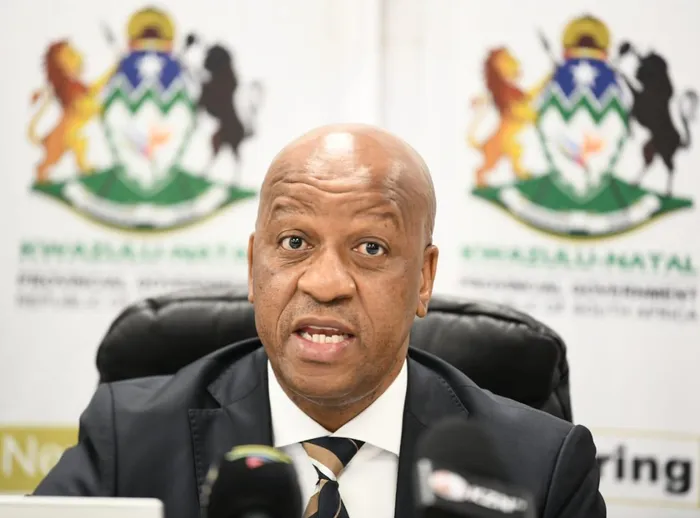
KwaZulu-Natal Premier Thami Ntuli reveals alarming statistics on rising child rape cases and gender-based violence.
Image: Supplied
KwaZulu-Natal Premier Thami Ntuli revealed statistics indicating a surge in rape cases, particularly affecting children under the age of 12, which was troubling during a press briefing session on Monday.
The jump in numbers, which were particularly high in seven districts across the province, highlighted the alarming state of gender-based violence (GBV) and femicide in KZN, as per SAPS statistics for the fourth quarter of the 2024/25 term.
The districts of eThekwini, uMgungundlovu, and King Cetshwayo were rated as the province's hotspots for GBV according to the statistics report.
“Between July and September, 2,013 survivors sought assistance at our Thuthuzela Care Centres, and in the preceding quarter, an alarming 65% of all GBV survivors were children,” said Ntuli, referencing the steep need for survivor support services.
The premier called for a collective recommitment from government bodies to community members to “stand up, speak out, and act” against the silent suffering of countless victims. His administration reassured residents of its determination to tackle this crisis with compassion, dignity, and immediate action.
Key to this response is the collaboration between the Office of the Premier, various government departments, and civil society organisations aimed at addressing gender-based violence.
The introduction of the Provincial Gender Machinery, active across all districts, represents a structured approach to strengthening institutional responses to GBV, including an initiative that places GBVF activists at 184 police stations throughout KZN.
Their roles include providing survivor support, conducting follow-ups, and leading school-based prevention programmes.
Ntuli highlighted the impact of the interventions, where 39,000 community members were reached through targeted awareness campaigns, and more than 5,000 men participated in discussions on promoting positive masculinity.
The newly established Khuseleka One Stop Centre in Zululand is meant to enhance access for survivors to integrated services. Currently, 21 shelters for abused women and children, alongside 31 White Door Centres of Hope, operate throughout the province. In the last quarter of the year, 25,976 survivors received psychosocial assistance.
Against these grim realities of the statistics, Premier Ntuli announced the launch of a comprehensive campaign aligned with the national theme to address GBV and femicide, which will extend beyond the conventional 16 Days of Activism.
The campaign encompasses five critical focus areas. The first aspect is the #SilwisananeChilo initiative that aims to illuminate the intersection of GBV and femicide, focusing on the experiences of individuals with disabilities, a demographic often overlooked in traditional discourse.
The second focus area is promoting province-wide citizen education initiatives. Through extensive public education campaigns using mass media and community engagements, the campaign seeks to challenge harmful norms and foster a deeper understanding of GBV.
The transformative power of sport, arts, and culture is seen as a key conduit for efforts to raise awareness and prevention, aiming to connect with the community's heart and spirit.
The campaign also recognises the influential role of taxi associations, religious institutions, and traditional leadership to convey their messages. Engaging policymakers, traditional authorities, and the media is seen as another essential focus area to drive the campaign.
DAILY NEWS