

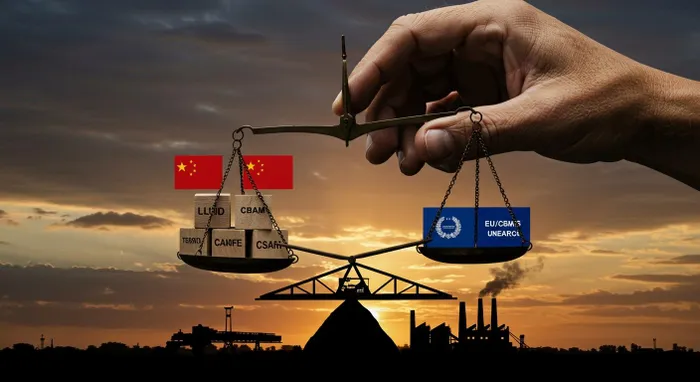
With tariffs, border adjustments, and export restrictions rising worldwide, still, South Africa businesses have the potential to boost its export output
Image: Gemini AI
"Common solutions to shared problems" is the bold declaration made by the leaders at the G20 Summit held in South Africa recently. Here, the world’s most influential nations committed to multilateral cooperation, macro policy coordination, global partnerships for sustainable development, and solidarity. This stance was particularly pertinent in South Africa, where more than 85 percent of total net financial assets are owned by a mere 10 percent of the population.
The question on the minds of business owners in the coming year is likely to be: How can I scale up my business? How do I grow revenue, expand reach, and essentially level up? Fayez Raidan, Managing Director at Global Free Trade, who manages exports from Durban through a trade corridor between South Africa and the UK, emphasised that it was all about operational expansion.
For those who have taken their operations beyond the startup level and have been enjoying success managing their businesses, the inevitable next step must involve growth by entering new markets and increasing sales channels. Raidan assured that it was far less daunting than it sounded.
"How often have we raved about a particular chocolate or beauty product known worldwide that is actually produced in a small town somewhere?" As a continent and a country with the global spotlight on us, we have the opportunity to share the authentic products we create with a much wider audience.
Consider Bokkeveld Olives: hailing from the small town of Langebaan, these olives are renowned internationally for their unique flavours. Ceres Fruit Juices from the Western Cape have become staples in many households around the world. The brand sources fruits locally and is famous for its 100% fruit juice products, which are exported to various global markets.
There are also Paternoster Lobsters from the west coast fishing village and Kalahari Truffles harvested from the Kalahari Desert region. These products are increasingly used in gourmet cuisine and are finding their way into high-end markets globally. Raidan said that apart from produce, South Africans are gifted creators and craftsmen. With the right adjustments, there is no reason why exports couldn't be done more widely.
"Within our businesses, we must make technological investments that improve our efficiency and capacity to manage volumes while maintaining quality. Teams are essential; surround yourself with the right people and invest in their professional development. Upscaling requires a strong group of individuals with clear roles and responsibilities."
Securing finances is another crucial aspect of increasing sales while managing expenses and profits for growth. Lastly, upscaling necessitates understanding markets, identifying new customer segments, and leveraging available services to do so.
He said in 2024, South African exports to the UK reached $5.28 billion, with key exports including precious stones, vehicles, and edible fruit. "As South African products face a 30% tariff in the US, this new corridor may provide vital opportunities for local businesses aiming to expand their international presence," said Raidan.
DAILY NEWS