

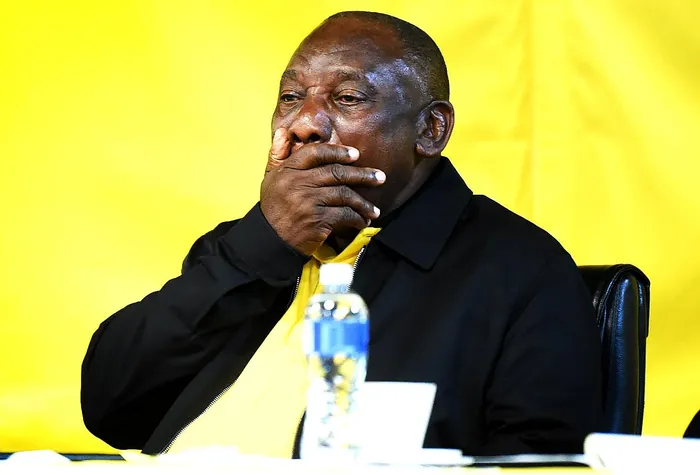
President Cyril Ramaphosa is at the centre of the Phala Phala farm theft scandal
Image: Itumeleng English / Independent Newspapers
The Independent Police Investigative Directorate (IPID) is considering reclassifying the report that was marked "top secret" previously, which delved into the conduct of SAPS' members' handling of the theft matter that occurred at President Cyril Ramaphosa's Phala Phala farm in February 2020.
That was a submission made by Acting Police Minister Firoz Cachalia in response to a parliamentary question raised by EFF MP Mazwi Blose. Cachalia said: “This is in view of the need to balance the individual rights as alluded to above with the public interest to access information.”
The IPID probed and produced a report on the conduct of members of the Presidential Protection Unit who handled the investigation into the alleged theft of $4 million from Ramaphosa’s farm in Limpopo province.
There was widespread conjecture about how the investigation was done, which prompted the IPID to investigate the alleged conduct of police after claims of a cover-up regarding the theft of foreign currency.
In June 2022, former State Security Agency (SSA) Director-General Arthur Fraser brought criminal charges against President Cyril Ramaphosa regarding the Phala Phala saga.
Ramaphosa denied any wrongdoing at all times as the plot thickened around the saga, and about October 2022, the National Prosecuting Authority indicated that they would not pursue criminal charges against the president in relation to the controversial farm theft scandal.
Blose sought clarity on when the report would be declassified for public access, especially following earlier confirmations from suspended Minister Senzo Mchunu earlier this year that the document had been referred to the SAPS in October 2023 for implementation of recommendations.
Mchunu noted that the classification was initiated under the Minimum Information Security Standards, preventing the release until proper declassification procedures were undertaken. “Until it is accordingly declassified, it would not be released for public consumption,” Mchunu said in February.
In justifying the report's classification, Cachalia emphasised the importance of protecting the investigation's integrity and safeguarding witnesses and SAPS members potentially implicated before their trial.
He referenced sections in the Constitution, which uphold the presumption of innocence and protect individuals from potential media trials prior to formal adjudication. “It further states that every accused is presumed innocent until proven guilty in a court of law,” Cachalia said.
Publicly naming suspects before they appeared in court risked trial by media, which could undermine judicial impartiality and damage reputations irreparably, even if the person was later acquitted.
“Moreover, IPID was aware of the fact that the Directorate of Priority Crime Inspectorate (Hawks) is investigating the criminal aspect of this matter, and it is inevitable that information contained in the IPID Report will also be expressed in the DPCI case docket,” he said.
The political backdrop to this inquiry is notably fraught, particularly following a June 2023 report by Public Protector Kholeka Gcaleka, which scrutinised the actions of the Presidential Protection Unit.
The report indicated that Wally Rhoode, head of the unit, acted beyond his authority in investigating the burglary reported by Ramaphosa.
Ramaphosa had reported the burglary to Rhoode, who allegedly conducted an investigation. Gcaleka found that Rhoode had acted improperly when conducting an investigation and that he did not have the power to launch the off-the-books investigation into the burglary.
She also did not accept his version that he was conducting a threat analysis.
In her remedial action, Gcaleka instructed former police minister Bheki Cele to take note of the findings of maladministration and improper conduct against the SAPS, particularly regarding the allegation that police officers in the Presidential Protection Services acted improperly by investigating the burglary at Phala Phala.
The SAPS cleared Rhoode of wrongdoing after concluding a disciplinary hearing.
Meanwhile, ActionSA, which submitted a Public Access Information Act application to the report, announced that it has lodged a formal appeal against IPID’s refusal to unseal their report, which pertained to the conduct of the Presidential Protection Unit members in relation to their involvement in the Phala Phala investigation.
The party’s chairperson, Michael Beaumont, said his party has been in consultation with its legal team to explore the possibility of launching legal action challenging the Minimum Information Security Standards (MISS), which was used to justify the classification of the IPID report. “However, we have been advised that the appeal mechanism must first be satisfied,” he said.
Beaumont also said the IPID report remained the last beachhead for the fight against the abuses of power to protect Ramaphosa from the events at Phala Phala.
“The fact that his protection team members were involved in the investigation of the robbery at his farm, in contravention of SAPS policy and law, has been covered up to reward those who covered up for the president.”
He said South Africans deserve answers on Phala Phala, and ActionSA’s application was one step towards ensuring those answers are delivered.
DAILY NEWS