
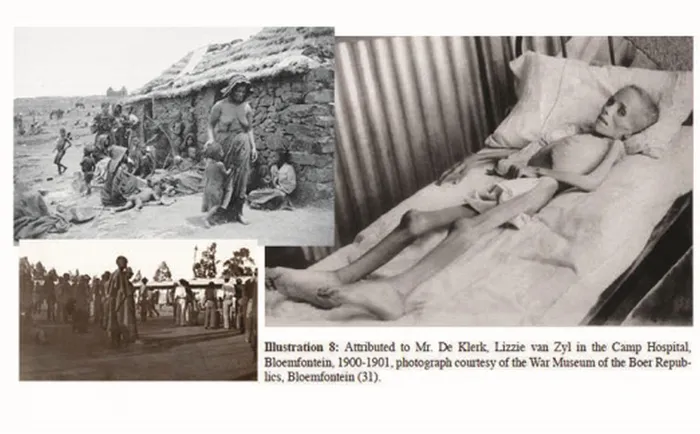
The harsh realities of war. Concentration camp victims during the Boer War.
Image: SA History online
The Cradle of Humankind, near Johannesburg, is one of the most important archaeological sites in the world.
1699 Czar Peter the Great changes the Russian New Year from September 1 to January 1.
1852 Major-General Sir George Cathcart, governor and commander-in-chief at the Cape, is defeated by Moshoeshoe, the first king of Lesotho, at Berea Mountain, after negotiations fall though. The invaders withdraw, and fearing that a second British assault would result in his military defeat, Moshoeshoe sues for peace, attains favorable terms and has amicable relations with the British restored.
1880 The Battle of Bronkhorstspruit takes place and a British detachment is cut to pieces.
1900 Having had ceasefire offers rebuffed, Britain orders concentration camps to be set up in an attempt to quell the Boer guerilla warfare.
1914 Rebel commando leader Jopie Fourie is shot for high treason, but his execution turns out to be a potent factor in the rise of the National Party, as his death only served to stir up already bitter feelings among the Boers, who were still smarting from losing the Boer War and the way the in which women and children were treated in the concentration camps.
1915 The last Australian troops are evacuated from Gallipoli, Turkey.
1941 The Flying Tigers, the American Volunteer Group squadron, has their first battle against Japanese invaders in Kunming, China.
1942 The Japanese air forces bombs Calcutta.
1951 An Idaho power station becomes the first nuclear plant to generate electricity, powering four light bulbs.
1952 South African ichthyologist, Professor JLB Smith receives a cable from the captain of a fishing boat, who says that he has caught a coelacanth (an ancient fish species thought dead for millions of years) in the Comoros. So important a find is it that Prime Minister DF Malan arranges a military aircraft to fly Smith to the islands so that he can retrieve it for further study.
1971 Doctors Without Borders is founded.
1987 A ferry sinks after hitting an oil tanker in the Philippines, killing about 4 000 people.
1989 The US invades Panama so they can arrest its leader, Manuel Noriega, who they want on drug-trafficking charges.
1991 Archaeologists discover a fleet of 5 000-year-old, ships near the Nile.
2019 The US Space Force – an armed forces branch – is founded.
2017 Singer Lady Gaga lands a Las Vegas residency deal for $75 million – the most lucrative deal ever offered in ‘Sin City’. The deal sees the world’s biggest star earn $1m per show.
2019 The US Space Force is founded, an armed forces branch dedicated to space warfare.
2022 The ruling Taliban suspends university education for female students in Afghanistan as part of a wider crackdown on women’s rights in the country.
DAILY NEWS