

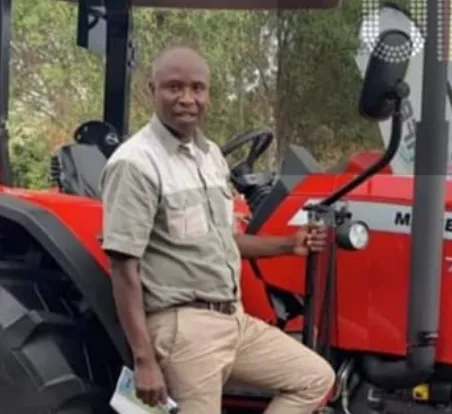
African Farmers’ Association of South Africa (AFASA) KZN chairperson Mbongeni Skhakhane was killed in Sweetwaters, Pietermaritzburg.
Image: AFASA KZN / Facebook
In a tragic turn of events, the Democratic Alliance (DA) Member of Parliament spokesperson on Agriculture and Rural Development, Sakhile Mngadi, expressed his heartfelt condolences to the family of Mbongeni Skhakhane, the African Farmers’ Association of South Africa (AFASA) KwaZulu-Natal (KZN) Chairperson, who was killed in a brutal shooting on Saturday.
The victim's life was cut short at his place of business in Sweetwaters, Pietermaritzburg, marking a lamentable incident that has shocked the agricultural community and beyond.
Mngadi described Skhakhane’s murder as a devastating loss not just for his family but also for the AFASA and the broader agricultural sector.
He stated, “The DA in KZN extends its deepest condolences at this sad and difficult time.
A committed farmer and leader, Mr Skhakhane dedicated his life to empowering emerging farmers, strengthening food security, and advancing rural development in KZN.”
The senseless killing highlights the increasing vulnerability faced by farmers and farm workers in South Africa, according to Mngadi.
It highlights the unacceptable reality that those who contribute significantly to livelihoods, jobs, and social cohesion are forced to work amid threats to their safety.
He urged the South African Police Service (SAPS) to act decisively, calling for a thorough investigation to ensure the swift apprehension of those responsible.
“We reiterate our call for strengthened rural safety strategies, visible policing, and intelligence led operations to protect farmers and farm workers who are vital to food production and economic stability,” he asserted.
AFASA’s National Chairperson, Molefe Mahape, echoed Mngadi’s sentiments while lamenting Skhakhane’s passing, which occurred during a festive season when many families enjoy a well-deserved break.
He pointed out that farmers often do not have the same luxury, as they continue to work tirelessly to ensure food availability during the holiday season.
“The loss of another farmer is devastating, as it deprives the country of a vital contributor in the fight against food insecurity.
Skhakhane was not only a black farmer but also a respected leader who served with distinction as the AFASA KwaZulu-Natal Provincial Chairperson for many years,” Mahape noted.
He credited Skhakhane with uplifting emerging farmers and bolstering support for black farmers in the province, highlighting recent contributions made at the AFASA Leadership and Strategic Partnership Conference.
The issues raised by Mahape and Mngadi reflect a broader national crisis, given alarming statistics on rural safety.
Recent reports indicate that in 2024 alone, there were 188 recorded farm attacks and 34 murders, with an additional 16 attacks and 3 murders documented in the initial weeks of 2025.
The surge in violence against farmers presents a critical challenge to rural communities and underscores the urgent need for comprehensive interventions to ensure their safety.