

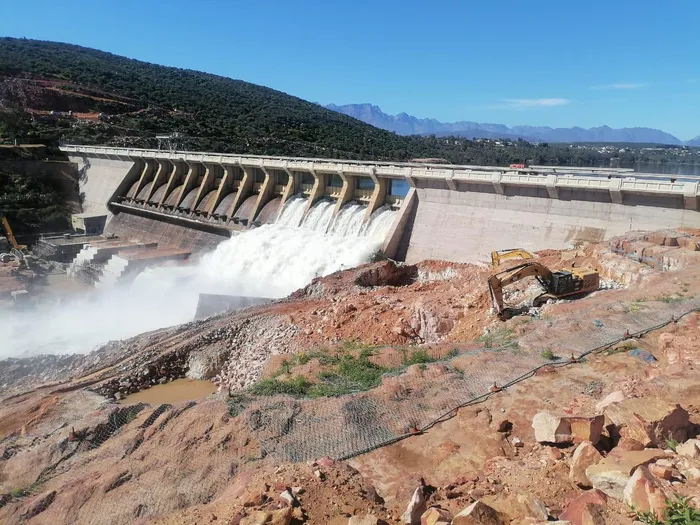
With Cape Town's dams at a precarious 73.7% capacity, climatologist Dr Peter Johnston warns that without immediate water conservation efforts, the city could face severe restrictions by April.
Image: DWS
As Cape Town faces an escalating water crisis, recent assessments from applied climatologist Dr Peter Johnston reveal alarming projections for the city's water supply.
Current figures indicate that Cape Town's dams are at 73.7 percent capacity; however, a combination of high consumption rates and forecasts of lower than average rainfall threatens to push these levels down to a precarious 30 percent by April of next year.
Dr Johnston has sounded the alarm, suggesting that the necessity for water restrictions may arise sooner than anticipated if residents do not begin conserving water immediately.
"We can’t desalinate at the scale that’s required, and we really, really do need rain," he said, stressing the urgency of the situation.
His comments reveal a pressing need for greater public awareness and education about the water cycle, which remains crucial in understanding how rainfall affects the city’s water supply.
Johnston's concerns extend beyond immediate consumption.
He highlights a significant gap in understanding among residents regarding the distinctions between different types of water in the urban ecosystem.
"Do people understand what the water cycle is?
How rainwater eventually ends up in our taps? What’s the difference between floodwater or what we call overflow water in the streets and actual sewage water?"
These questions illustrate a wider issue of knowledge that could greatly impact water conservation efforts across the city.
This year's rainfall trends have exacerbated the predicament, with insufficient precipitation recorded to replenish the region's dam systems.
"Cape Town’s average rainfall in the Western Cape Water Supply System is over 800 millimetres a year," Johnston explained.
"That’s a lot of rain that needs to fall to fill those dams, which we didn’t get this year." The implications of reduced precipitation are compounded by the realities of urban water consumption and a growing population.
As the city prepares for potentially severe restrictions, officials and residents alike must remain vigilant.
The call for community involvement in water conservation measures has never been more critical. Beyond personal usage habits, Johnston advocates for a holistic understanding of the intricate relationship between climate, rainfall, and water supply to encourage proactive steps toward sustainability.