

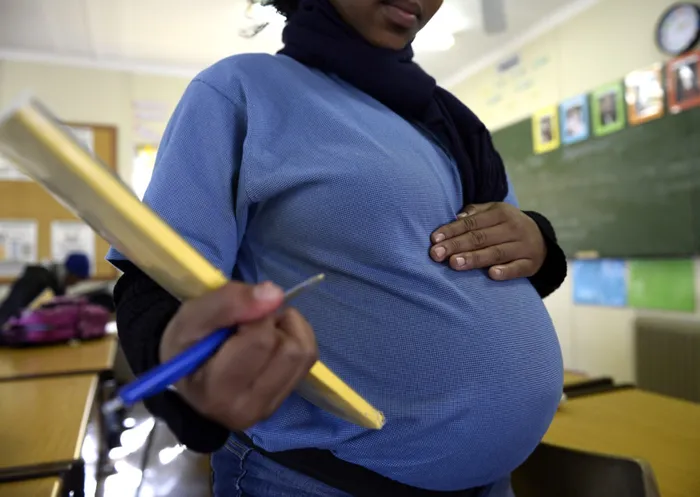
FOSA urges the South African government to declare teenage pregnancy a national crisis.
Image: File
Social justice and human rights activist group, Forum for South Africa (FOSA), has made a demand to the government to officially declare the country's teenage pregnancy rate a national crisis. FOSA were alarmed at the revelation made by the Social Development and Health Department that 21 children were born to teenagers aged between 15 and 19 years in the Eastern Cape on New Year's Day. The organisation's call for urgent action was further exacerbated by Statistics South Africa (Stats SA) recently reporting that mothers aged 19 and younger gave birth to over 100,000 children between January 1, 2024, and February 28, 2025. Their leaders argued that the perception of “young mothers” as bearers of “blessings” must be challenged, as these pregnancies often indicate a grim reality requiring urgent societal intervention.
Tebogo Mashilompane, FOSA's head, emphasised the need to dismantle the glorification and normalisation of teenage pregnancies. He condemned cultural practices, such as teenage baby showers, which contribute to romanticising early motherhood. “South Africa cannot afford a society where children give birth to children,” Mashilompane stated plainly, stressing the dire social, educational, health, and economic ramifications of this growing issue. The statistics paint a stark picture, revealing that 33% of teenage mothers drop out of school entirely, which undermines their future prospects and the progress of the nation as a whole. “Such figures compel us to reflect on the values instilled within our society and the future being paved for our children,” said Mashilompane.
According to FOSA, the situation called for a united front against a problem that has shown worrying trends across provinces like the Eastern Cape. The organisation believes that there is nothing beautiful or fulfilling about teenagers giving birth. Instead, it is a tragedy that demands immediate and collective action, and they also called for stricter adherence to statutory rape laws in relevant cases. They also demanded that families cease negotiating settlements that could further jeopardise the victims' safety and dignity.
Mashilompane said the call to action extended beyond governmental responsibility; it encompasses communities, families, and civil society. Embrace, the movement for Mothers, is another civil rights group that has also raised concerns about the alarming teen pregnancy rate, which spiked particularly during festive periods. Embrace's spokesperson, Nonkululeko Mbuli, said that societal perceptions often reduce teenage pregnancy to a moral failing on the part of young girls. “We need to adopt a holistic, systematic, and structural approach to this issue,” Mbuli stated, highlighting the need for inclusive dialogue aimed at addressing the root causes of teenage pregnancy.