

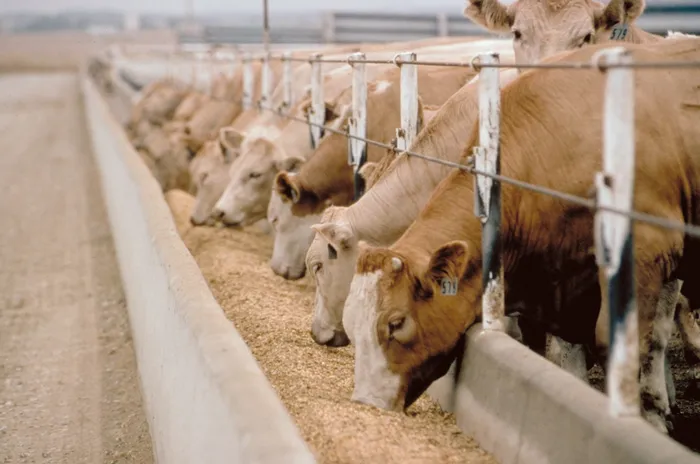
KwaZulu-Natal's agriculture sector is under severe threat from a foot-and-mouth disease outbreak.
Image: File
The agriculture sector in KwaZulu-Natal (KZN) is grappling with the devastating effects of a foot-and-mouth disease (FMD) outbreak that has wreaked havoc on farming communities, particularly in the uMngeni Municipality.
Reports indicate that thousands of animals have been affected by the highly contagious disease, placing rural livelihoods and local economies under severe strain.
FMD, which spreads rapidly through the movement of infected livestock and contaminated equipment, poses a serious threat to the province’s agricultural stability. In response, the uMngeni Municipality has issued an urgent call for farmers and agricultural businesses to implement strict biosecurity measures to limit further transmission.
These measures include thorough cleaning and disinfection of equipment when moving between farms, restricting unauthorised access to agricultural properties, and preventing the unauthorised movement of animals.
“We urge all businesses to inform their clients and staff of any outbreaks at the earliest opportunity and to diligently keep records of service visits to farms or rural properties,” the municipality said in a statement released on Wednesday.
“Any suspicion of foot-and-mouth disease must be reported immediately to the State Veterinarian at the Department of Agriculture to allow for swift intervention,” the statement added.
Compounding the crisis, dairy farmers in the Midlands were recently instructed to close a vehicle disinfection point on Karkloof Road near Howick. The facility had been established as a grassroots initiative to curb the spread of the disease but was declared illegal by local law enforcement due to a lack of formal authorisation.
Farmer Andrew Morphew, who has been directly affected by the outbreak, said police informed them that their hands were tied.
“The station commander said his hands are tied. His team cannot legally operate a roadblock without a minimum of eight members,” Morphew said.
Despite the confusion surrounding the closure, police spokesperson Sergeant Sifiso Gwala clarified that no formal complaint had been lodged against the disinfection point. However, he confirmed that a farmer’s request to establish a temporary roadblock for vehicle disinfection was declined due to legal constraints.
Farmers’ frustration extends beyond the disinfection dispute, with mounting anger over the government’s failure to supply essential FMD vaccines.
Agriculture Minister John Steenhuisen previously assured farmers that vaccines would be available by mid-January. However, officials confirmed last week that South Africa is now sourcing vaccines from Argentina and Turkey — a process requiring special permits, as the vaccines are not licensed for use in the country.
In response to the escalating crisis, Steenhuisen announced a comprehensive ten-year strategy aimed at stabilising and ultimately eradicating the outbreak through phased implementation.
A key component of the plan is the establishment of the Foot-and-Mouth Disease Industry Coordination Council, designed to strengthen cooperation between government and the agricultural sector in a coordinated effort to contain and control the disease.
At present, the Northern Cape remains the only province unaffected by the outbreak. However, the disease has already spread to two of South Africa’s largest feedlots, raising serious concerns about livestock welfare and the broader agricultural economy.
Steenhuisen said a unified national response was essential.
“The council will ensure that our industry plays an active and organised role in supporting the phased rollout of the strategy aimed at safeguarding our livestock and rural economies,” he said.
DAILY NEWS