

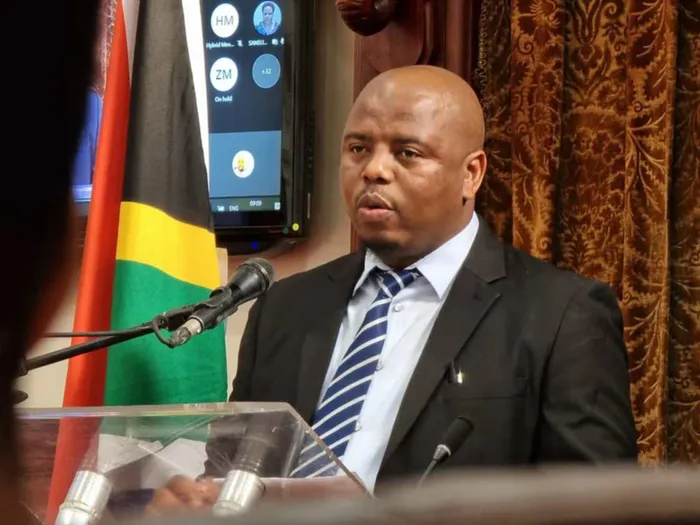
Amidst ongoing protests concerning school reopenings, the KwaZulu-Natal Department of Education supports the arrest of Jacinta MaNgobese Zuma for inciting public violence.
Image: Supplied
The KwaZulu-Natal Department of Education has said it supports the arrest of March and March leader Jacinta MaNgobese Zuma, following charges of inciting public violence laid against her.
The charges stem from ongoing protests linked to the denial of admission to local children at Addington Primary School in Durban at the start of the school year. Other organisations implicated include the Umkhonto WeSizwe Party and Operation Dudula.
KwaZulu-Natal MEC for Education Sipho Hlomuka said the department would not tolerate disruptions to teaching and learning, nor actions that jeopardise the safety and well-being of learners — a stance he said aligns with the broader position of government.
“I appreciate the role played by the police in dealing with people who are disrupting teaching and learning in our schools and traumatising our learners. If Jacinta (MaNgobese Zuma) is part of that, I also welcome that,” Hlomuka said.
The MEC’s comments follow a series of complaints from concerned parents, who reported that their children were fearful of attending school due to disruptive actions by unidentified individuals.
“Such incidents have traumatised learners,” Hlomuka noted, adding that the department plans to deploy social workers to provide psychosocial support to affected children.
He further stressed that every South African child who applies for admission will be placed at a school, provided there is available space.
In a show of solidarity with MaNgobese Zuma, ActionSA leader Zwelakhe Mncwango raised concerns about what he described as a growing perception in South Africa that individuals advocating for citizens’ rights are increasingly viewed as enemies of the state.
“It’s strange what’s happening in our country, where those who are patriotic become enemies of the state,” Mncwango said, adding that MaNgobese Zuma was fighting for the rights of South Africans.
He directed his criticism at what he described as government inaction on education-related challenges, arguing that effective governance would negate the need for protests.
“If learners were in class and teaching and learning were proceeding normally, we wouldn’t be here today,” Mncwango said, adding that the ongoing issues in the education sector reflect broader shortcomings within government.
DAILY NEWS