

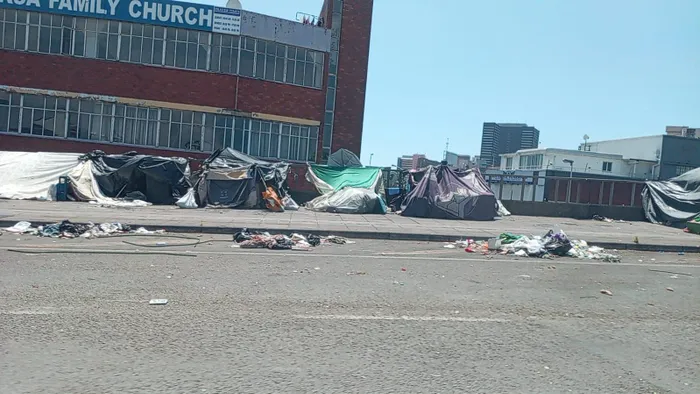
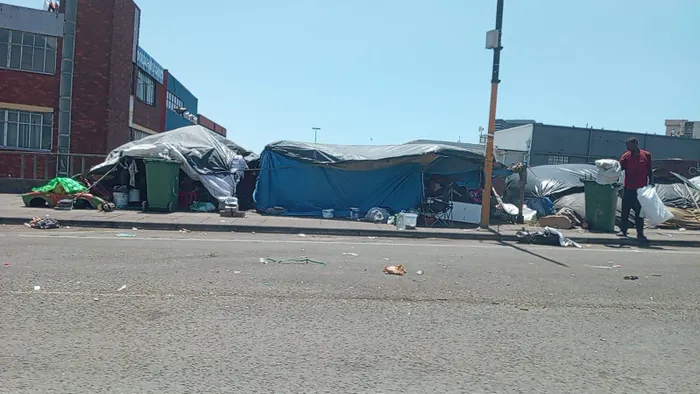
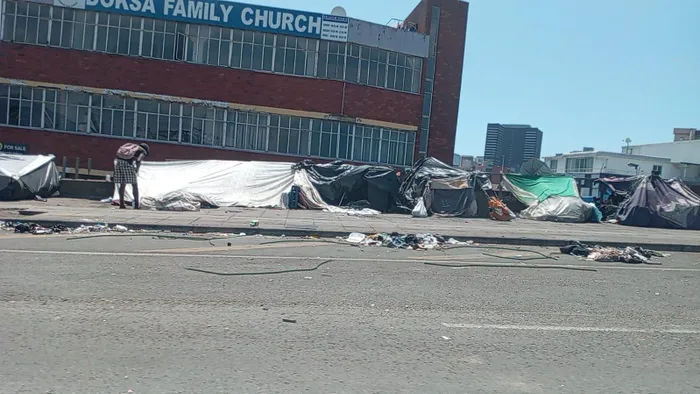
Local authorities are grappling with a persistent vagrancy crisis on the M4 freeway at Che Guevara Road
Image: Mthembeni Vuma
Metro police have admitted that preventing vagrants and drug users from congregating and committing various crimes on Che Guevara Road, near the M4 freeway, on the edge of Durban’s CBD, is a battle they were not winning.
The admission was made to Daily News in response to the persistent problem of vagrants and drug users using the area to carry out acts of lawlessness, including terrorising motorists and disrupting nearby businesses.
Earlier this week, a video circulated showing vagrants swarming a vehicle and vandalising it as it passed their makeshift den, leaving the driver traumatised — the latest example of the criminality plaguing Che Guevara Road.
Last month, metro police and members of eThekwini Municipality’s clean-up teams drove vagrants out of the area and neatened the surroundings. However, as has happened in the past after similar operations, those clean-up efforts proved futile. Hours later, the vagrants regrouped at their Che Guevara Road den.
Metro police spokesperson Boyce Zungu said they were fighting a losing battle, as vagrants returned each time they were removed.
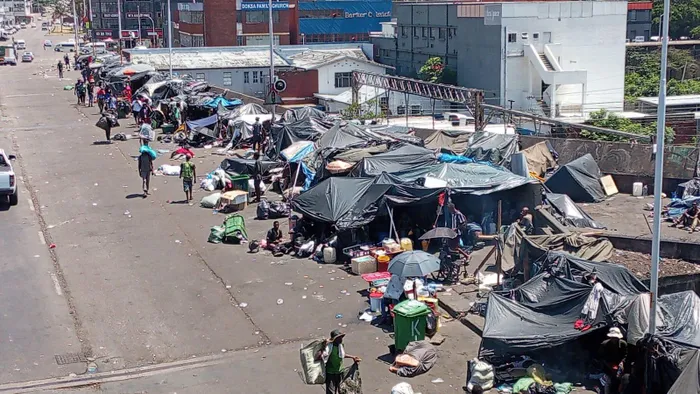
Vagrants in Che Guevara Road
Image: Mthembeni Vuma
Zungu said the lack of facilities where vagrants could reside was proving to be a critical factor, as they always found their way back to the area.
“We have opted to regularly patrol the area to ensure it is safe for residents,” he added.
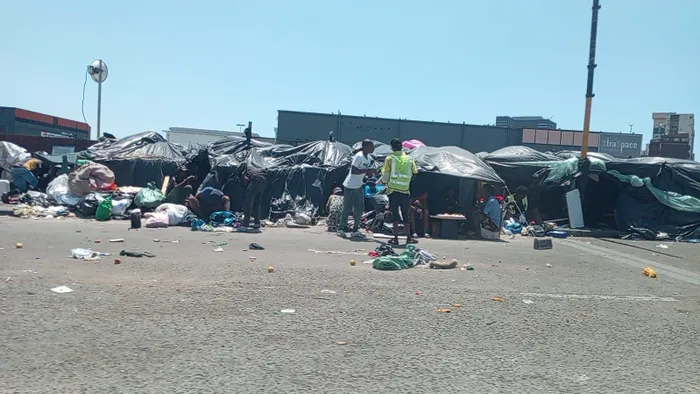
Metro police struggle to manage vagrancy and drug issues on M4 freeway
Image: Mthembeni Vuma
Zungu said officers were immediately dispatched to deal with incidents whenever complaints were received.
At the time of publication, the city had not responded to questions from the publication regarding whether it had a comprehensive plan to address the perennial vagrant situation. However, the municipality held a workshop in October to assess city by-laws relating to offences committed by homeless people on Durban’s streets. It formed part of the municipality’s inner-city rejuvenation programme and homeless intervention strategy.
The Glenwood Bulwer Ratepayers and Residents Association NPC (GBRRA) has raised concerns about growing unmanaged homelessness and encampments near the M4 bridge, and the direct impact on residents of Lower Bulwer, including Che Guevara Road, if the situation remained unresolved.
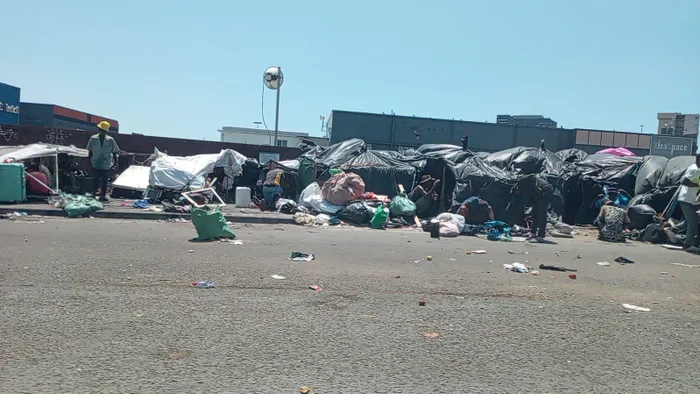
Metro police struggle to manage vagrancy and drug issues on M4 freeway
Image: Mthembeni Vuma
GBRRA chairperson Keyuren Maharaj said Lower Bulwer was a dense residential and mixed-use area with schools, medical facilities, flats, and small to medium-sized businesses.
He said the area did not have the capacity to absorb the spillover effects of a prolonged absence of coordinated intervention, including safety risks, sanitation challenges, and pressure on already strained urban management resources.
“In June last year, GBRRA met with Safer Cities and formally offered assistance, including community-level support and cooperation where appropriate. We were advised of a ‘new profiling system’ intended to inform a more effective response. Seven months later, we are still awaiting feedback or engagement on its implementation.
“This is not a call for displacement without care, nor a criticism of vulnerable individuals. It is a call for urgency, coordination, and follow-through,” Maharaj said.
Metro police struggle to manage vagrancy and drug issues on M4 freeway
Image: Mthembeni Vuma
He added that repeated clean-ups without sustainable planning merely shifted the problem into surrounding neighbourhoods, with Lower Bulwer increasingly at risk of becoming the unintended pressure point.
Maharaj said the GBRRA remains ready to work constructively with all relevant stakeholders, but warned that delays in action and communication carry consequences for communities on the ground.
Metro police struggle to manage vagrancy and drug issues on M4 freeway
Image: Mthembeni Vuma
DA councillor Andre Beetge said his party had suggested that the municipality actively identify suitable land for vagrant occupation, including the formalisation of existing informal settlements, where areas could be demarcated into parcels, infrastructure installed and basic services delivered.
He also said buildings donated to the city by the provincial government could be renovated into suitable housing. Beetge further suggested that expropriated abandoned buildings could be used to restore dignity to vulnerable communities while simultaneously reducing health risks, sanitation challenges and crime-related pressures.
Doran Subiah, chairperson of the Umbilo Business Association (UBA), said illegal dumping sites would re-emerge and unlawful structures would be rebuilt if root causes were not addressed.
Subiah said the UBA required the municipality to match businesses’ commitment to cleaning the area with a transparent, long-term plan for Umbilo and surrounding areas, including regular maintenance schedules, infrastructure investment and a dedicated safety and cleanliness partnership.
In a recent statement, the municipality acknowledged that the homeless community includes individuals struggling with addiction, unemployed foreign nationals, undocumented individuals, and people who have lost their residences.
The municipality also announced that Phase 1 of the Sakhithemba Shelter in Illovo, south of Durban, is expected to have a maximum occupancy capacity of 800 upon completion. The shelter will be managed by a non-governmental organisation.
Currently, the municipality operates two safe sleeping spaces in Greyville and North Beach. The city also runs a Harm Reduction Centre at Bellhaven Memorial Hall in Greyville, which offers drug management programmes.
DAILY NEWS