

Our readers have some pretty strong opinions. Do you share them?
Image: ChatGPT
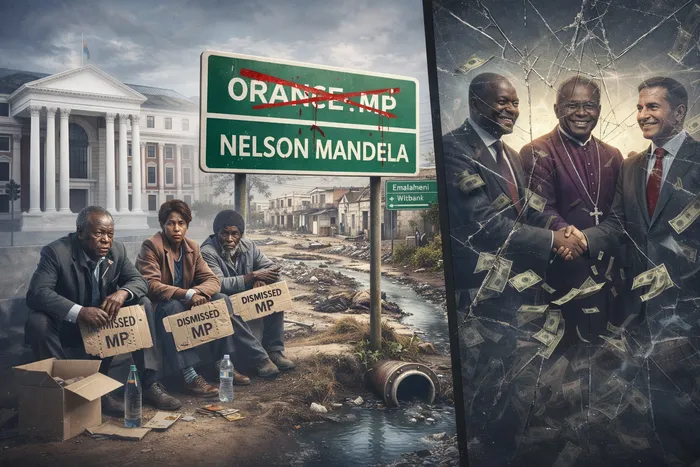
The national Public Works ministry under Durban’s Dean Macpherson must take urgent legal steps to evict three former MKP MPs who continue to occupy parliamentary accommodation despite being removed from office by their party, which has been plagued by controversy and infighting.
Lease agreements should be reviewed and amended to cover situations such as this and to prevent further unlawful occupation.
Legal and related costs should be sought against the former MPs, GA Mogotsi, NG Mgwebi and RB Mbiki. Court action around evictions is expensive and taxpayers too often carry the burden.
The days of free parliamentary accommodation and associated benefits for former MPs must come to an end. | Simon T Dehal Verulam
Renaming towns won’t fix broken municipalities. Changing the names of towns will not bring a single job, fix a broken sewer pipe, or restore water to communities that have gone without.
It will not rebuild collapsing roads, revive failing local economies, or end the culture of corruption.
South Africa’s crisis is not symbolic. It is structural.
Yet this is precisely the distraction being pushed by Minister Gayton McKenzie, whose enthusiasm for renaming towns conveniently avoids confronting the real causes of decay in local government: Collapsing service delivery, mass unemployment, and the entrenched ANC patronage networks that have turned municipalities into feeding troughs for political elites.
The truth is uncomfortable, but unavoidable. Municipal failure in South Africa is not accidental. It is the direct result of cadre deployment, political interference in administration, and systematic looting disguised as governance.
Changing a town’s name does nothing to address municipalities that can not produce credible financial statements, that fail to spend infrastructure grants, or that can not keep the lights on and taps running. McKenzie’s push fits neatly into the ANC’s long-standing playbook: When governance fails, escalate identity politics; when accountability looms, redirect public anger toward symbolic battles. The renaming of towns becomes a substitute for economic justice, a performance of transformation without substance.
This approach cheapens social cohesion.
True cohesion can not be legislated through signage or rebranding exercises while communities remain trapped in poverty and unemployment. Social cohesion is built when people experience dignity through work, safety through functional institutions, and hope through reliable public services. It grows in thriving environments, not in towns renamed but still decaying.
What South Africans urgently need is capable governance at the local level and people who are fit for purpose to turn failing municipalities around. That means professional, skilled administrators appointed on merit, not political loyalty. Councillors and mayors who understand budgets, infrastructure, and economic development and are held accountable if they fail. It means insulating municipal administrations from political interference so that competence, not patronage, determines who runs our towns and cities.
Renaming towns without fixing municipalities is not transformation, it is theatre. South Africans have paid too high a price for political theatre while their communities continue to crumble. Until we address the root causes of municipal failure, changing names will change nothing. | Thulani Dasa Khayelitsha
We do not need to read millions of pages of released or hidden files to recognise that there is a deep crisis of trust in global political, economic and media leadership. Many ordinary people believe those in power act with hypocrisy, speaking of rights and morality while protecting their own interests and influence.
There is growing anger at what is seen as a culture of deception among elites – powerful individuals celebrated publicly while serious allegations and wrongdoing surface years later. This erodes confidence in institutions and fuels the belief that accountability exists only for the powerless.
Ordinary people – across faiths, races and nations – are too often divided against one another while those with influence continue to benefit from wealth, conflict and instability. Wars, exploitation and corruption leave civilians, particularly women and children, bearing the greatest suffering.
The result is a widening sense that global systems serve the few rather than the many, and that justice is unevenly applied. People of faith and conscience are increasingly questioning whether moral leadership still exists at the highest levels of authority.
Until transparency, accountability and respect for human dignity are consistently upheld, distrust will deepen and social divisions will grow. | Yagyah Adams Cape Town
DAILY NEWS