

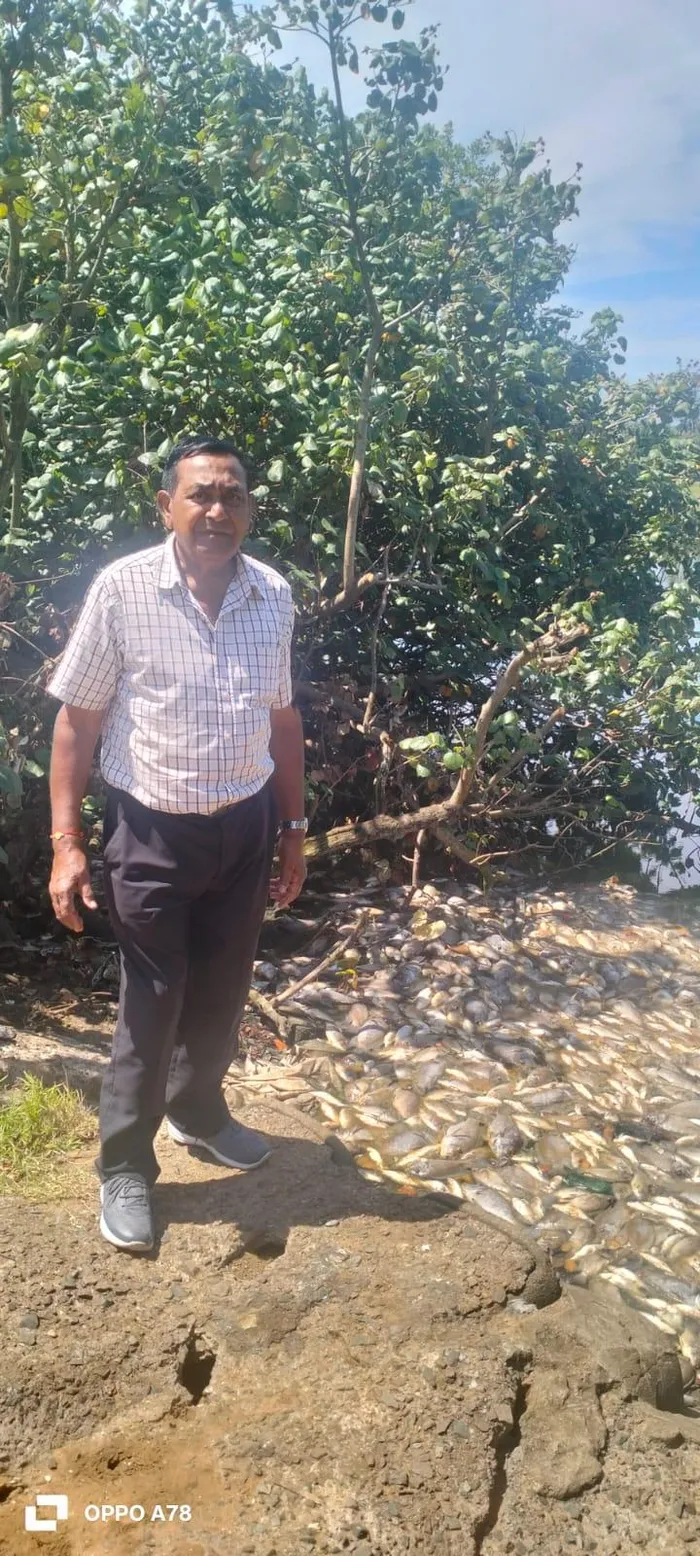
Shad Nowbuth, eThekwini Municipality Ward 90 councillor, at the Isiphingo Estuary, where hundreds of fish died after a sewer spillage.
Image: Supplied
A combination of a damaged wastewater pipe on Prospecton Road and a cable theft at the Isiphingo Beach wastewater pump station has led to a catastrophic environmental incident, killing hundreds of fish and contaminating the Isiphingo River estuary, south of Durban.
On Wednesday, January 28, eThekwini Ward 90 Councillor Shad Nowbuth reported extensive sewage pollution at the river mouth and captured images of dead fish scattered along the banks. By Tuesday, February 3, the majority of the fish had been removed, though some remained lodged in the mangrove swamps, making complete retrieval a challenge.
eThekwini Municipality spokesperson Gugu Sisilana confirmed that the fish mortality was caused by the combined effects of pipeline damage and cable theft, which disrupted the wastewater system’s normal operations.
“The city acted swiftly to contain and mitigate the impact,” Sisilana said, detailing emergency measures that included isolating affected infrastructure, deploying vacuum tankers around the clock, and using chemical dosing to reduce environmental harm.
Repairs to the damaged rising main have now been completed, and all impacted wastewater pump stations are fully operational.
Technical teams were also dispatched immediately to restore pump station functionality after the cable theft. Clean-up efforts included the removal of dead fish and ongoing environmental monitoring to ensure further contamination is prevented.
Councillor Nowbuth, who inspected both the pump station on Beach Road and the river mouth, highlighted the difficulties of retrieving fish trapped in mangrove areas but praised the commitment of municipal teams to restore the estuary.
The environmental impact of the spill drew attention from Hannah Lidgett, MPL and DA spokesperson on Economic Development, Tourism, and Environmental Affairs, who described a devastating scene.
“An entire stretch of the river had turned black, with dead fish floating in the water and a pervasive stench caused by raw sewage and decomposing aquatic life,” she said. Lidgett noted that a construction company had allegedly damaged a major sewer pipeline, triggering the spill.
Mangrove ecosystems along the river have been particularly affected. Lidgett emphasized that mangroves are crucial for biodiversity, water filtration, and coastal protection.
“The repeated sewage spills into sensitive ecosystems raise urgent questions about environmental safeguards and enforcement. Such incidents also impact tourism, often leading to beach closures along KwaZulu-Natal’s coastline,” she said.
The incident underscores the fragility of local ecosystems and the urgent need for coordinated action to prevent further environmental degradation in the region.
DAILY NEWS