

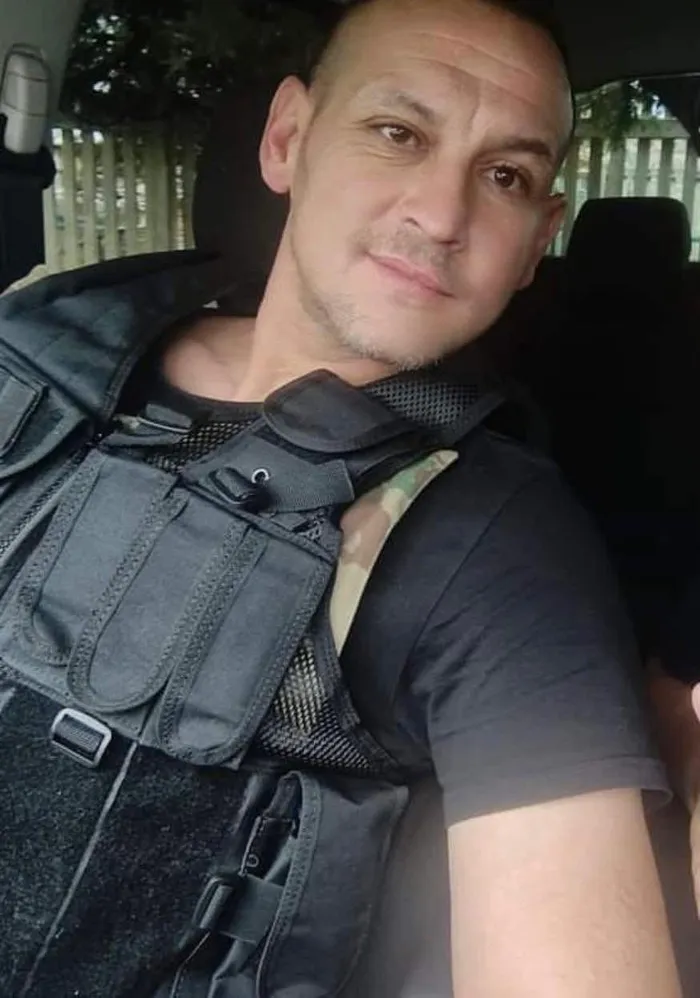
Security expert Willem Els urges immediate reforms in South Africa's witness protection protocols following the tragic death of former police reservist Wiandre Pretorius
Image: X
Security expert Willem Els from the Institute for Security Studies (ISS) has highlighted the urgent need for comprehensive reforms in the nation’s witness protection protocols.
This call for action comes in the wake of a tragic incident involving former police reservist Wiandre Pretorius, who reportedly took his own life after surviving an alleged hit on Thursday.
His death has raised questions about the efficacy and safety of current mechanisms designed to protect those who dare to speak out against corruption and crime.
Els stated that if potential witnesses feel threatened and vulnerable, they will understandably hesitate to come forward, thus allowing those engaged in criminal activity to flourish unchecked.
He said addressing these concerns requires not only a revision of existing legislation surrounding witness protection, but also innovative strategies to reinforce the security provided.
“Stakeholders must engage in meaningful conversations about how to redefine what witness protection entails to enhance its effectiveness and encourage more individuals to trust the system,” Els said.
Pretorius allegedly shot himself at a petrol station in Brakpan, Gauteng, on Saturday.
National police spokesperson Athlenda Mathe stated that Pretorius was a person of interest in the murder of Marius van der Merwe, otherwise known as Witness D. Van der Merwe had implicated Pretorius during his testimony at the Madlanga Commission of Inquiry.
Pretorius was also a suspect in the murder of Emmanuel Mbense in 2022.
Els believes that in the ongoing battle against corruption and crime in South Africa, whistleblowers emerge as essential allies in the pursuit of justice.
However, their willingness to speak out often places them in jeopardy, raising profound questions about the effectiveness of the nation’s witness protection framework.
Els reiterated that once a whistleblower identifies wrongdoing or corruption, a crucial responsibility falls upon the company involved, as well as the legal system, to ensure the safety of those willing to testify.
He explained that under South African law, particularly the Witness Protection Act and the provisions of the National Prosecuting Authority (NPA), the steps to safeguard witnesses are designed to be systematic and thorough.
However, the reality often tells a different story.
“When a whistleblower reports a threat, it typically triggers a threat assessment conducted by the NPA. If deemed necessary, the individual is placed into witness protection — a process that entails significant upheaval in their life.
“Contrary to common perceptions that conjure images of luxurious protection with bodyguards and black cars, the truth is starkly different.
“Most witnesses are relocated to environments far removed from their familiar surroundings, often in small, isolated towns where anonymity is an absolute necessity.
“For these individuals, such relocations come at a profound personal cost.
“They are stripped of their normal lives; they cannot attend work, engage with family members, or maintain contact with friends.
“Due to this situation, many find the isolation unbearable, leading some to abandon the programme and return to their communities, often with tragic consequences.”
Els said there were instances where whistleblowers who exited the protection scheme were murdered, which brought to the fore flaws in the execution of witness protection protocols in the country.
DAILY NEWS