

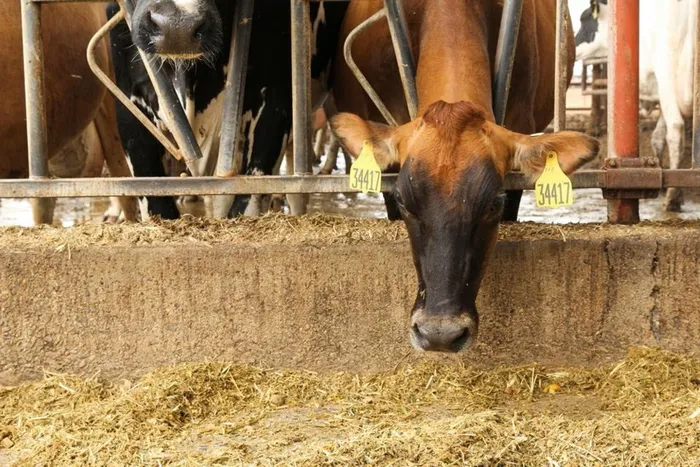
KwaZulu-Natal is stepping up its fight against Foot and Mouth Disease with the arrival of 1.5 million vaccine doses, aiming to protect its vital livestock population amidst ongoing challenges.
Image: Supplied
The news that the government will acquire 1.5 million doses of the Foot-and-Mouth Disease (FMD) vaccine this week has brought relief to KwaZulu-Natal diary farmer like Dave Moberly, whose livelihood has been devastated by the virulent outbreak.
A rollout of the FMD vaccine, courtesy of the Department of Agriculture, is expected in the coming weeks.
With 800 of his 1,200 cows infected and 500 suffering severely, Moberly's emotional and financial stakes have never been higher.
Moberly's plight is not merely a tale of livestock lost; it is also a story of frustration and anger directed at the state’s inadequate response to a crisis that has left many farmers vulnerable. In a recent media interview, he recounted the moments leading up to the catastrophe.
With whispers of an outbreak emerging in late 2025, Moberly, a Creighton-based farmer in the Harry Gwala District, began searching for vaccination options to protect his herd. However, his efforts were met with disheartening news: the state reportedly had no stock available to combat the outbreak.
Determined to safeguard his remaining animals, Moberly embarked on an arduous quest to secure vaccines from alternative sources. This desperate endeavour cost him over R180,000 — a staggering amount for a farmer already grappling with the impact of FMD.
“I did everything I could to ensure my cows would be protected,” he shared, his voice tinged with the weight of impending loss.
However, KwaZulu-Natal Premier Thami Ntuli’s announcement that the province is set to receive 1.5 million doses of the FMD vaccine was the relief that farmers like Moberly and others enduring the same plight had been praying for.
“The vaccination will be free, and we will have agricultural advisors and veterinarians on hand to assist farmers. Our aim is to ensure that every livestock owner is reached, particularly in rural regions where the challenges are greatest,” Ntuli promised.
Efforts to stem the FMD tide were already underway, with over 300,000 livestock vaccinated in the current financial year alone. Antibiotics were also being distributed to strengthen the animals’ immune systems, offering another layer of protection while vaccinations are rolled out.
“We see that we have a big problem in rural areas. So, those are all the places we have prioritised,” Ntuli said.
As livestock movement poses a significant risk for spreading the disease, farmers were urged to seek the necessary clearance and certification from the Department of Agriculture or approved veterinarians before moving animals across district borders.
“We have promised the people of KwaZulu-Natal that this February, work must be seen being done in the province to try and ensure all livestock gets vaccinated. Our Department of Agriculture is well organised, with every ward having an advisor and medical professionals available at livestock dips to guide farmers through this challenging time,” Ntuli added.
As the province braces for the influx of vaccines, officials remain optimistic that targeted interventions will provide the breakthrough needed to finally turn the tide against Foot-and-Mouth Disease.
Provincial Chief State Veterinarian Dr Themba Sikhakhane sought to reassure farmers that systems were in place to contain the disease.
“I can assure you that we have the capability to assist farmers, and we are going to make sure that we use the vaccine within the time allocated,” he said. Sikhakhane highlighted extensive community outreach efforts.
“We communicate with rural areas using social media, we speak to amakhosi, we call community meetings, and I personally visit various communities to make sure that we send the message,” he said.
Home to an estimated 2.4 million cattle, KwaZulu-Natal is the most affected province in the fight against this infectious disease, with authorities identifying 207 cases thus far, 187 of which remain unresolved, primarily due to ongoing vaccine shortages.
While Foot-and-Mouth Disease does not pose a risk to humans, agricultural economist Wandile Sihlobo said its impact has been felt in farmers’ pockets.
Once an area has been declared infected, strict control measures are put in place. These include bans on the movement of livestock in and out of affected zones, suspension of auctions, limits on slaughtering, and veterinary monitoring of herds. In some areas, permits are required to move animals, and biosecurity protocols have been tightened.
The outbreak forms part of a wider national crisis, with cases reported in several provinces. Only the Northern Cape remains free of cases, while major livestock areas in KwaZulu-Natal, Free State, Mpumalanga, Gauteng, North West, and parts of the Western Cape and Limpopo have reported infections and movement restrictions.
DAILY NEWS