

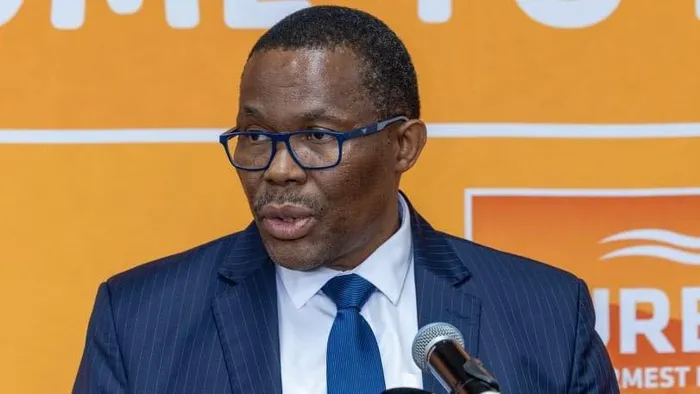
Traditional leaders in KwaZulu-Natal convened in Durban for a workshop aimed at enhancing disaster management strategies in response to recent floods. In Picture: ETHEKWINI Mayor Cyril Xaba.
Image: Supplied by Durban Tourism
Various traditional leaders descended on Pinetown, Durban, on Thursday for a pivotal Traditional Leadership Disaster Management Workshop jointly organised by the eThekwini Municipality and the provincial government.
The workshop, critical in light of the ongoing floods that have ravaged the region over the past few years, is aimed at equipping leaders with the necessary knowledge and tools to better manage and mitigate disaster risks within their communities.
Mayor Cyril Xaba called for a fundamental shift away from a restrictive “top-down” approach in governance, advocating instead for a collaborative partnership between municipalities and traditional councils.
Xaba was supported by Deputy Mayor Zandile Myeni and Council Speaker Thabani Nyawose as they advocated for fostering a more integrated response to disasters in KwaZulu-Natal.
“Traditional leaders know the landscape best,” he emphasised, urging them to collaborate with municipal planners to avoid allocating land in high-risk areas such as wetlands and floodplains.
The mayor also proposed the establishment of village-based disaster committees under the stewardship of traditional leaders, emphasising the importance of integrating diverse fields, including social, economic, technical and natural systems, to address the complex nature of hazards.
“By engaging local communities in disaster preparedness and response, we can empower them to be the first responders in times of crisis,” Xaba added.
He referenced the Disaster Management Act of 2002, which stipulates the need for cooperative governance across all sectors, further advocating for the mainstreaming of Disaster Risk Reduction (DRR) into sustainable development and poverty alleviation strategies.
“Ensuring that development practices do not increase vulnerability, but rather reduce it, aligns with the Sendai Framework’s principle to ‘Build Back Better,’” Xaba said.
He highlighted that moving from reactive post-disaster recovery to proactive risk reduction necessitates policy integration at all levels of government.
To bolster understanding of existing weather patterns and alerts, Wiseman Dlamini from the South African Weather Service (SAWS) educated councillors and traditional leaders on the various weather alert levels.
“Understanding these levels is crucial for safety. Familiarising oneself with these alerts can significantly enhance preparedness for severe weather,” Dlamini said.
A representative from the Hlengwa clan expressed appreciation for the collaboration between the government and traditional leaders, remarking: “These workshops will greatly assist us in reading and understanding weather patterns. Normally, these were factors that rural communities overlooked.”
The workshop aimed not only to equip traditional leaders with practical tools for enhancing early warning systems and crisis communication but also to integrate traditional knowledge systems with scientific methodologies to strengthen community resilience.
Participants included traditional leaders, disaster management specialists and senior government officials, all united in their commitment to disaster risk reduction as a collective responsibility.
DAILY NEWS