

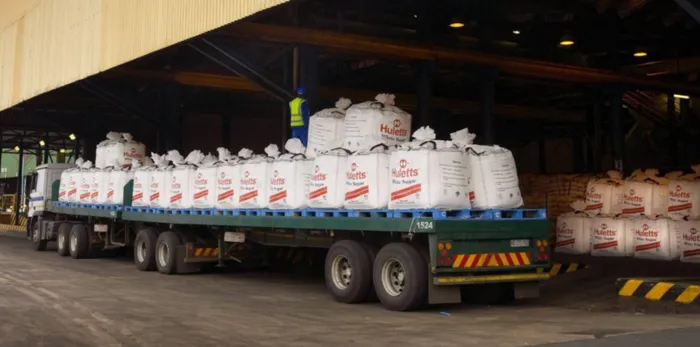
THE filing for provisional liquidation by Tongaat Hulett on February 12, marked the end of an era for a 134-year-old giant of the South African industry.
Image: Supplied
The South African government has confirmed its firm opposition to the liquidation of Tongaat Hulett Limited (THL), signalling a commitment to support lawful measures to stabilise the 134-year-old sugar company and protect jobs in the sector.
Ministerial spokesperson Kaamil Alli stated that the Department of Trade, Industry and Competition (dtic), alongside other state agencies, was actively monitoring the company’s ongoing liquidation proceedings in court.
“Government remains firmly of the view that liquidation should be a measure of last resort, particularly where there are reasonable prospects of rescuing a strategically important enterprise in a manner that protects jobs, sustains productive capacity, and preserves value for the broader economy,” Alli said.
Tongaat Hulett recently filed for provisional liquidation, highlighting mounting challenges in the sugar industry. With business rescue plans not fully implemented and funding agreements still pending, cane growers could struggle to deliver crops on time for the upcoming crushing season, placing thousands of jobs and associated supply chains at risk.
The department emphasised that Minister Parks Tau is acutely aware of the pressures facing the sugar industry, both domestically and internationally, and described Tongaat Hulett as a systemically important player in South Africa’s sugar value chain.
Liquidation, the dtic warned, would have far-reaching consequences, particularly in KwaZulu-Natal, where the sector supports thousands of workers, small-scale farmers, rural economies, and downstream industries. The collapse of this ecosystem, the department said, would exacerbate economic distress in vulnerable communities and undermine decades of investment in industrial capability, agricultural development, and transformation initiatives.
Alli stressed that the dtic believes Tongaat Hulett can still be stabilised and restructured through a sustainable solution that balances the interests of workers, growers, communities, creditors, and the country.
“Government will intensify its engagements with all stakeholders, including the Industrial Development Corporation, labour, growers, financiers, investors, and affected communities, to explore solutions that ensure the survival of the company and the long-term sustainability of the sugar sector,” Alli added.
The department noted that these engagements are guided by broader policy objectives: protecting jobs and livelihoods, safeguarding small-scale and emerging farmers dependent on the sugar value chain, preserving industrial and agricultural capacity critical to food security and regional economies, and ensuring transparency, accountability, and good governance in all processes.
“All lawful efforts aimed at finding a viable and durable resolution will continue to receive government support,” Alli said, adding that while the dtic respects the independence of the courts and ongoing legal proceedings, it will continue to facilitate constructive dialogue and support credible rescue initiatives.
Meanwhile, KwaZulu-Natal Premier Thami Ntuli has also announced provincial efforts to prevent Tongaat Hulett’s collapse. Speaking at the Cabinet Lekgotla in Durban, Ntuli confirmed that the matter would be discussed with national government and other stakeholders to find a solution to save the company.
“This is a concern not only for us as a provincial government but for the national government as well. The national government is intervening, and I am hopeful that the company will be saved,” Ntuli said.
The urgency to secure a sustainable resolution comes as Tongaat Hulett’s liquidation filing follows unresolved funding agreements and incomplete business rescue plans, leaving the future of the company and the sugar sector in South Africa hanging in the balance.
DAILY NEWS